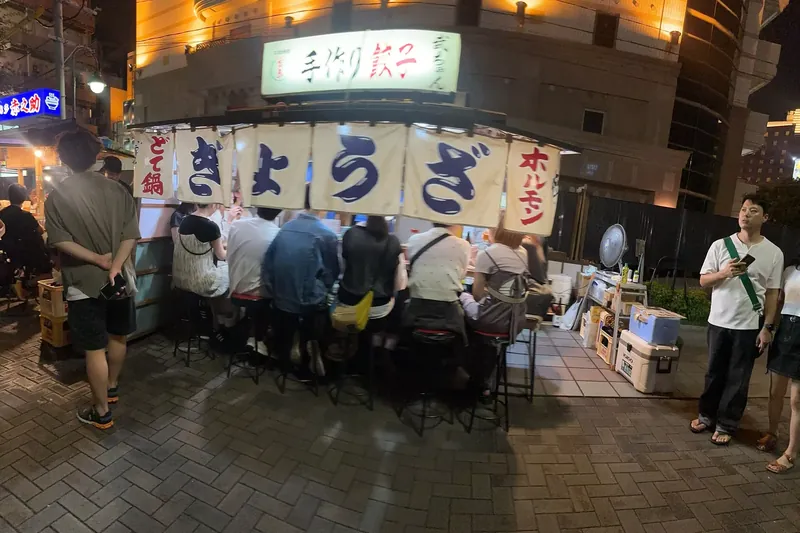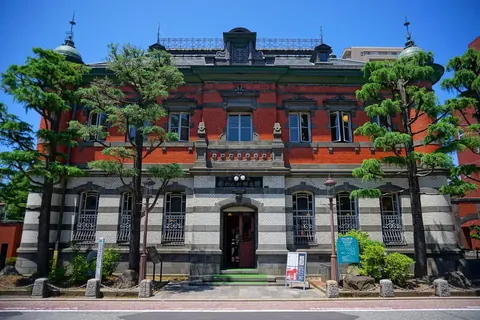
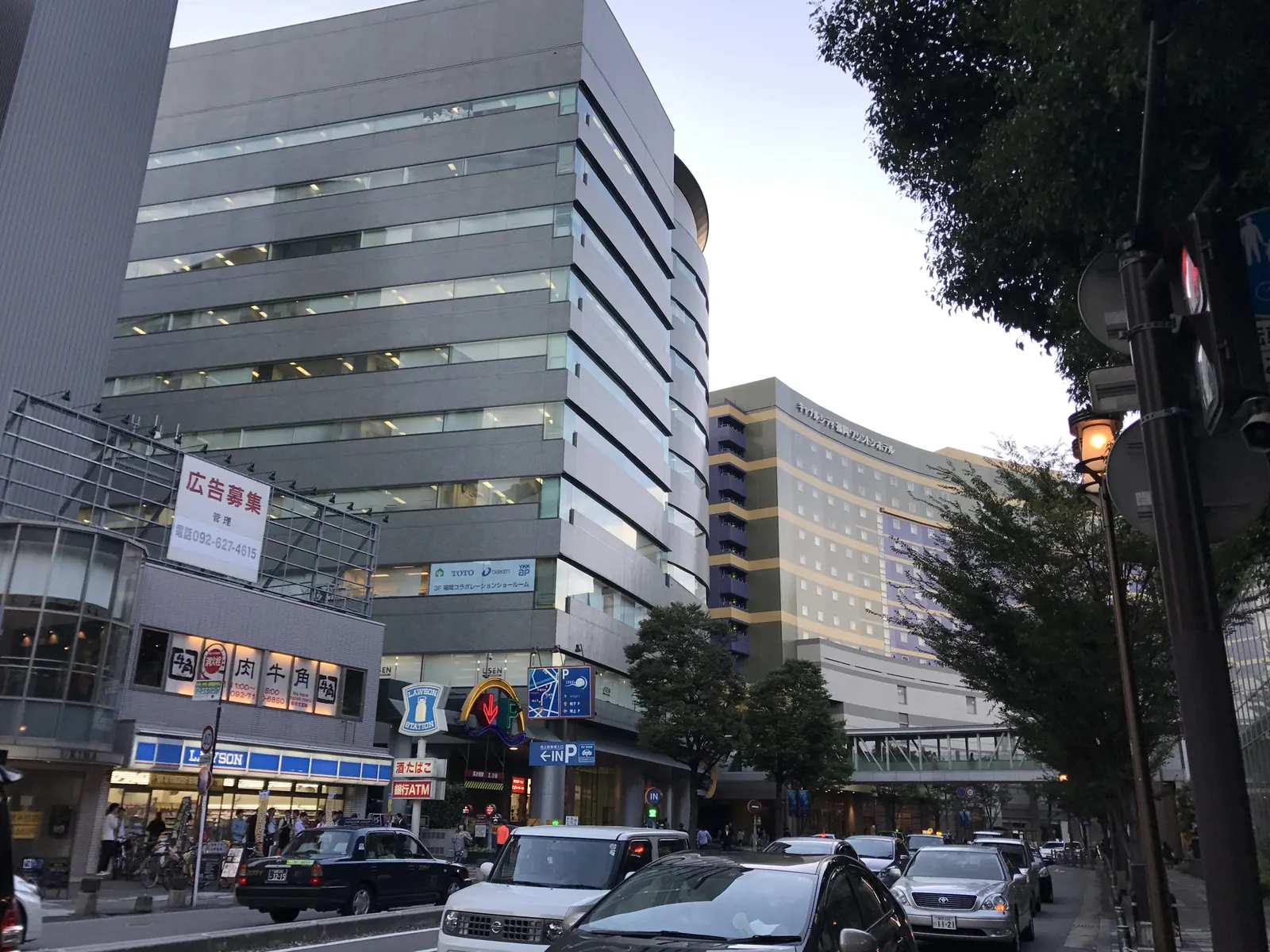
Most writing about Fukuoka is for people who have a day in port. This guide is for the other group: passengers whose cruise starts or ends at Hakata Port. For them the questions are different. Which wharf? How do you get there from the airport with two large suitcases? Where should you sleep, and what is the earliest flight you can safely book home?
The answers below come from the City of Fukuoka’s call records and access pages, the terminal operator, the airport, the bus, subway and rail operators, Yamato Transport’s published counters and fares, and the taxi fare table. Nobody from this site has done the transfer; nothing here is first-hand. Where a number is our own estimate, it says so. For the day-in-port version, see the Fukuoka cruise port guide.
The short version
| Question | Answer |
|---|---|
| Which terminal? | Chuo Wharf Cruise Center (Berth 5, sometimes 6). Occasionally Hakozaki Wharf Berth 5, further east |
| Airport → ship | Taxi: about 20 minutes (city figure), our estimate ¥2,300–3,600. Public transport: about an hour with two changes |
| Hakata Station → ship | Bus from stop F, about 20 minutes, ¥260, every 15 minutes in the daytime, + 500 m walk. Taxi from about ¥1,700 (estimate) |
| Tenjin → ship | BRT or route 80, 15–20 minutes, ¥210, + 500 m walk |
| Luggage | Yamato same-day delivery to city hotels, ¥1,500 a piece; no service to the ship that we could find |
| Where to sleep | Hakata Station or Tenjin |
| Earliest flight home | About 11:30 domestic, 13:00 international (assumptions below) |
Which terminal: Chuo Wharf, almost always
Hakata Port has two cruise wharves in use. The city’s records show how lopsided the split is:
| Berth | 2025 calls | Oct 2026 scheduled | Terminal building | Public bus |
|---|---|---|---|---|
| Chuo Wharf Berth 5 | 176 | 18 of 20 | Chuo Wharf Cruise Center | Main stop (International Terminal) 500 m away; the operator says some route 80 trips run to the Cruise Center |
| Chuo Wharf Berth 6 | 25 | 0 | Same Cruise Center | Same |
| Hakozaki Wharf Berth 5 | 7 | 2 of 20 | None described in any official source | None |
The Chuo Wharf Cruise Center opened in 2015. It is two single-storey buildings with up to 20 immigration booths, built for ships of 4,000–5,000 passengers. It has an information desk in Japanese, English, Chinese and Korean, free Wi-Fi, and a currency-exchange machine that changes foreign cash into yen only. Its hours “vary with ship times”. The city’s berth maps say only cruise staff and passengers may enter the quay and the Cruise Center, so friends cannot come in to see you off.
Hakozaki Wharf gets the second, usually smaller ship on two-ship days. In 2025 that meant mid-size ships; in the autumn 2026 schedule they are Asuka II, Mitsui Ocean Sakura and Luminara. If your documents say Hakozaki, plan on a taxi both ways.
Kashii Park Port, which some websites still name for large ships, is a container and car terminal. It had no cruise calls in 2025 and has none in the city’s schedule to the end of November 2026.
How to tell which one is yours
- The city’s cruise schedule lists ship, date, arrival and departure times and berth. It is published only about two months ahead.
- Your line’s documents name the terminal and your check-in time. Asuka Cruise, for example, tells passengers that Hakata is one of several ports with more than one terminal and that the meeting place is in the itinerary it sends before departure.
- Check your date, not your ship. In October 2026 Asuka II is scheduled at Chuo Wharf on the 1st, 3rd and 5th but at Hakozaki on the 4th, because Spectrum of the Seas has Berth 5 that day.
The schedule does not say which calls are turnarounds. Your booking does.
From Fukuoka Airport to the ship
Fukuoka Airport is unusually close to the city, but it has two terminals on opposite sides of the runway, and they work differently.
- Domestic terminal: connected directly to the subway (Fukuoka-kuko station, B2F).
- International terminal: no subway. A free inter-terminal shuttle runs to the domestic terminal every 5–7 minutes at busy times (roughly 07:00–19:00) and less often early and late, from about 06:00 to about 23:00; all buses have wheelchair ramps. Or take Nishitetsu bus A to Hakata Station: about 18 minutes, ¥400, cash or IC card.
The options
| Route | Time | Fare per person | With large luggage |
|---|---|---|---|
| Taxi, domestic terminal → Cruise Center | City figure: about 20 min. Map routing: 12–22 min free-flow | Our estimate ¥2,900–3,600 on the meter, plus any expressway toll | Easiest: door to door, no stairs |
| Taxi, international terminal → Cruise Center | About 8 min free-flow by map routing; allow 20 | Our estimate ¥2,300–2,500, plus any toll | Easiest |
| Subway → Hakata Station → bus (from domestic terminal) | Subway 5 min; bus about 20 min; walk 500 m. City: “about 5 min + about 20 min” excluding walks. Allow about an hour | About ¥260 + ¥260 = ¥520 | Workable for one case each, hard with two: a change at Hakata Station, a bus with no luggage rack guarantee, and 500 m on foot at the end |
| Bus A → Hakata Station → bus (from international terminal) | About 18 + 20 min, plus a walk through Hakata Station (bus A stops at the Chikushi exit, stop F is on the Hakata side) and 500 m at the port | ¥400 + ¥260 = ¥660 | As above |
| Taxi to Hakozaki Wharf | Map routing: 7–9 min free-flow | Our estimate ¥2,100–2,600 | The only realistic option; no bus serves the wharf |
The taxi estimates come from map-routing distances (OpenStreetMap/OSRM; the two terminals give different results) and the Kyushu Transport Bureau’s official Fukuoka-area fares: ¥570–600 for the first 1.1 km, then ¥100 about every 300 m, plus time charges in slow traffic. Treat them as floors. Taxi stands are on 1F at both terminals. We found no published fixed-fare taxi between the airport and the port.
A note on the subway fare. Fukuoka’s subway charges by distance: ¥210 up to 3 km, ¥260 for 3–7 km. Airport to Hakata is two stops (5 minutes) and Tenjin four (11 minutes); we give ¥260 for both, but confirm on the operator’s fare search. Contactless Visa, Mastercard, JCB, Amex and other cards work at every subway gate, capped at ¥640 a day.
Late flights
| Service | Last useful time |
|---|---|
| Subway | Trains run 05:30–00:25, every 4–8 minutes |
| Inter-terminal shuttle | Last buses around 23:00 |
| Bus Hakata Station → port | Last at 20:30 on weekdays, 20:43 Saturdays, 20:37 Sundays (route 88, October 2026) |
| Bus Tenjin → port | Last at 21:49 (route 80); last BRT about 19:58 |
| International terminal building | Open 05:00 to 22:40 (1F) |
If you land after about 19:00 and your ship sails the next day, go to a hotel, not the port. If you land on embarkation day itself, see the timeline below. The safe answer is not to.
From Hakata Station and Tenjin (including the Shinkansen)
Hakata Station is Fukuoka’s Shinkansen station, the western end of the Sanyo Shinkansen from Osaka and the northern end of the Kyushu Shinkansen. Tenjin is downtown, and the Nishitetsu railway starts there.
| From | Bus | Time | Fare | Frequency | Gets you to |
|---|---|---|---|---|---|
| Hakata Station, stop F (Hakata-eki Nishi-Nippon City Bank-mae) | BRT or route 88 | About 19–20 min | ¥260 | BRT every 15 min (:00, :15, :30, :45) until 18:00, then every 20 min to 19:20; route 88 after that; last 20:30 on weekdays | International Terminal stop, then walk 500 m |
| Tenjin, Solaria Stage-mae 2A | BRT | 15–20 min | ¥210 | Every 15 min in the daytime; last BRT 19:58 | International Terminal stop, then walk 500 m |
| Tenjin, Solaria Stage-mae 2A | Route 80 | About 15 min | ¥210 | Every 30–60 min; last 21:49 | International Terminal stop, then walk 500 m (see below) |
| Either | Taxi | About 10 min (city); 5–7 min free-flow by map | From about ¥1,400 (Tenjin) or ¥1,700 (Hakata Station), our estimates | — | Cruise Center area |
Two details matter with luggage. The terminal operator says some route 80 trips run to a Cruise Center stop, saving the 500 m walk, but Nishitetsu’s timetable search lists no such stop for October 2026, and in the search its trips from Tenjin end at the International Terminal stop. Do not count on it; plan for the walk or a taxi. And route 88 runs only towards the port: on the way back to Hakata Station, take the BRT or routes 11, 19 or 50.
City buses take cash, with change for ¥1,000 notes and coins only (no ¥5,000 or ¥10,000 notes), and IC cards.
The car-park problem. The terminal operator says the Cruise Center car park is for tour buses only and that there is no general parking there. It sends drivers to the International Terminal car park 500 m away. Whether taxis can drop passengers at the Cruise Center door on embarkation day is not stated in any source we found. Ask for 中央ふ頭クルーズセンター (Chuo Futo Cruise Center) and expect to be told where the drop-off is.
Luggage: forwarding, storage and porters
What Yamato (TA-Q-BIN) publishes for Fukuoka, from its counter lists dated September 2026:
| Service | Where | Cut-off | Delivered | Fee |
|---|---|---|---|---|
| Same-day delivery to hotels, Fukuoka City (limited areas) | Fukuoka Airport, international and domestic counters | 12:00 | From 14:00 | ¥1,500 a piece |
| Same-day delivery to hotels, Fukuoka City (limited areas) | Hakata Station Ming counter | 11:00 or 14:30 | From 13:00 or 15:30 | ¥1,500 a piece |
| Same-day delivery to Kumamoto and Kagoshima (limited areas) | Airport counters; Hakata Station Ming | 11:00 | From 18:00 | Standard rate + ¥2,200 |
| Storage, same day | Airport international counter; Hakata Station counter | Collect by 19:30 | — | ¥1,000 a piece |
Ordinary next-day TA-Q-BIN within Fukuoka Prefecture, cash, collected: 120 size ¥1,730, 140 size ¥2,090, 160 size ¥2,410. Bring it to a counter or convenience store and it is ¥100 less. From Kyushu to the Kanto region (Tokyo, Yokohama), a 140-size case is ¥3,250; to Kansai (Osaka, Kobe), ¥2,780. The size is length + width + depth in centimetres (or the weight band, whichever is higher); a full-size checked suitcase typically lands in 140 or 160, but measure yours.
What this means in practice:
- Arrival day: land, hand the cases to Yamato at the airport before noon, and travel to your hotel with a day bag. The cases arrive from 14:00. This is the most useful service in this guide.
- Hotel to ship: we found no public service that delivers to the Cruise Center or to a ship. Japanese lines expect their passengers to use couriers (Asuka Cruise says sending bags ahead “lets you arrive lighter”), but the arrangements come in the line’s own documents. If your line offers a delivery scheme, use it. If not, take the bags with you in a taxi.
- Ship to home or to your next hotel: after disembarking, a Yamato counter at Hakata Station or the airport can send bags on next-day or same-day as above.
Coin lockers. No official source lists coin lockers at the Cruise Center. Hakata Station and the airport have lockers, but we have not verified sizes or counts; Yamato’s ¥1,000 staffed storage is the reliable alternative for a large case.
Porters. Asuka Cruise says bags handed over before check-in are carried to your cabin; Western lines generally do the same at a “luggage drop” before the check-in hall. How this works at Fukuoka on your sailing is in your line’s documents. We have no Fukuoka-specific source.
Where to stay the night before
Hotel names are your choice; we have no basis for recommending one. Districts are a different matter, because the morning logistics follow from them.
| District | Why | Port by bus | Port by taxi (our estimate) |
|---|---|---|---|
| Hakata Station | Airport subway 5 min; Shinkansen; Yamato counters; bus stop F every 15 min | About 20 min + 500 m walk, ¥260 | About 7 min, from ~¥1,700 |
| Tenjin | Downtown; BRT every 15 min in the daytime, plus route 80; Nishitetsu trains | 15–20 min, ¥210 | About 5 min, from ~¥1,400 |
| Nakasu / Gion (between the two) | Riverside and the old town; subway to the airport | BRT from Gofukumachi (stop K) about 14 min, ¥210 | About 6 min, from ~¥1,700 |
The city gives “about 10 minutes” by car from either Tenjin or Hakata Station to the port. Nothing here is far; the real choice is whether you want the station (airport and trains) or downtown (shops and the yatai stalls).
How many nights? Arrive at least two nights before. For a passenger flying in from North America, Europe or Australia, the pre-cruise hotel playbook explains why one night is the commonest regret, and that applies here too. A flight delay on embarkation day can mean missing the ship, and the line’s air desk can rebook you but cannot hold it.
Check-in, what opens when, and what the terminal has
- Check-in window. Asuka Cruise’s guidance for its domestic cruises: check-in opens about 2 hours to 1.5 hours before departure, and international cruises take longer because of departure immigration. Other lines give a timed arrival slot in your documents. We have not seen any line’s Fukuoka slots, so use yours.
- Terminal hours. The Cruise Center opens around the ship’s schedule, not to a published timetable. Arriving hours early does not help; there is nowhere to wait with luggage that we could verify.
- International sailings. If your cruise leaves Japan (for Busan, Jeju or Shanghai), you clear Japanese departure immigration in the Cruise Center, which has up to 20 booths. Have your passport ready, not packed.
- Food: none listed at the Cruise Center. Eat before you go.
- Cash: the exchange machine changes foreign notes to yen; there is no ATM listed. By map, a 7-Eleven with an ATM is about 650 m from the International Terminal bus stop, and a FamilyMart about 420 m. 7-Eleven and Japan Post ATMs generally take foreign cards.
- Wi-Fi: free, according to the operator.
- Parking: International Terminal car park, 153 spaces, 24 hours. ¥100 per 30 minutes up to 4.5 hours, then ¥1,000 per 24 hours. Payment by cash (¥1,000 notes and coins only), credit card, e-money or QR code. No reservations, and the operator warns it can be full when cruise ships are in. A week would come to roughly ¥7,000–8,000 at those rates (our arithmetic). Whether it allows multi-day cruise parking is not stated. Ask first.
Passes, IC cards and cash
- IC cards (nimoca, SUGOCA, Hayakaken and the national cards) work on Nishitetsu buses and trains and on the subway. One card each covers every leg in this guide except a taxi.
- Contactless credit cards work at all subway gates, capped at ¥640 a day. On ordinary city buses, contactless cards are not confirmed; carry an IC card or coins.
- Japan Rail Pass: covers the Shinkansen to Hakata, with conditions (a special ticket) on Nozomi and Mizuho trains. It does not cover the subway, the bus to the port or a taxi.
- JR Kyushu Rail Pass: All Kyushu ¥22,000 (3 days), ¥24,000 (5) or ¥26,000 (7); Northern Kyushu ¥15,000 (3) or ¥17,000 (5). It does not cover the Hakata–Kokura Shinkansen (JR West) or subways and buses. It makes sense only if you tour Kyushu by train before or after the cruise.
- Cash: keep about ¥3,000–5,000 in coins and ¥1,000 notes for buses, lockers and a taxi that might not take cards (our suggestion). More on money.
Flying in from overseas the day before
- Immigration and customs at the airport. Register in advance on Visit Japan Web, the Digital Agency’s online service for arrival procedures, and have the QR codes on your phone. Japan Customs requires you to declare cash and equivalents over ¥1 million. If you carry prescription medicines, read our medications guide before you pack.
- Fukuoka’s international terminal is small and close to town. That is an advantage, but plan as though immigration will take an hour.
- Jet lag timing. Whatever time you land, the first night is the bad one. A second night makes embarkation day bearable, and a third gives you a real day in the city, with Dazaifu, the old town and an evening at the yatai stalls (which most day-callers miss because they open at about 18:00).
- Arriving on a cruise from abroad? If your Fukuoka embarkation is actually a transfer from another cruise, the first-port immigration guide covers the face-to-face inspection.
Timeline: embarkation day
Assumptions: Chuo Wharf, 17:00 departure, check-in slot around 13:00–15:00. You slept at Hakata Station, and two people have two large cases each.
| Time | Step |
|---|---|
| 08:00–10:00 | Breakfast. Check out by the hotel’s time; most hotels hold bags at the front desk (confirm the evening before) |
| 10:00–12:00 | Free morning near the station or in the old town (Kushida Shrine and the temples of old Hakata are a short taxi or bus ride) |
| 12:00 | Lunch. There is no food at the Cruise Center |
| 12:45 | Collect the bags; taxi to the Cruise Center. About 10 minutes, from about ¥1,700 (estimate) |
| 13:00–15:00 | Hand the cases to the porters at the terminal; check in at your slot; departure immigration if the cruise leaves Japan |
| By about 16:00 | On board. Your line’s all-aboard time overrides this |
| 17:00 | Sail |
Without heavy bags, take the BRT from stop F instead (about 20 minutes, ¥260) and walk the last 500 m. From Tenjin, the BRT or route 80 from stop 2A takes 15–20 minutes, ¥210, with the same walk.
Flying in on the day? Only on a domestic flight that lands by late morning, and only if you accept the risk. Plan: land, taxi straight to the port (about 20 minutes), check in. Hand nothing to Yamato: its same-day delivery goes to hotels, not the ship.
Timeline: disembarkation day
Assumptions: ship alongside about 07:30–08:00, at Chuo Wharf; domestic cruise (no arrival immigration); you are flying out.
| Time | Step |
|---|---|
| 07:30–08:00 | Ship alongside |
| 08:30–09:30 | Off the ship, in the group your line assigns (our estimate of the window) |
| 09:30 | Taxi to the airport: about 20 minutes and our estimate of ¥2,300–3,600, plus any toll. Or walk 500 m to the International Terminal stop and take the BRT to Tenjin (about 15 minutes, ¥210), then the subway |
| 10:00 | At the airport |
| 11:30+ | Earliest realistic domestic flight |
| 13:00+ | Earliest realistic international flight, allowing for your airline’s check-in deadline |
If the cruise arrives from Busan, Jeju or another foreign port, every foreign passenger clears face-to-face immigration at Fukuoka; plan one to two hours more and book the afternoon. If your flight is the next day, send the cases to your hotel from Hakata Station (cut-off 11:00 or 14:30, ¥1,500 each) and spend the day without them.
Mistakes passengers make here
We were not able to collect forum reports for this article, so there are no passenger anecdotes here. The traps below are the ones visible in the official data. We will add first-hand reports from passengers when we have sourced them.
- Trusting the berth on an old webpage. Several sites still send large ships to Kashii; the city’s own records say Chuo Wharf, with Hakozaki for the second ship.
- Assuming the same berth as the ship’s last visit. Asuka II moves between Chuo and Hakozaki on consecutive days in October 2026.
- Planning to be dropped at the door by a friend. There is no car pick-up or drop-off parking at the Cruise Center, and only passengers may enter.
- Waiting for bus 88 to Hakata Station after disembarking. It runs only towards the port. Take the BRT or routes 11, 19 or 50.
- Booking a 10:00 flight home. Even on a domestic cruise with the ship in by 08:00, the numbers do not work.
- Expecting Yamato to deliver to the ship. Its same-day service goes to hotels in limited city areas.
- Carrying only ¥10,000 notes on the bus. The fare box changes ¥1,000 notes and coins only.
- Counting on an ATM or lunch at the terminal. Neither is listed. Get both in town.
Checked 2 October 2026: berths and call counts from the City of Fukuoka’s schedule and 2025 results; terminal facilities and parking from the operator; bus times and fares from Nishitetsu’s timetable search for October 2026; subway, airport, Yamato and rail-pass figures from those operators’ current pages. Taxi times and fares are our estimates from map routing and the official fare table.