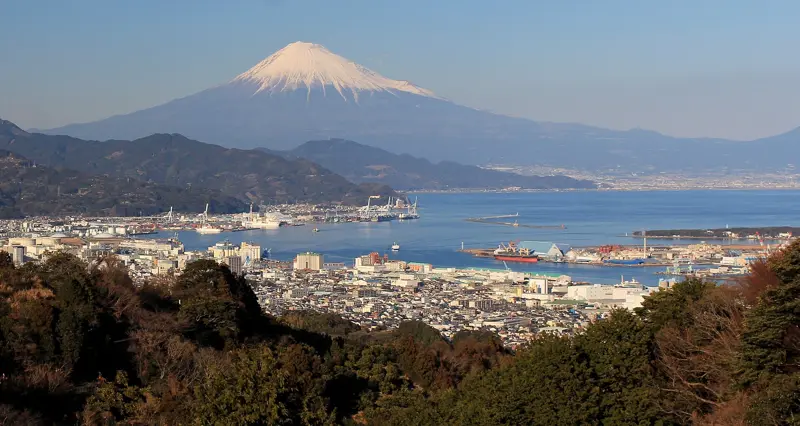
A reader traveling solo on a ship calling at Shimizu from 07:00 to 17:00, after clearing immigration at Nagasaki, asked whether there was time to take the bullet train somewhere for the day. There is, and the honest answer has a twist: from Shimizu you mostly do not need the bullet train. Shimizu has no Shinkansen station. The ordinary Tokaido Line runs straight from JR Shimizu to Mishima, the gateway to the Izu Peninsula, in about 50 minutes for ¥860, and to Atami in about 70 for ¥1,170. Backtracking to Shizuoka for a Kodama gets you there no sooner and costs more than twice as much.
Our first choice for a 10-hour call is Shuzenji, the old hot-spring town in Izu, with a backup for each kind of day: Atami for plum blossom and a 2,000-year-old tree, and Shizuoka city if your call is short or the weather is poor. Every time below was checked on 1 November 2026 against the November weekday timetables; fares and hours come from the operators’ and attractions’ own pages, listed under the article. Weekend timetables differ, so look up your exact trains in Google Maps (it handles all three railways) the evening before.
How much time a Shimizu call gives you
The port’s own FY2026 list has 94 timed calls between 11 January and 29 November 2026. The median call is 9 hours; 41 of them were 10 hours or longer, and the most common arrival is 07:00. Our rule for every plan on this site: off the ship 30 minutes after arrival, all-aboard 30 minutes before departure, and back at the gangway an hour before all-aboard. That takes 2 hours off every call. So a 07:00–17:00 call gives 8 usable hours, from 07:30 to 15:30.
| Trip | Ashore | Call | 2026 calls |
|---|---|---|---|
| Shuzenji | 8 h | 10 h | 41 of 94 |
| Atami | 6.5 h | 8.5 h | 65 of 94 |
| Shizuoka | 4 h | 6 h | 91 of 94 |
Ships tie up at Hinode Pier, usually New No. 2 berth. JR Shimizu Station is about 30 minutes on foot by the port’s own map (we measured 25 to 35) or a 5-to-10-minute taxi. Dream Plaza, 10 minutes’ walk from the ship, runs a free shuttle to the station’s Minato (east) exit in about 10 minutes, but its first bus leaves the station at 9:45, so it helps on the way back, not on an early start. If your ship is listed at Okitsu, a container berth, add the ship’s shuttle to every plan. Your port page and the Shimizu complete guide have the berth detail; check your ship’s date and hours on the cruise calendar.
When the bullet train is worth it
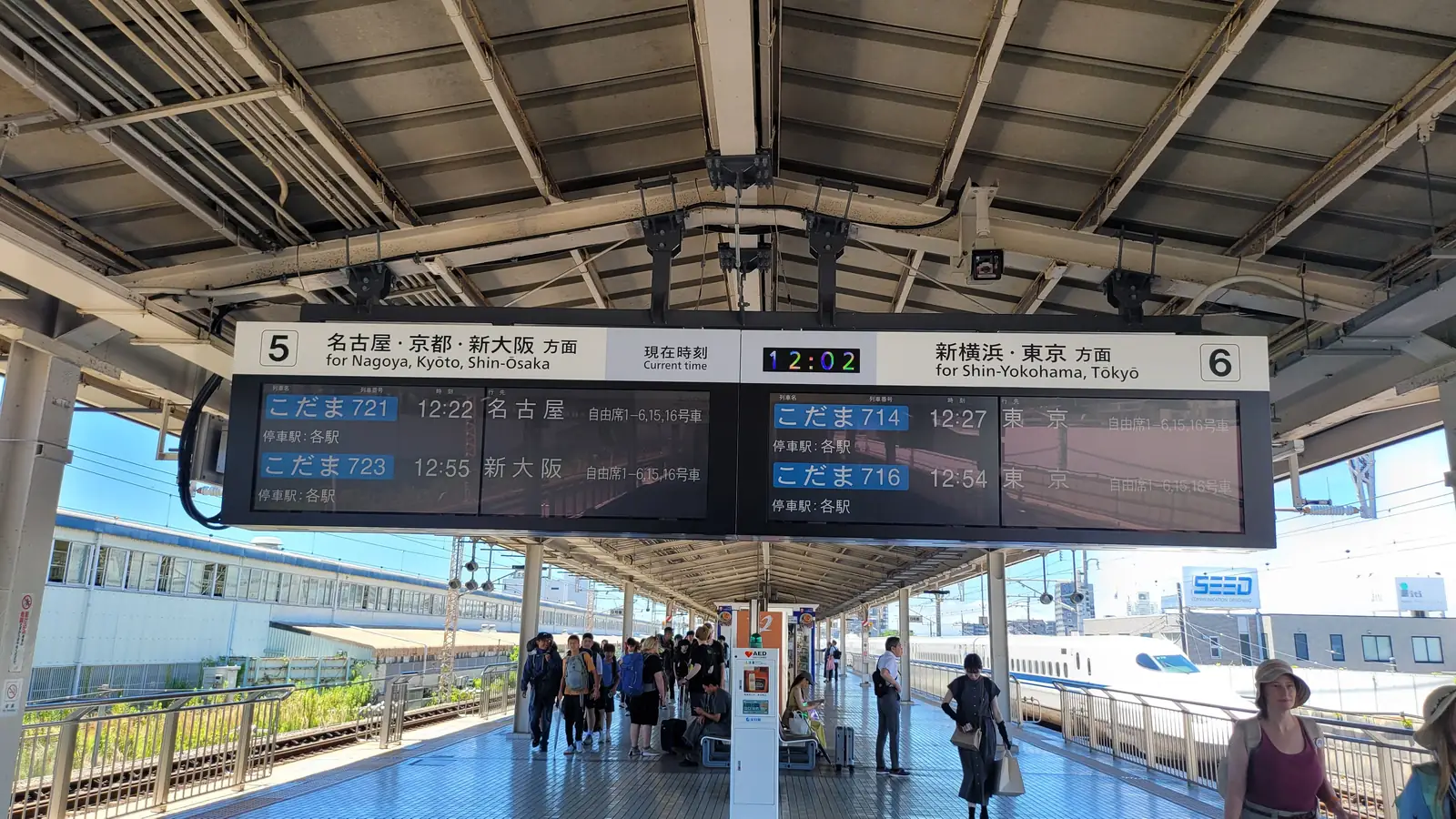
The Kodama from Shizuoka to Mishima takes 25 minutes with one stop at Shin-Fuji; a journey planner prices it at ¥990 fare plus ¥990 unreserved express charge, ¥1,980 in all (check at the machine). Add the 10-minute local from Shimizu back to Shizuoka and the change of platforms, and you reach Mishima no sooner than on the direct local. On our check, the planner did not offer the Shinkansen as the fastest route from Shimizu to either Mishima or Atami in the morning or the afternoon. Use it only as a fallback, if a direct local has just left and the next is far off. The day trips below use the ordinary line.
Plan A: Shuzenji, Izu (needs a 10-hour call)
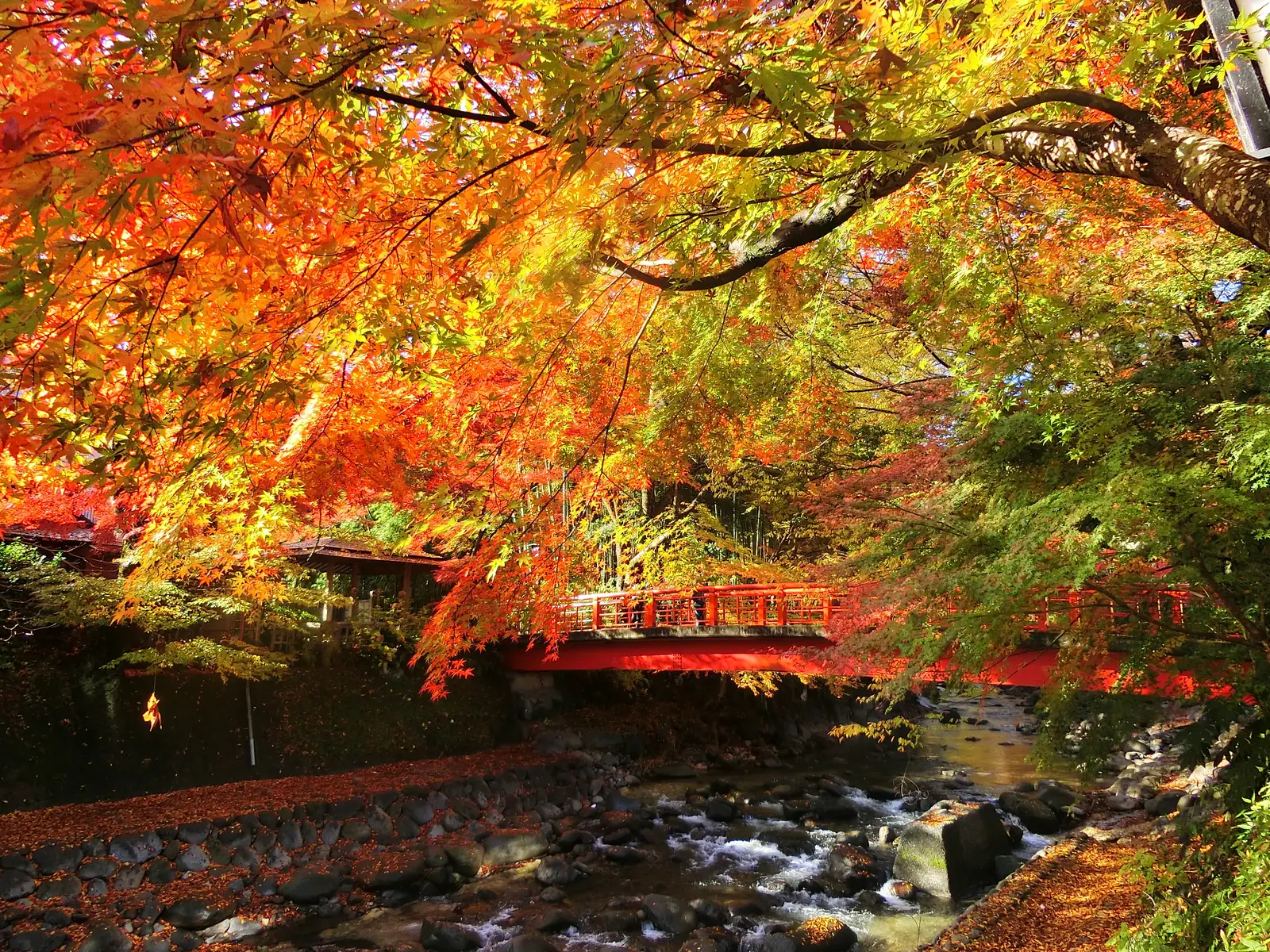
Shuzenji is a hot-spring town in a narrow valley, built around a temple founded in 807 and the Katsura River (the stream is also called the Shuzenji River). The whole town is the attraction: the temple, a bamboo path, red bridges over a rocky stream, and soba with fresh wasabi for lunch.
Getting there. JR Tokaido Line to Mishima, then the Izuhakone Railway’s Sunzu Line to Shuzenji, the last stop: about 35 minutes, trains every 12 to 25 minutes in the daytime, ¥550. From Shuzenji Station, the Tokai Bus to Shuzenji Onsen takes 6 to 10 minutes and costs ¥300; buses run about every 15 minutes in the morning. A taxi is about 10 minutes.
Paying. Suica works on JR and on Tokai Bus, which lists all the national IC cards. The Sunzu Line is different. Since December 2024 every station takes contactless bank cards (Mastercard since 27 May 2025), but press reports of the launch say transit IC cards such as Suica are not accepted; the railway’s own page does not say either way, so check before you go and carry a contactless card or cash for a ticket.
The pass. The Izuhakone Line 1-Day Pass (RAIL & BUS) costs ¥1,200, is sold only to foreign visitors at staffed Sunzu Line stations on showing a passport, and covers the Mishima–Shuzenji train and five Izuhakone Bus routes around Numazu and Izu-Nagaoka. It does not cover Tokai Bus, which runs every bus in this plan. A plain return at ¥550 each way is ¥1,100, so skip the pass. Izuhakone Railway applied on 15 October 2026 to raise fares, with the Sunzu Line change planned for spring 2027; the application’s cap for this distance is ¥650. If that goes through, the pass would come out ¥100 ahead, so check the fare page when you travel.
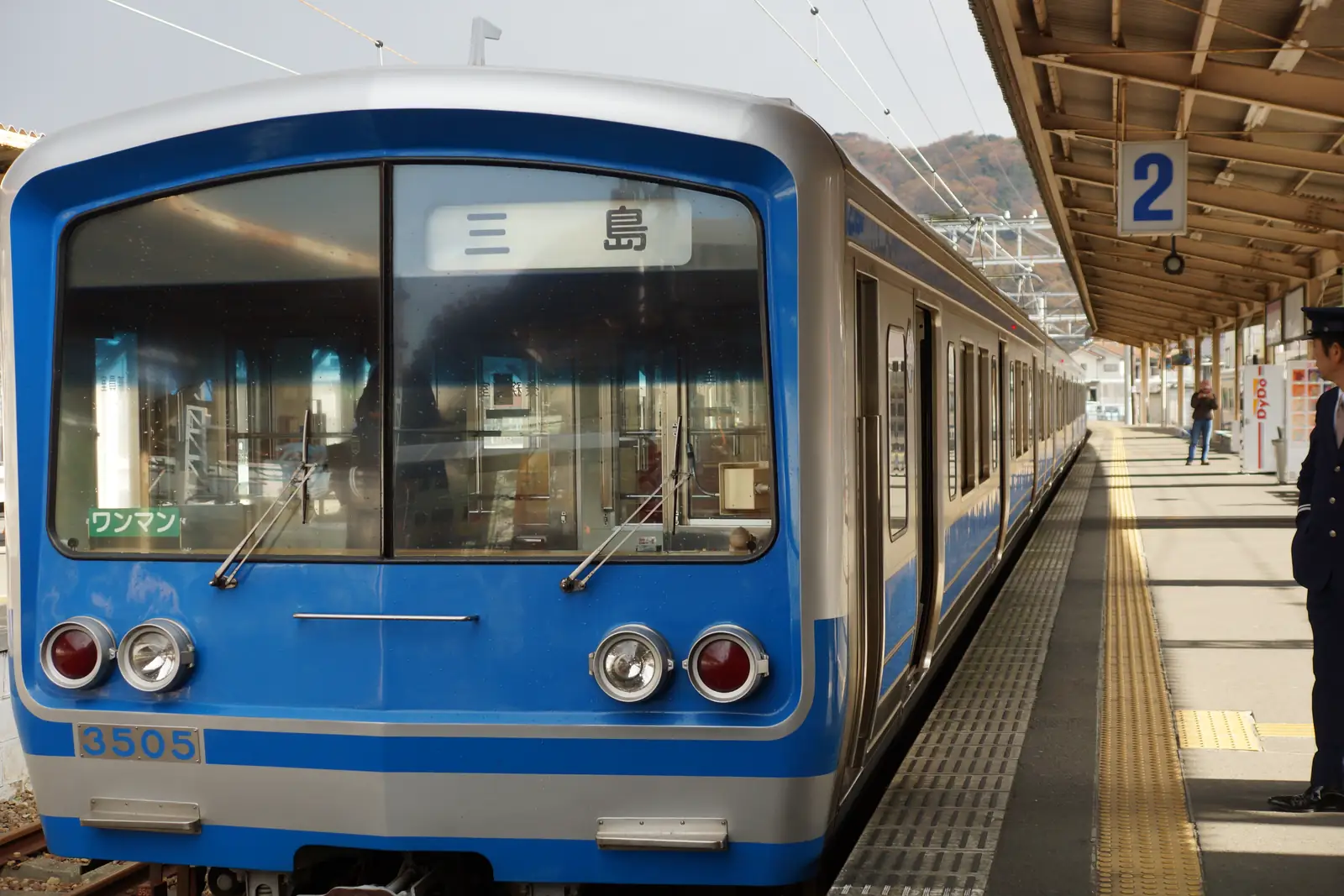
The day, counted back from a 16:30 all-aboard (weekday example, November 2026 timetables):
| Time | Step |
|---|---|
| 16:30 | All-aboard |
| 15:30 | At the gangway. Taxi from JR Shimizu, 5 to 10 minutes; on foot you arrive around 15:50, still 40 minutes before all-aboard |
| 15:15 | Arrive JR Shimizu |
| 14:25 | Tokaido Line local from Mishima, direct to Shimizu, ¥860 |
| 13:40 | Last safe Sunzu Line train from Shuzenji (arrives Mishima 14:20), ¥550 |
| 13:10 | Tokai Bus from Shuzenji Onsen to the station, about 10 minutes, ¥300. Do not count on the 13:29: it arrives three minutes before the 13:40 leaves |
| 11:20 | Back in town: the bamboo path, the bridges, lunch |
| 11:10 | Bus down from the maple grove to Shuzenji Onsen, about 5 minutes, ¥250 |
| 10:35 | Shuzenji Nature Park maple grove (“Momiji-bayashi”), by the bus that leaves Shuzenji Station at 10:25 and passes the Shuzenji Onsen stop a few minutes later, ¥430 from the station |
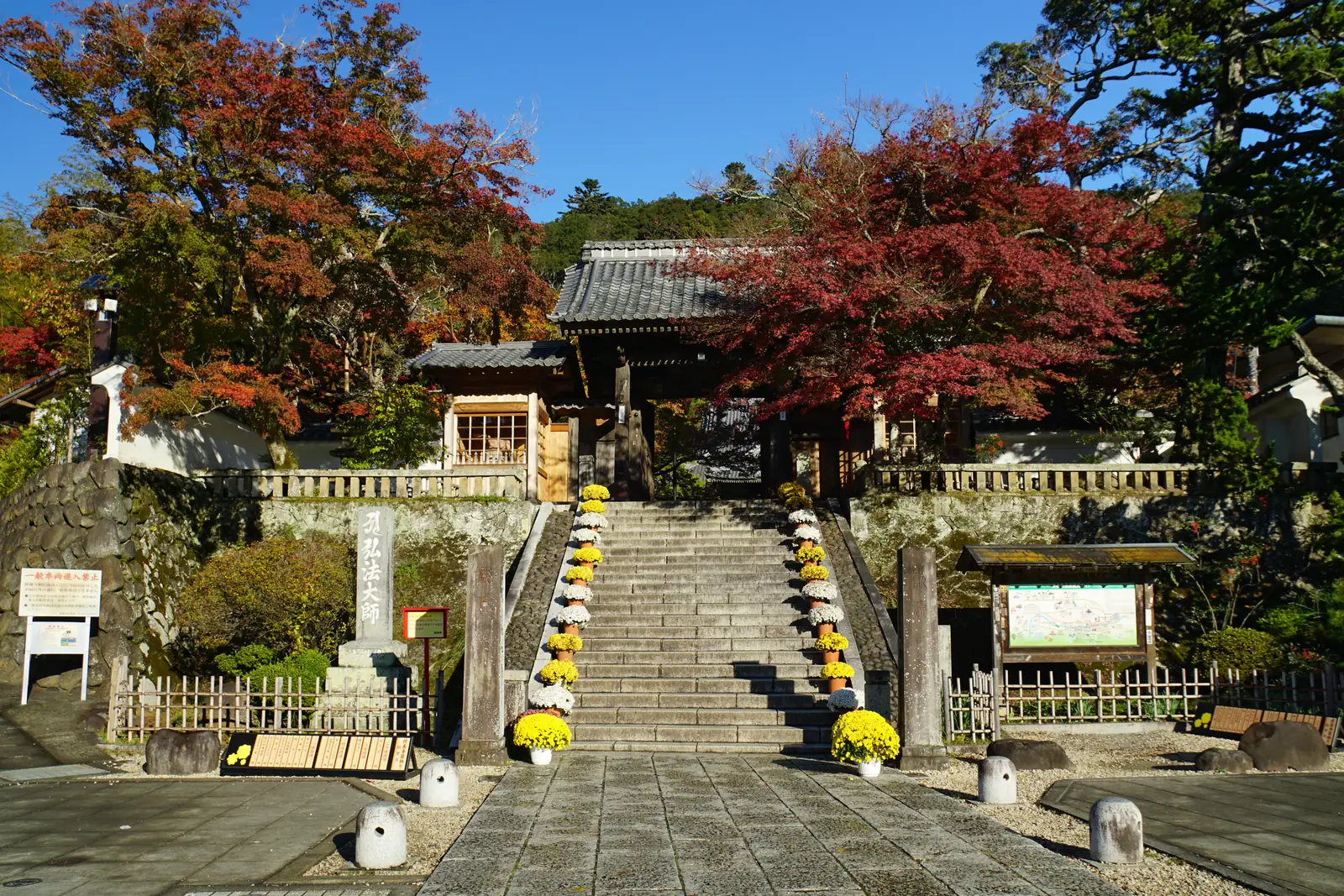
| 09:55 | Shuzenji Temple and Tokko-no-Yu |
| 09:45 | Tokai Bus from Shuzenji Station to Shuzenji Onsen, ¥300 |
| 09:35 | Arrive Shuzenji |
| 09:00 | Sunzu Line from Mishima |
| 08:00 | Tokaido Line local from JR Shimizu, direct to Mishima (arrives 08:55). The 07:35, with a change at Numazu, gets you to Shuzenji at 09:20 |
| 07:30 | Off the ship, taxi to JR Shimizu |
The 13:40 is the line we would not cross. If the maple grove is out of season or you would rather not ride buses up and down, spend the morning in town and leave earlier: the 12:55 from Shuzenji reaches Mishima at 13:35, which leaves time for Rakujuen (below) before the 14:25.
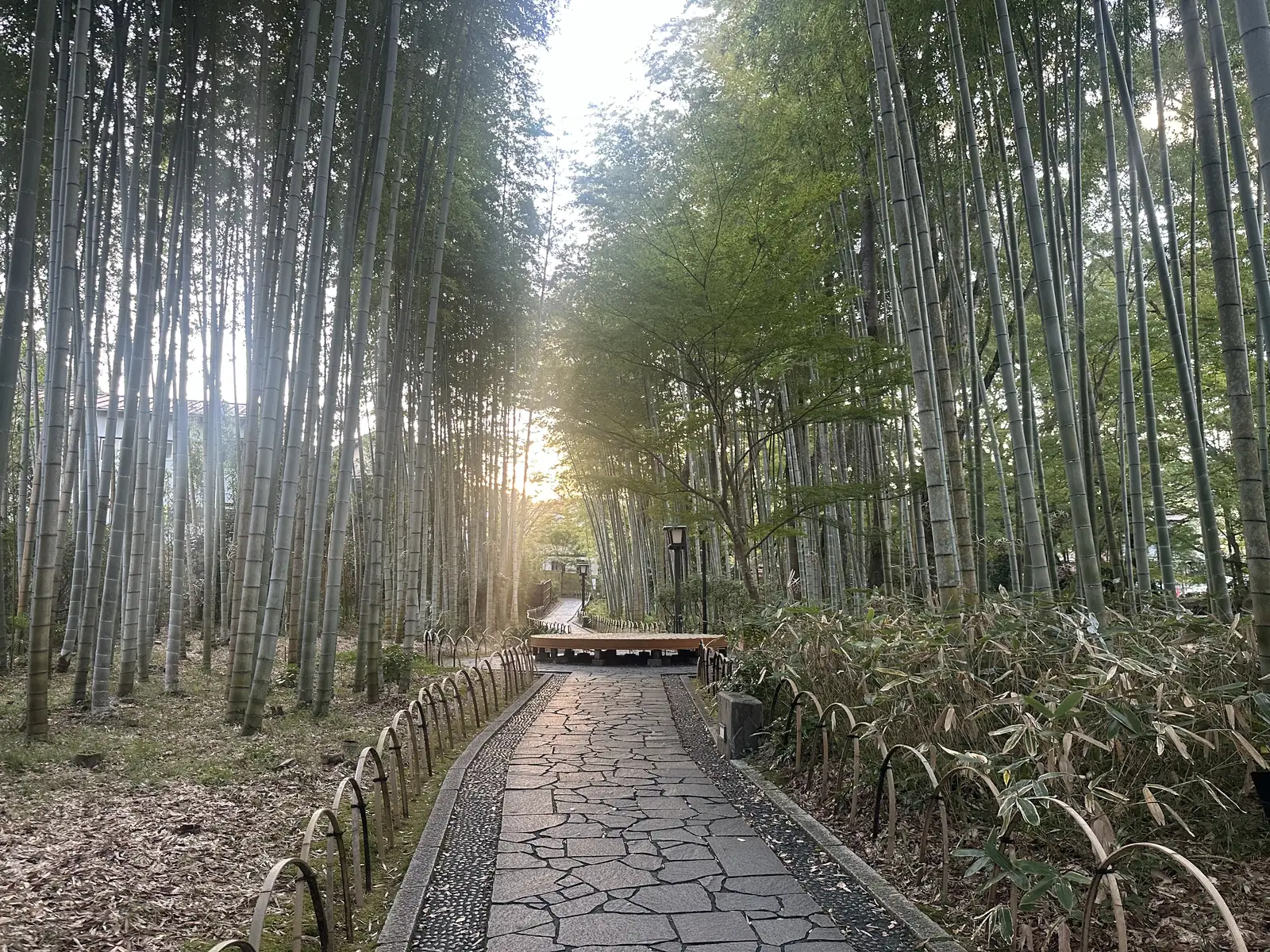
What to see. Shuzenji Temple is said to have been founded by Kobo Daishi in 807; the grounds are open 5:00 to 17:00 and free, and the treasure hall takes visitors 8:30 to 16:30. In the river below the temple, Tokko-no-Yu is the spring the town grew from. It is for looking at: the tourist association says you can neither bathe nor soak your feet there. The free Kawarayu foot bath, six people at a time, is in the little park in front of it. A short walk on from Tokko-no-Yu, Chikurin-no-Komichi is a paved path through a bamboo grove beside the river, lit after dark. Shigetsuden, a small hall Hojo Masako built for her son, is by the tourist association’s account the oldest wooden building in Izu.
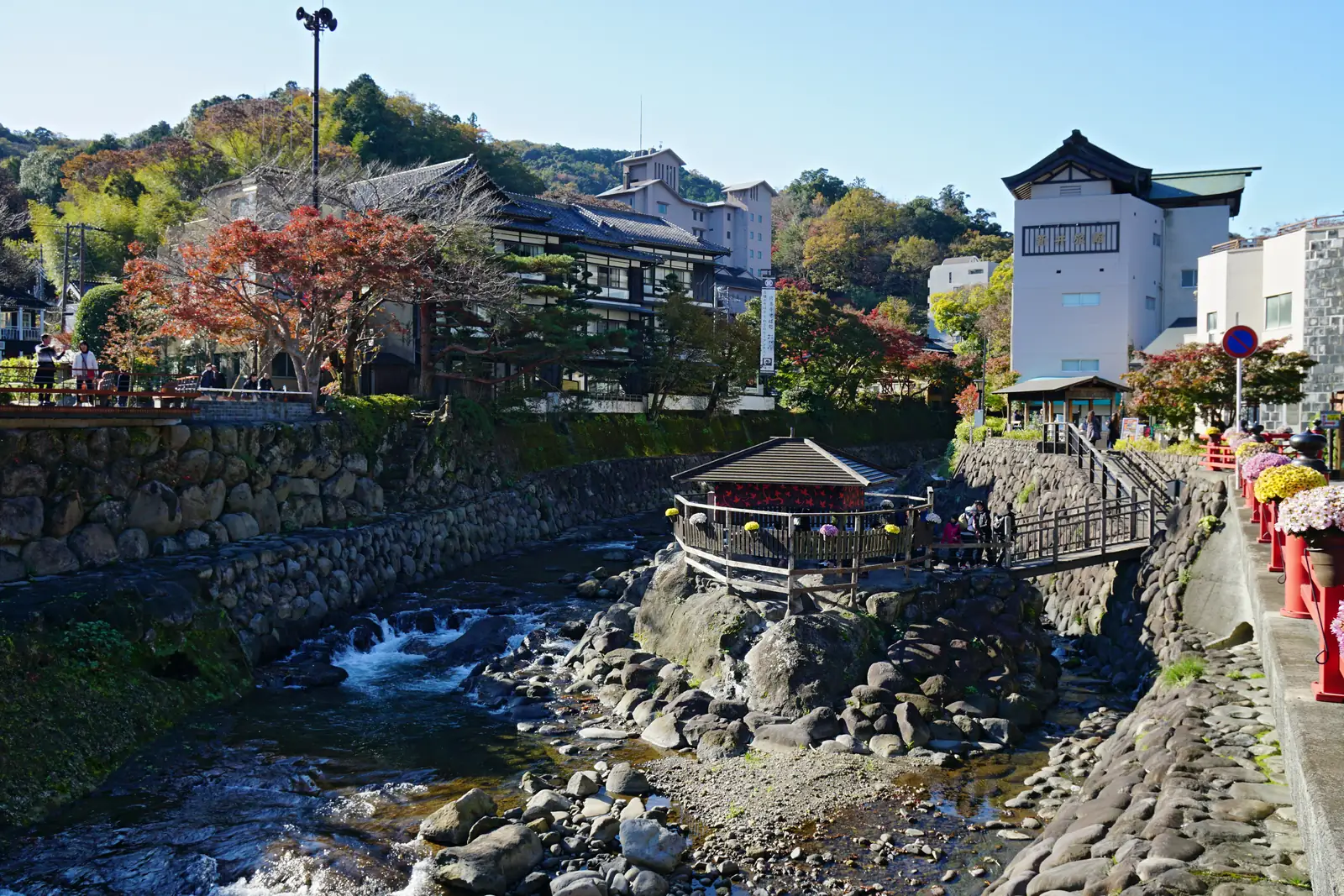
Lunch. Izu grows wasabi, and several soba shops in the onsen town serve buckwheat noodles with a whole fresh root to grate yourself. Many close in mid-afternoon, so eat before 13:00.
Best months. The maple grove in Shuzenji Nature Park is at its best from mid-November to early December, the town from mid-November to mid-December and the temple from late November, by the tourist association’s 2026 guide. Fresh green maples along the bamboo path and the river run from mid-April to mid-June. Shuzenji’s own plum garden, about 1,000 trees and free, blooms from early February to early March. The bamboo, the temple and the river work in every month.
Plan B: Atami (needs an 8.5-hour call)
Atami is the easier day: one direct train each way, no buses needed and far more slack. Go for Atami Baien, a valley garden of plum trees, and Kinomiya Shrine and its camphor tree.
Getting there. The 07:45 Tokaido Line local from JR Shimizu reaches Atami at 08:55, and an Ito Line train one stop on brings you to Kinomiya at 09:05. Buy a paper ticket from Shimizu to Kinomiya at the machine (¥1,180). Kinomiya is on JR East’s line, past the boundary at Atami, and JR Central asks you to buy a ticket for the whole trip when you cross from one IC-card area to the other. From Atami Station there is also a bus to the “Baien” stop, about 15 minutes, on the “Ainohara Danchi” route.
The day, counted back from a 16:30 all-aboard:
| Time | Step |
|---|---|
| 15:30 | At the gangway, taxi from JR Shimizu |
| 15:15 | Arrive JR Shimizu |
| 14:10 | Last local from Atami that keeps the full margin, direct, ¥1,170 (the 14:35 reaches Shimizu at 15:40) |
| 11:45 | Walk down to Atami Station, about 20 minutes by the shrine’s own figure; lunch near the station |
| 10:45 | Kinomiya Shrine and the great camphor, 5 minutes from Kinomiya Station; grounds open 9:00 to 17:00 |
| 09:15 | Atami Baien, 10 minutes on foot from Kinomiya Station |
| 09:05 | Arrive Kinomiya |
| 07:45 | Tokaido Line local from JR Shimizu |
| 07:30 | Off the ship, taxi to JR Shimizu |
What to see. Atami Baien’s plum festival ran from 10 January to 8 March in 2026, with the whole garden in bloom from late January to mid-February; the 2027 festival is set for 9 January to 7 March. During the 2026 festival the garden opened 8:30 to 16:00, and admission was ¥300 for visitors, free for junior-high age and under. Its 469 trees in 60 varieties are not the whole story: the same garden holds an autumn-color festival from late November, which ran 14 November to 6 December in 2026, free, with a foot bath open 10:00 to 16:00. At Kinomiya Shrine the camphor tree is more than 2,000 years old by the shrine’s count, about 24 m around the trunk, and a national natural monument.
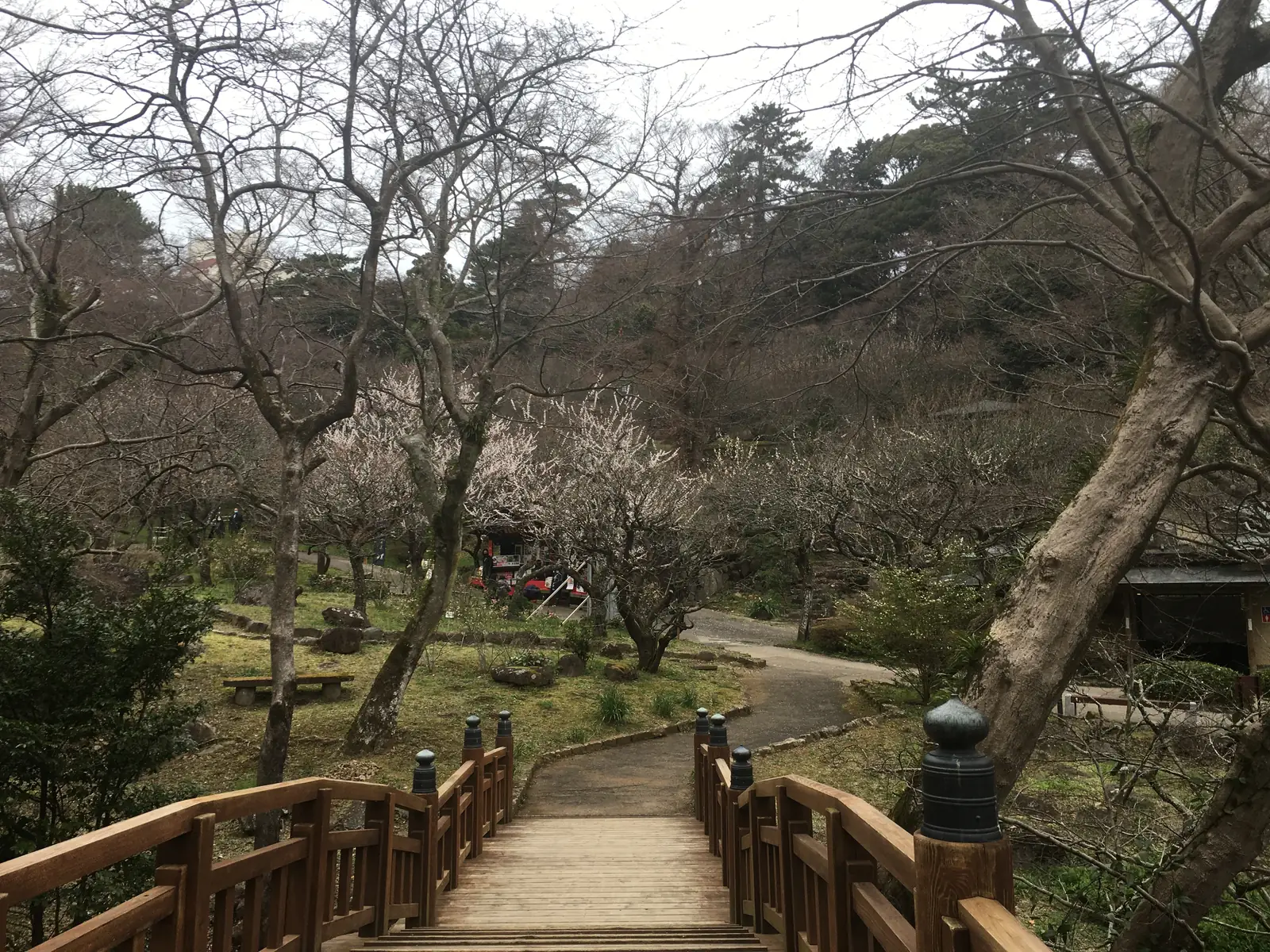
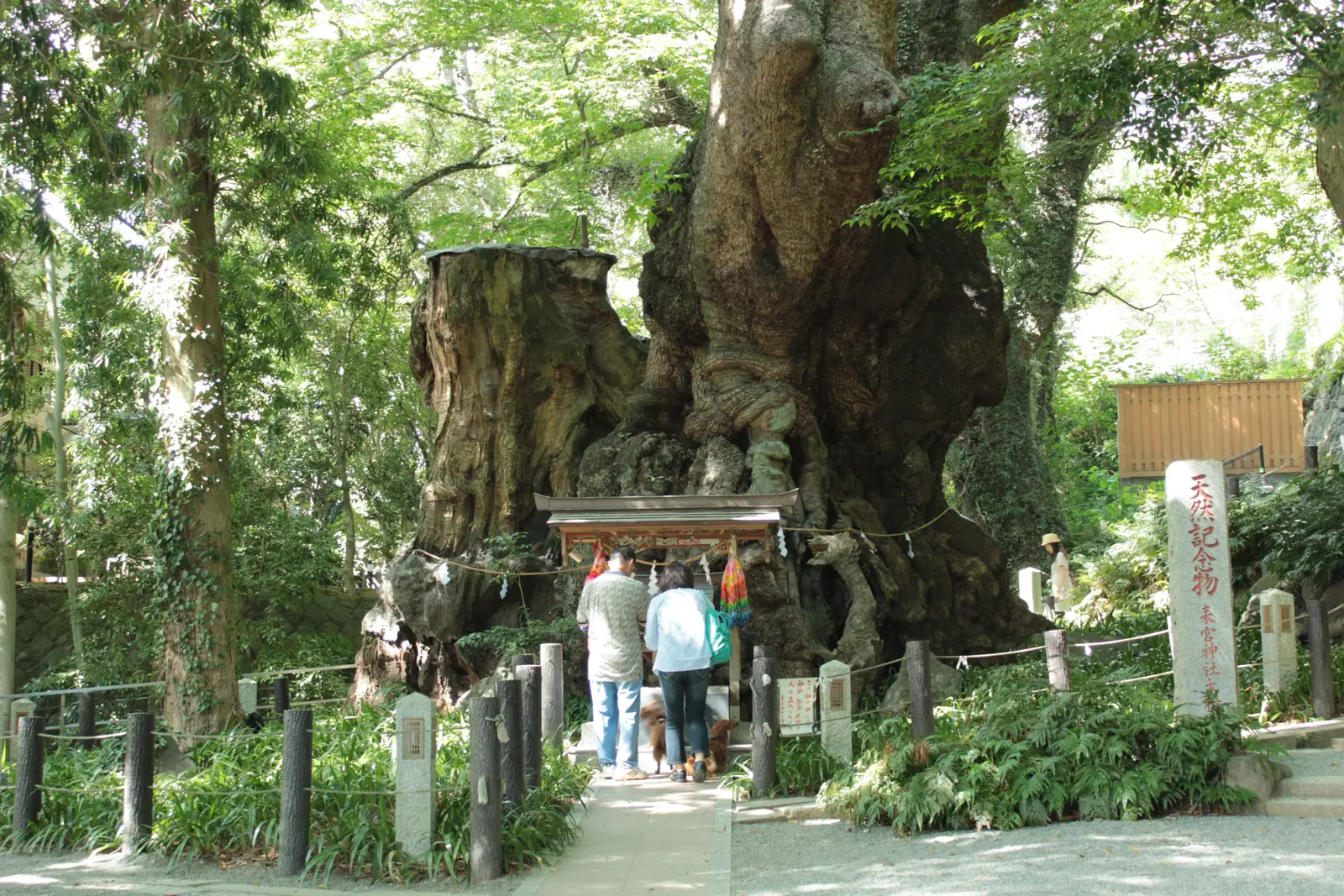
Best months. Late January to mid-February for plum blossom, late November to early December for the autumn color. Outside those weeks the shrine alone is a short morning; pair it with a slow lunch rather than a rush.
Plan C: Shizuoka city (needs a 6-hour call)
If your call is short, the forecast is wet or you would simply rather not watch the clock, Shizuoka is about 10 minutes away on the local line (¥240). Sunpu Castle Park, Tokugawa Ieyasu’s retirement castle, is about 15 minutes on foot from JR Shizuoka Station, and in its corner is Momijiyama Garden, a small stroll garden with a pond and a hill clipped like a tea field.
| Time | Step |
|---|---|
| 15:30 | At the gangway. Walk 25 to 35 minutes from JR Shimizu, or take the free Dream Plaza shuttle (about 10 minutes) and walk 10 |
| about 14:45 | Local train from Shizuoka to Shimizu, about 10 minutes |
| 12:30 | Lunch near Shizuoka Station |
| 10:30 | Momijiyama Garden, then the East Gate and Tatsumi turret |
| 10:15 | Walk from JR Shizuoka, about 15 minutes |
| 10:00 | Local train from JR Shimizu |
The garden and the rebuilt castle buildings open 9:00 to 16:30 (last entry 16:00) and close on Mondays, opening when Monday is a holiday, and from 29 December to 3 January. Admission is ¥150 for the garden, ¥200 for the East Gate and Tatsumi turret, or ¥360 for all three sites. Our page on Sunpu Castle and Shizuoka city has more.
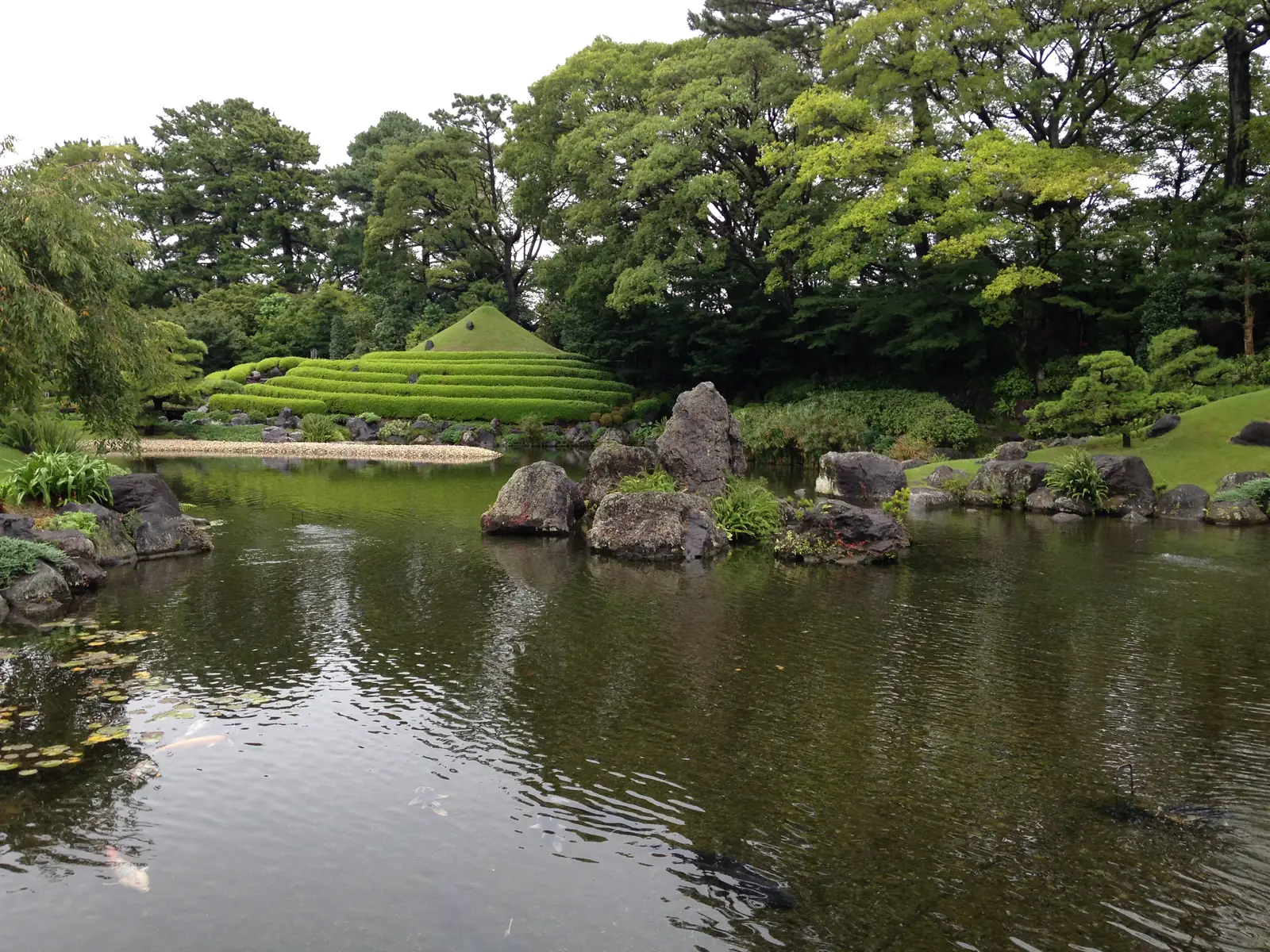
Best months. Cherry blossom around the castle moats in late March and early April (the weather agency’s normal full-bloom date for Shizuoka is 2 April), and the garden’s maples into early December; the park’s own autumn-leaf lunch in 2026 is set for 4 to 6 December.
Add-on: Rakujuen at Mishima
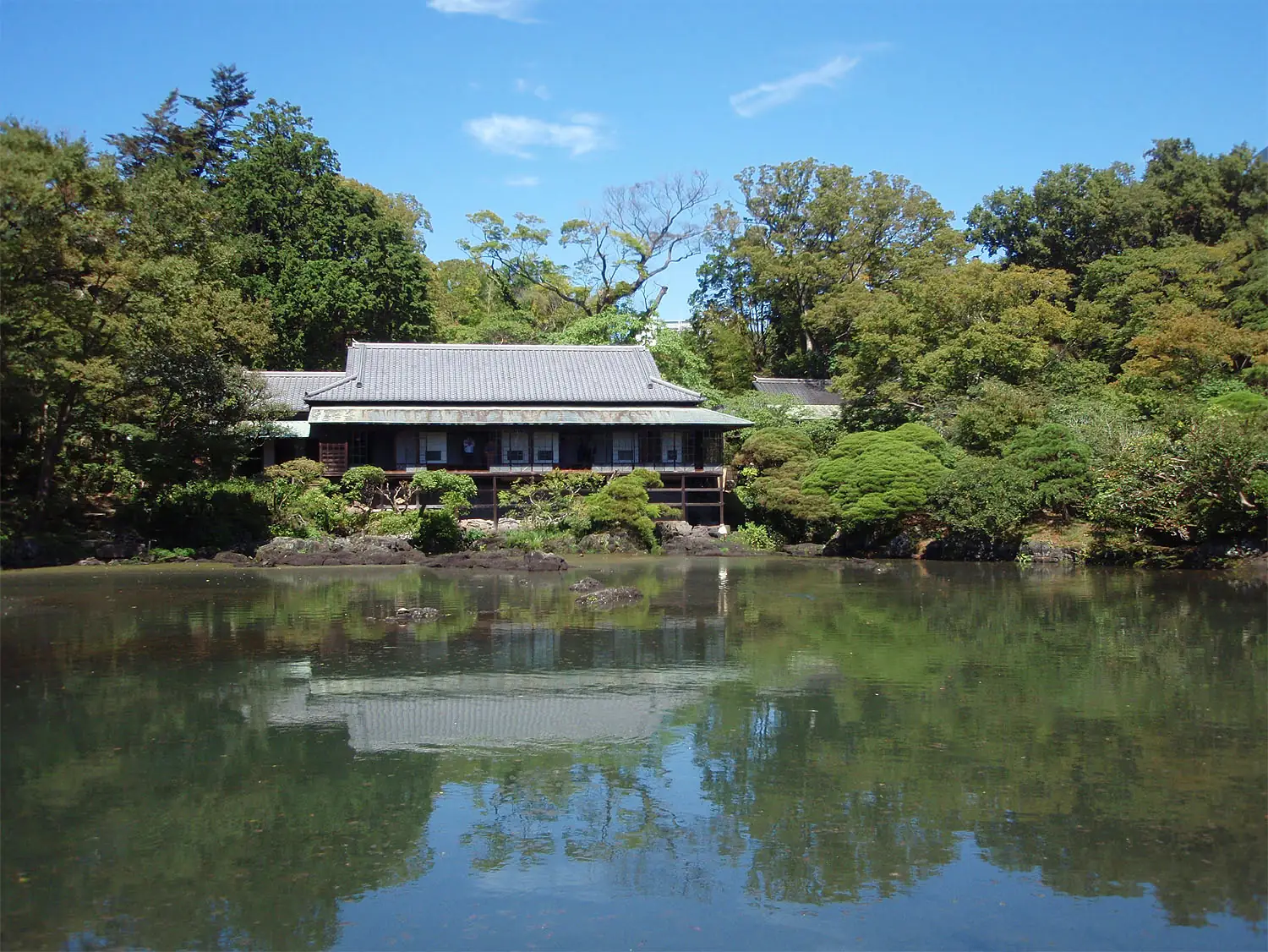
On the Shuzenji day, Rakujuen is 3 minutes on foot from the south exit of Mishima Station: a city park on a lava flow from Mt. Fuji, where spring water from the mountain wells up into Kohama-ike pond beside the Rakujukan villa. It opens 9:00 to 17:00 from April to October and 9:00 to 16:30 from November to March (last entry 30 minutes before), closes on Mondays (the next weekday when Monday is a holiday) and from 27 December to 2 January, and costs ¥300 for adults, free for junior-high age and under. It fits only if you leave Shuzenji on the 12:55 or earlier.
If you would rather not watch the clock
A train day from Shimizu works, but it is a day of connections, and the ship will not wait for a missed bus. If that sounds like hard work on holiday, our honest recommendation is the Fuji Highlights group car tour: it is only for cruise passengers at Shimizu, leaves from the port within an hour of docking and runs six to seven hours, so the timing is the guide’s job. It goes to Mt. Fuji rather than Izu, which is the other reason to stop at Shimizu. The Shimizu guided tours list the rest, and plan your day puts any of these on your own call.
If, like our reader, you cleared immigration at Nagasaki and the ship does not leave Japan before Shimizu, there is no inspection at Shimizu and you simply walk off; our guide to your first Japanese port explains why the first port takes longer.
Guided days at the ports in this article
Shared cars with a guide first; each page says who should skip it. Booked through Viator; there is no tour desk at the pier.

If you book, we may earn a small commission at no extra cost to you. It never decides what we recommend.