Three numbers solve most trouble ashore in Japan. Dial 119 for an ambulance or a fire, 110 for the police, and 050-3816-2787 for help in English at any hour. For the rest there is a staffed counter close by: a police box, a station office, a pharmacy.
Find your problem in the table and tap it. Each card below gives the first move, the steps in order, and the number or the official page.
| Problem | First move | Number or place |
|---|---|---|
| Someone is badly ill or hurt | Call 119 and say “kyukyu” | 119, ambulance and fire |
| A crime or a traffic accident | Call 110 | 110, police |
| You need help in English | Ring the Japan Visitor Hotline | 050-3816-2787, 24 hours |
| Feeling ill, not an emergency | The ship’s medical centre, or a clinic | The official search, in the card |
| You need a medicine | Ask a pharmacist | A “yakkyoku” or a drugstore |
| A lost wallet, phone or bag | Report it at a police box | The nearest “koban” |
| Left on a train or in a taxi | Ask station staff, or the taxi firm | The lines are in the card |
| You need a toilet now | Nearest station or convenience store | Most are free |
| A bag to store | Coin lockers at a large station | ¥300–600 (JNTO) |
| No signal, or a dead battery | Your paper card, then station Wi-Fi | A public telephone |
| Running late for the ship | Phone the port agent | The daily programme has the number |
| The ship has sailed without you | Phone the port agent, then your embassy | Missed the ship in Japan has the order |
| An earthquake or a tsunami warning | Go up, away from the water | High ground |
| Out of yen, or a card declined | Find a 7-Eleven | A Seven Bank ATM |
Emergency numbers: 119, 110 and the English hotline
First: dial 119 for an ambulance or a fire, and 110 for the police, from any phone. The Japan National Tourism Organization (JNTO) lists both as the urgent numbers.
| Number | Use it for | Good to know |
|---|---|---|
| 119 | Ambulance, fire | An interpreter can join in most areas |
| 110 | Police: a crime, a traffic accident | Tokyo’s police say an interpreter joins the line |
| 118 | Japan Coast Guard: an accident at sea | When you are in one or see one |
| 050-3816-2787 | Japan Visitor Hotline: accident, illness, disaster, tourist questions | 24 hours a day, 365 days. English, Chinese, Korean |
| #7119 | Advice by phone: ambulance or not | Japanese only, and not in every prefecture. Use the hotline for English |
| #9110 | Police advice that is not urgent | Weekdays 8:30–17:15, differing by prefecture. English in Tokyo |
A 119 call follows a fixed order. The Fire and Disaster Management Agency’s English guide sets it out:
- Say which service. The operator asks whether it is a fire or a medical emergency. The City of Yokohama gives the two words: “kaji” for a fire, “kyukyu” for an ambulance.
- Say where you are. Give the address. If you do not know it, the agency says to name a nearby building or intersection.
- Say what happened, and the person’s age. Give the symptoms and when they started.
- Give your name and a phone number. The crew may ring back if they cannot find you.
- Send someone to meet the ambulance, if another person is with you.
Language. The fire agency says a fire headquarters can pass a 119 call to a telephone interpreting centre, so three people talk together. As of 1 January 2025, 673 of the 720 fire headquarters had this, all in English, Chinese and Korean. For 110, the National Police Agency’s policy is the same three-way call.
Cost. The City of Yokohama states that it costs nothing to phone 119 and call a fire engine or an ambulance. From a public telephone, 110, 118 and 119 need no coins and no card, NTT East says.
If you cannot get through or be understood, ask a person nearby to call. The Japan Tourism Agency’s Guide for when you are feeling ill prints one line in Japanese that asks for an ambulance. Open its “How to use Medical institutions” tab and show the screen.
What the hotline does. It answers travellers directly and can name medical institutions that see patients in foreign languages. The tourism agency says it does not, as a rule, interpret three-way calls or make bookings.
Illness or injury: the ship, a clinic or an ambulance
First: decide which of three it is. Chest pain, slurred speech, trouble breathing, a sudden severe headache or heavy bleeding means 119 now. Those signs are on the fire agency’s list of reasons to call without hesitation.
- An emergency: call 119. The ambulance takes you to an emergency hospital. The Japan Tourism Agency says you cannot choose which one.
- Not an emergency, and the ship is close: go back on board. Princess Cruises, for one, says its medical centres have full-time doctors and nurses and open at any hour for emergencies.
- Not an emergency, and the ship is far: find a clinic. The tourism agency’s medical institution search filters by prefecture, language, department and credit card. It shows up to 30 results, nearest first, and asks you to phone before you go.
- Take four things. The fire agency’s guide lists your passport, cash or a credit card, and your current medicine. Add your insurance details.
- Be ready to pay on the day. The tourism agency says credit cards are accepted only at major hospitals, and clinics generally take cash only. Ask reception for an estimate first.
- Tell the ship and your insurer. Ring the port agent as soon as a doctor is involved, and keep every receipt. With cash-free travel insurance the agency says no payment is needed, on the insurer’s conditions.
The word for hospital is “byoin”. The #7119 line gives advice from a doctor, a nurse or a paramedic on whether to call an ambulance. The fire agency’s page is in Japanese and does not say the line works in English, so use the Visitor Hotline for that.
The rules on medicine you bring into the country are a separate matter: see bringing your medications to Japan.
Pharmacy: medicine without a doctor
First: for a cold, a headache or an upset stomach, go to a pharmacy or a drugstore and ask the pharmacist. The word to ask for is “yakkyoku”.
- Over-the-counter medicine needs no doctor. The Tokyo Metropolitan Government’s guide says it is sold freely at pharmacies and drugstores.
- Prescription medicine needs a prescription from a medical institution. The same guide gives the route: a doctor, a prescription, then a pharmacy, where a pharmacist prepares it. A prescription is valid for four days.
- Show the medicine on your phone. The Japan Tourism Agency links an English search of over-the-counter medicines, by drug name, part of the body or effect.
- Go in the daytime if you can. The agency says some medicines cannot be sold when the pharmacist is not there.
- Pay twice after a doctor’s visit. The clinic bills the treatment, and the pharmacy bills the medicine separately.
If a medicine you take every day has run out or gone missing, start at the ship’s medical centre. The Tokyo guide gives no route from a prescription written abroad to a pharmacy counter.
Lost property: report it at a police box
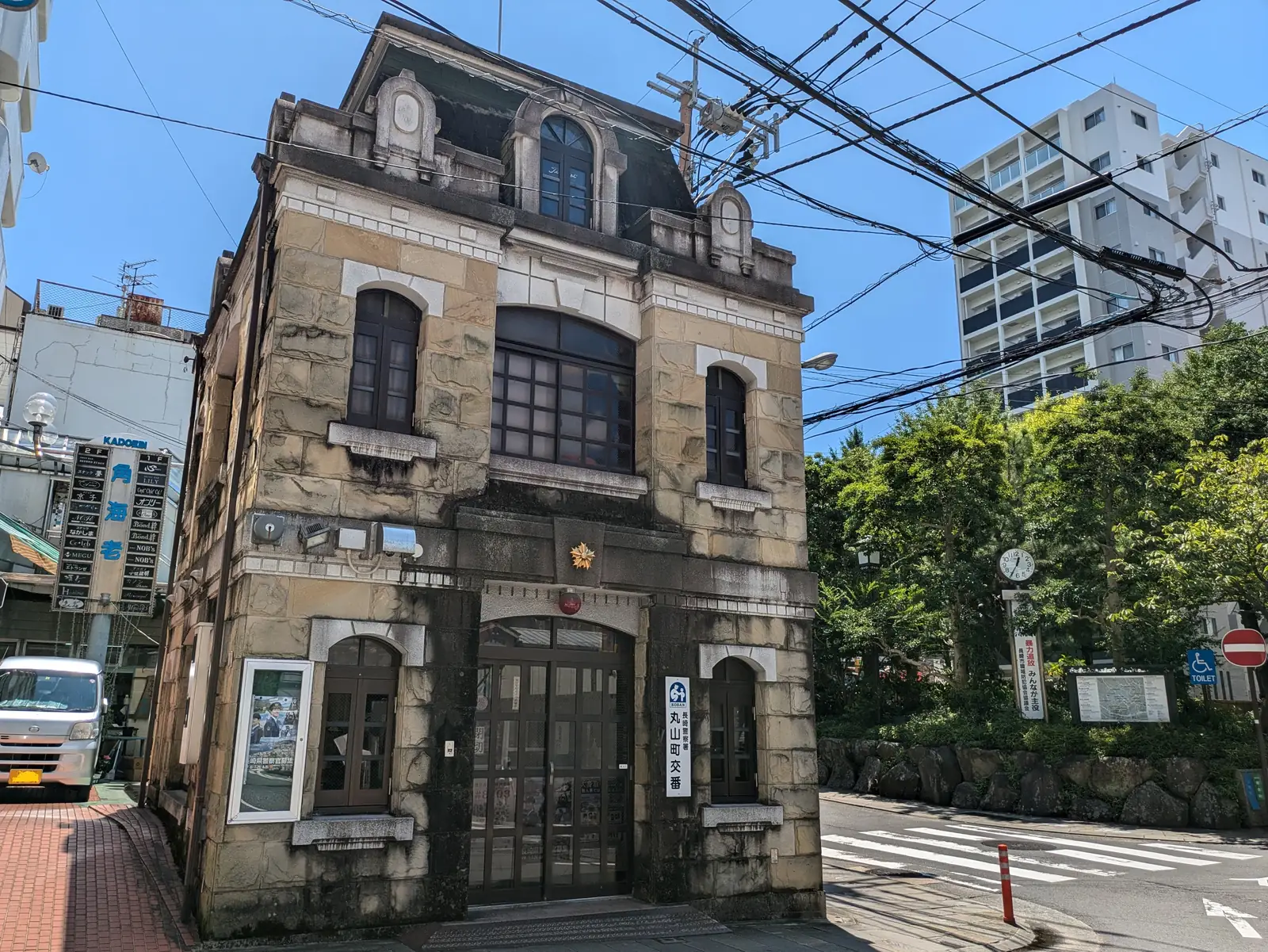
First: go to the nearest police box, called a “koban”, or a police station, and fill in a Lost Property Report. Tokyo’s Metropolitan Police Department publishes the procedure in English, and the steps below are its own. JNTO gives the same first move for the whole country.
- Report in person. Every police office has the form. Tokyo’s police do not accept reports by email, and they print the form on their website to fill in beforehand.
- Give a phone number in Japan. The police say they do not, as a rule, make international calls. Ask the port agent whether you may give theirs.
- Stop the cards and the phone. The police tell you to ring the card issuer or the mobile carrier to prevent misuse.
- Ask at the place as well. Railways and taxi firms keep lost items themselves for a while, usually about a week, Tokyo’s police say.
- Ask for the report’s number. Tokyo’s police hold found property for three months under the Lost Property Act. They can send it to an address in Japan at your cost.
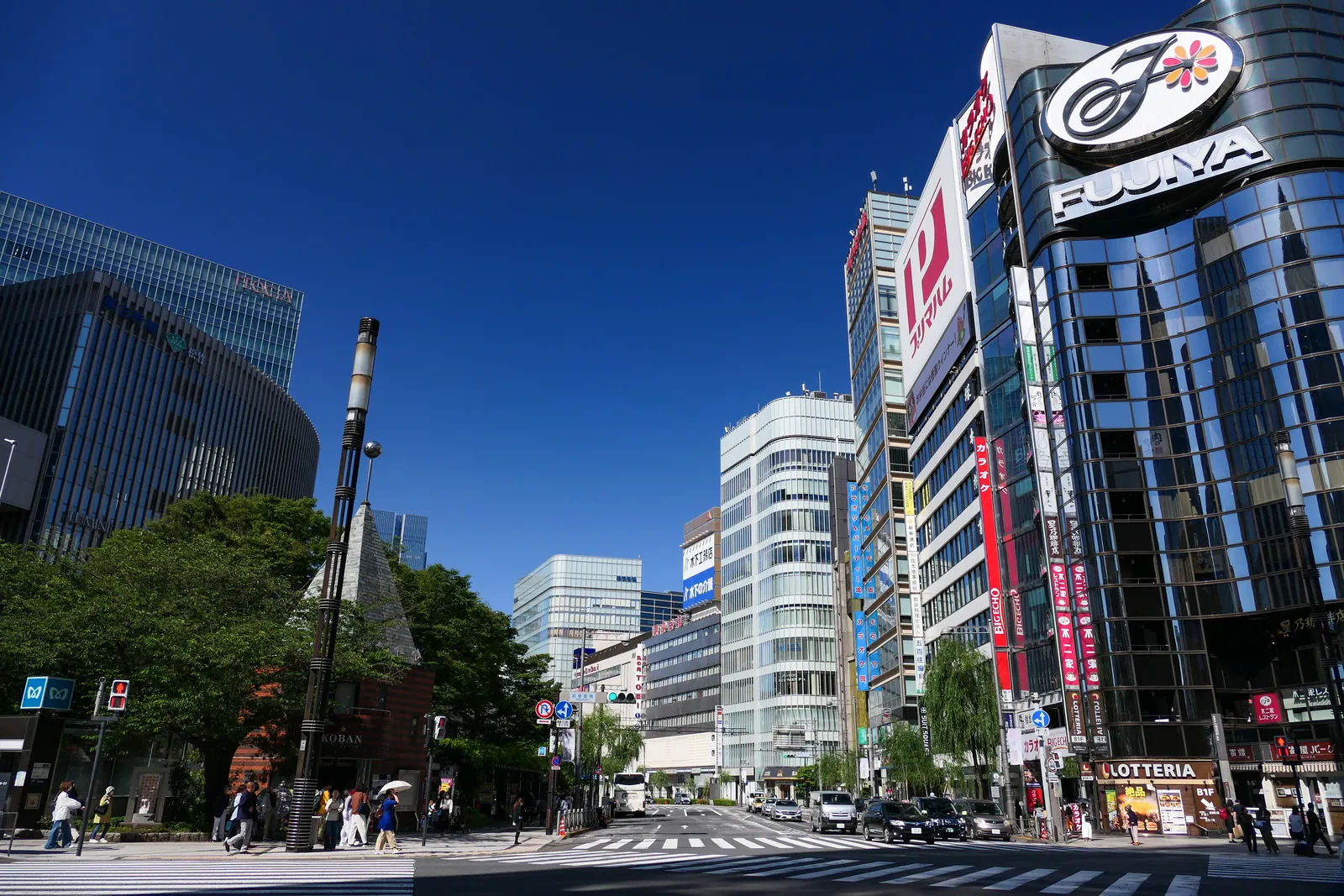
For trains and taxis, ask the operator on the same day:
| Where you left it | Ask first | Phone line |
|---|---|---|
| A JR East train or station | Station staff | 050-2016-1603, English, 10:00–18:00 |
| A JR West train or station | A station, or the operator’s chat | 0570-00-4146 or +81-6-6133-4146, then press 2. 9:00–19:00 |
| A taxi | The firm named on the receipt | No receipt: a police box |
| Tokyo, some days later | The police Lost and Found Center | 0570-550-142, 8:30–17:15 |
JR East runs the lines around Tokyo and north to Tohoku and Niigata. Its Infoline closes over the year-end and New Year holidays. At Tokyo Station the lost property office is on the first floor near the Nihombashi exit, open 8:30–20:00.
JR West’s stations include Kyoto, Osaka, Okayama, Kanazawa and Hiroshima, and its line answers every day in seven languages. For a through train, ask the company that ran it: JR West names JR Central for the Tokaido Shinkansen.
The Tokyo center’s counter is at 1-9-11 Koraku, Bunkyo-ku, by Iidabashi Station. It opens Monday to Friday, 8:30–16:30, and closes on national holidays and from 29 December to 3 January.
A lost passport needs a police report before an embassy can replace it, JNTO says. Tokyo’s police say to ask your embassy first whether it needs one. The cruise side of that is in do you carry your passport ashore and missed the ship in Japan.
Toilets: where they are and how they flush
First: walk to the nearest station or convenience store. The Japan Sanitary Equipment Industry Association names six kinds of place with toilets: airports, stations, hotels, convenience stores, commercial buildings and parks. It says most are free, and JR West says the majority of its stations have them.
- Ask in a shop. The association says some places want you to ask a member of staff first. The word is “toire”.
- Find the flush. It is a lever on the tank or a button on the wall. Some have a sensor to hold a hand over, or a button on the seat’s remote control.
- Read the eight pictures. In January 2017 the association published eight standard symbols: flush, light flush, lid, seat, stop, rear wash, front wash and dryer.
- Leave the call button alone. A button near the flush brings someone to help. The association asks you to press it only in an emergency, such as feeling ill.
- Flush the paper. Toilet paper goes into the bowl, and sanitary items go into the bin beside it. Some toilets run out of paper, so carry tissues.
A multi-function toilet is a larger room. Wheelchair users, people with a stoma and people with babies have priority, and the association says older people may use it too. We found no official English search page for accessible toilets.
Lockers: coin lockers at the station
First: look for coin lockers at the nearest large station. JNTO says most stations and tourist facilities have them, at ¥300 to ¥600 by size. It warns that they fill up quickly in very busy places.
| Source | What it says | Price and limit |
|---|---|---|
| JNTO, nationwide | Lockers at most stations. Many newer ones take IC transit cards | ¥300–600 |
| JR East group, Multi-Ecube lockers | Cashless only: an IC card or a QR code, no cash | ¥300–1,000 by size. Three days at most |
| JR West | Lockers at every Shinkansen station and at major stations | When full: six stations store luggage |
- Check how it takes payment before you load it. Some lockers take coins and some take only a card. The JR East group’s Multi-Ecube lockers take no cash.
- Photograph the locker number and the nearest exit sign. A large station has many banks of lockers.
JR West’s six stations with temporary luggage storage are Kyoto, Shin-Osaka, Osaka, Okayama, Kanazawa and Hiroshima.
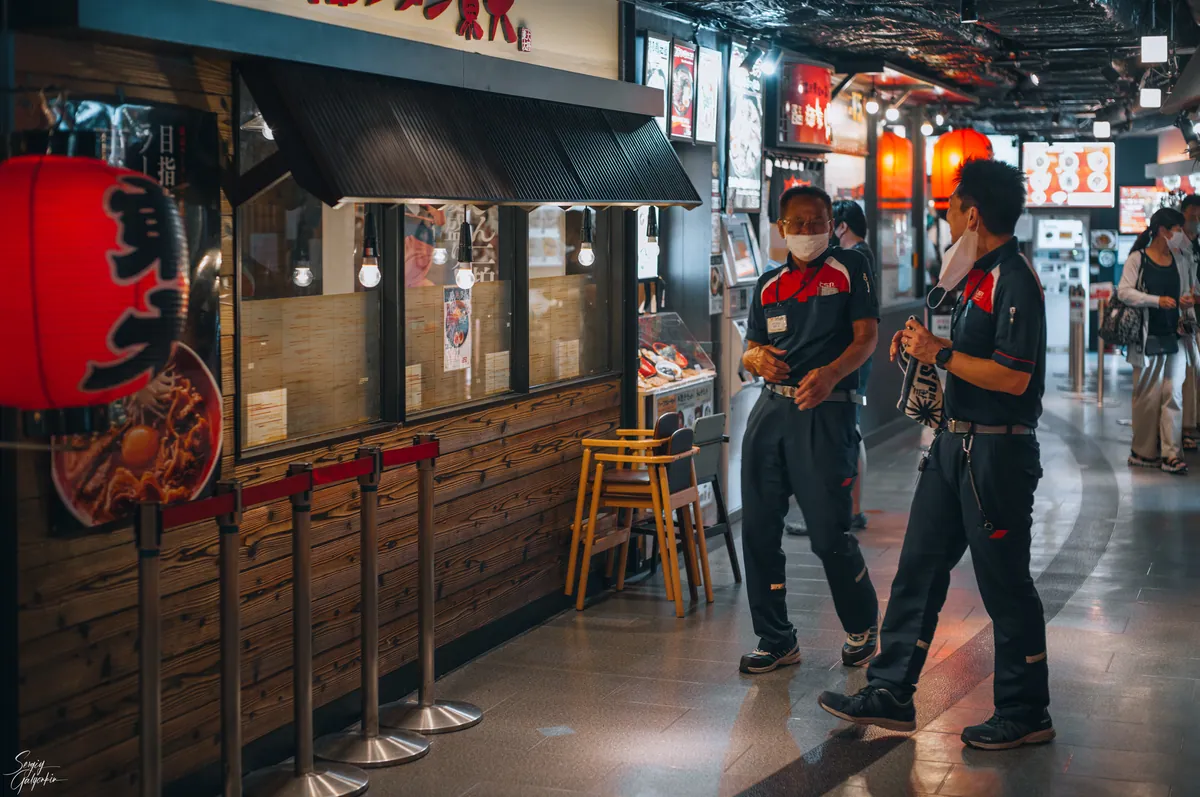
Counters with the “Hands-Free Travel” logo store luggage or send it on, JNTO says. Its usual limits are 160 cm for the three sides added together and 25 to 30 kg. Sending cases between the ship, a hotel and the airport is covered in luggage forwarding and the cruise terminal.
No signal or a dead battery: paper, Wi-Fi, a public telephone
First: take out the paper card you wrote on board. It carries the ship’s name, the berth, the port agent’s number and the time to be back. A taxi driver or a police officer can act on it without your phone.
- Find station Wi-Fi. JR East says free Wi-Fi is available at its major stations. JR West offers JR-WEST Free Wi-Fi wherever its mark is shown.
- Have an email address ready. The Japan Tourism Agency says free Wi-Fi for visitors usually asks you to register one and accept the terms.
- Use a public telephone. It takes coins or a phone card. For 110, 118 or 119, lift the receiver and dial; if the phone has a red emergency button, press it first.
- Ask at a tourist information centre. JNTO counts more than 1,500 certified centres across the country.
JNTO’s Japan Free Wi-Fi list of major locations names the big convenience-store chains and the JR groups among its partners, so a 7-Eleven, Lawson or FamilyMart is the nearest place to try. We found no official page on public charging points and name none: carry a power bank.
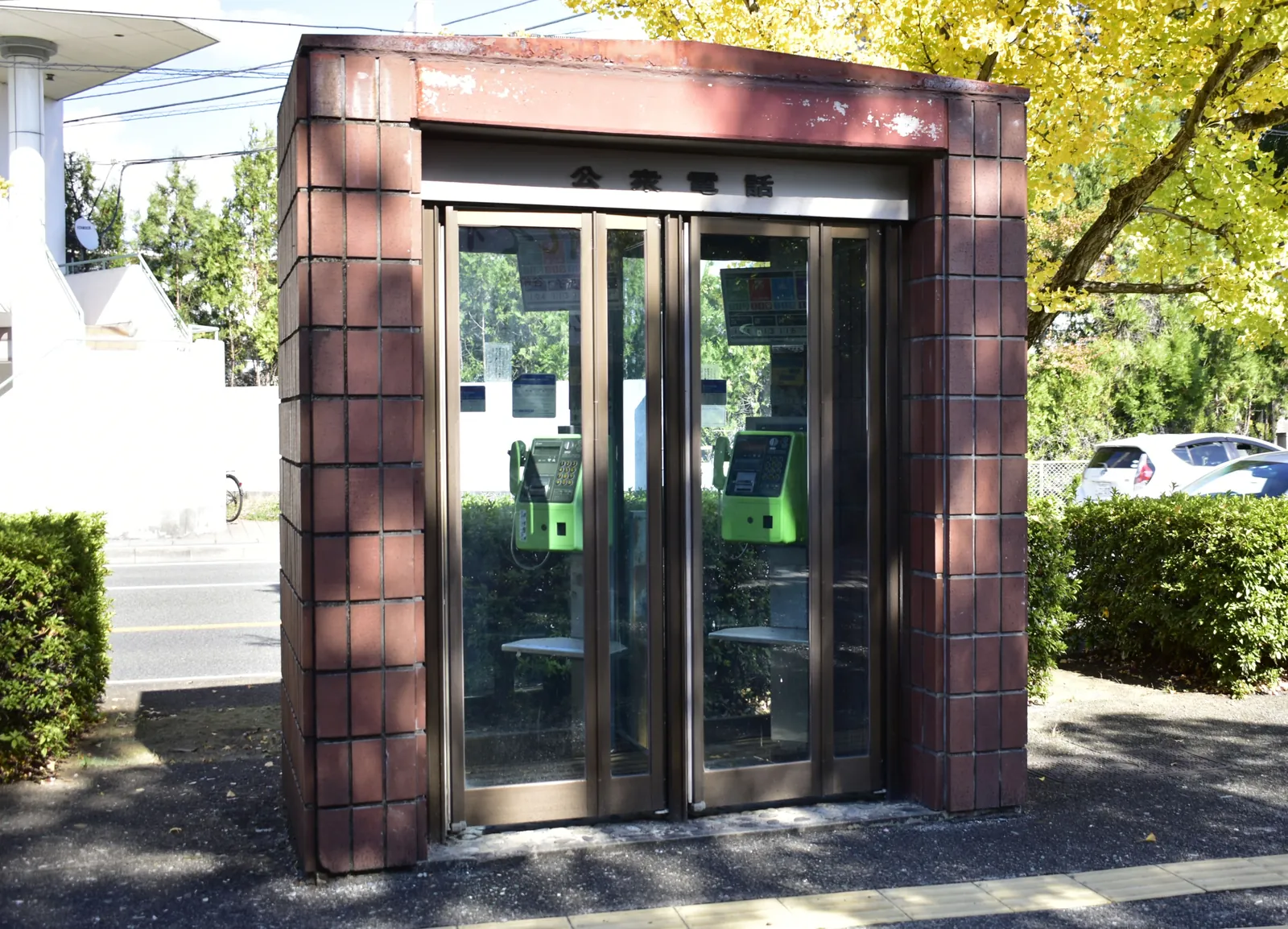
A data plan that works ashore is the better fix. The setup is in money, Wi-Fi and eSIM for a Japan cruise.
Running late: phone the port agent first
First: phone the port agent, whose name and number are printed in the ship’s daily programme. Princess Cruises tells guests who miss the ship to contact the agent at once, using the details in the onboard newsletter. The agent then contacts the ship for you.
- Say five things. The ship, your name and cabin, where you are, how you are travelling, and when you can reach the berth.
- Take a taxi and show the berth’s address. Each port’s page prints the terminal’s address in Japanese where the port publishes one: start from all ports. How taxis work is in taxis at a Japanese cruise port.
- If the ship has gone, stay at the port. The steps and the costs are in missed the ship in Japan.
The way to avoid this call is a margin: this site’s rule is to be back at the gangway an hour before all-aboard. All-aboard is usually 30 minutes before departure, and the daily programme prints it. That puts you at the gangway 90 minutes before the ship sails, not 60.
Earthquake or tsunami warning: go up, away from the water
First: protect your head while it shakes. Then, if you are near the sea and the shaking was hard, or gentle but long, go to high ground at once. The Japan Meteorological Agency says a tsunami can arrive before a warning is issued.
- Go up. The agency says to leave coastal and river areas for high ground or a tsunami evacuation building. The Japan Tourism Agency adds: watch the people around you and go where they go.
- Stay away from the berth. Waves come repeatedly, and the tourism agency says not to go near waterfronts until the warning is lifted. A pier is a waterfront.
- Wait for the all-clear. The meteorological agency says not to leave the evacuation place until warnings are cleared.
The tourism agency’s Safety tips app pushes earthquake and tsunami warnings in English and 14 other languages. Every step, and what the ship does, is in earthquake or tsunami warning on a Japan cruise day. The three warning levels are on the meteorological agency’s English tsunami page.
Money: the two ATMs that take overseas cards
First: find a 7-Eleven. Seven Bank says its ATMs there give yen on cards issued overseas, day or night, every day of the year.
| ATM | Where | Hours | Limit and cards |
|---|---|---|---|
| Seven Bank | Over 28,000 ATMs in 7-Eleven stores | 365 days. Visa and Mastercard 24 hours | ¥100,000 a withdrawal. Visa, Mastercard, UnionPay, American Express, JCB and two more brands |
| Japan Post Bank | Post offices, and compact ATMs in FamilyMart stores | Mon–Sat 7:00–23:00. Sundays and holidays 7:00–21:00 | ¥50,000 a transaction. Visa, Plus, Mastercard, Maestro, Cirrus, JCB, UnionPay and one more |
Seven Bank’s screens work in English and nine other languages. Japan Post Bank says its hours differ from one ATM to another, and that a fee of ¥220 may apply with certain cards.
When a card is refused:
- Ask for less. Seven Bank says to lower the amount and try again. A card read by its magnetic stripe stops at ¥30,000.
- Try the other bank’s machine. Both banks say a card can be refused even when it carries the right mark.
- A PIN error is the issuer’s to fix. Seven Bank says to contact the company that issued the card. Write that number down before you sail.
How much cash a port day takes, port by port, is in how much cash you need for a Japan port day.
On the day, in order: six things before you leave the ship
Do these on the ship’s Wi-Fi, before the gangway. Each one makes a card above work.
- The daily programme. Photograph the port agent’s name and number and the all-aboard time. Write both on paper as well.
- The ship and the berth. Write the ship’s name and today’s berth in English. Your ship’s page under ships names the berth at each port, and the port’s page gives the terminal’s address in Japanese.
- Your passport’s photo page. Photograph it, with both sides of the landing permit if the ship issued one.
- Your insurance. Note the policy number and the insurer’s emergency phone number.
- The hotline. Save 050-3816-2787 as a contact. JNTO’s number for calls from overseas is +81-50-3816-2787: try it if the short form fails.
- A pin on the berth. As you step onto the pier, drop a pin in your map app.
Then, ashore:
- One pocket. Keep the ship card, the permit or passport, the paper card and some yen together.
- Turn back early. Be at the gangway 90 minutes before the ship sails.
- If a step fails. No agent’s number in the programme: ask Guest Services before you go. Phone dead: the paper card and a public telephone. Something lost: the police box first, then the agent.
Every source below was read on 16 and 17 November 2026. Numbers and hours change, and the linked official pages have the final word.