You can take a taxi from a Japanese cruise berth without a word of Japanese. The meter is the price, nobody tips, and the driver reads the place name off your phone. This page gives the official fare in 16 fare zones, the apps that work at each port, and a taxi card for 25 berths.
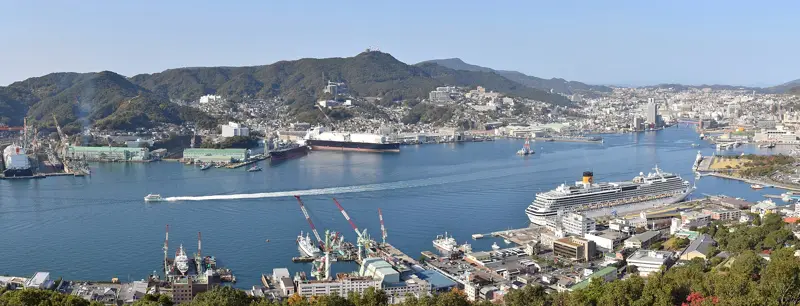
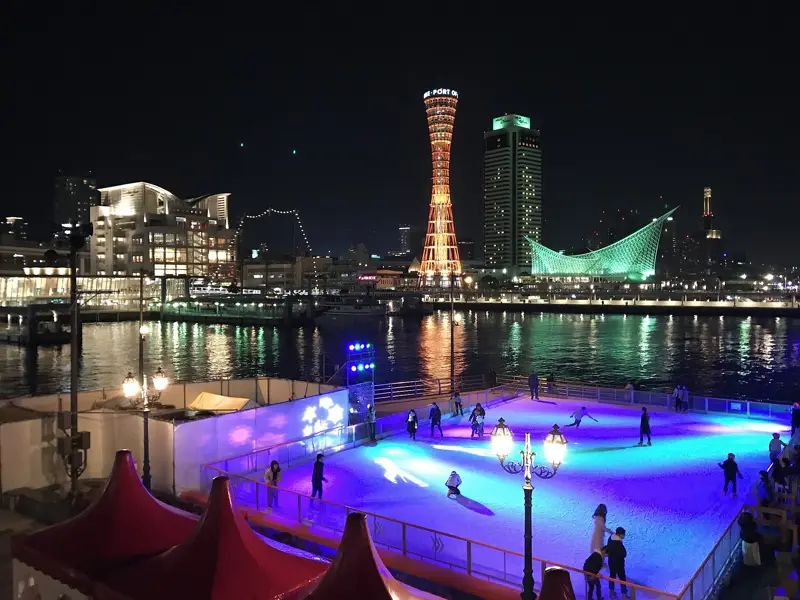
The rides are short. Kobe’s city office puts Sannomiya about 6 minutes from the cruise terminal by taxi. Nagasaki’s port puts the railway station about 10 minutes from Matsugae.
Carry yen for the ride. The Japan National Tourism Organization (JNTO) says cards “can generally be used in major city taxis”. It adds that cash may be the only option in the countryside.
Taxi basics: six things to know before the gangway
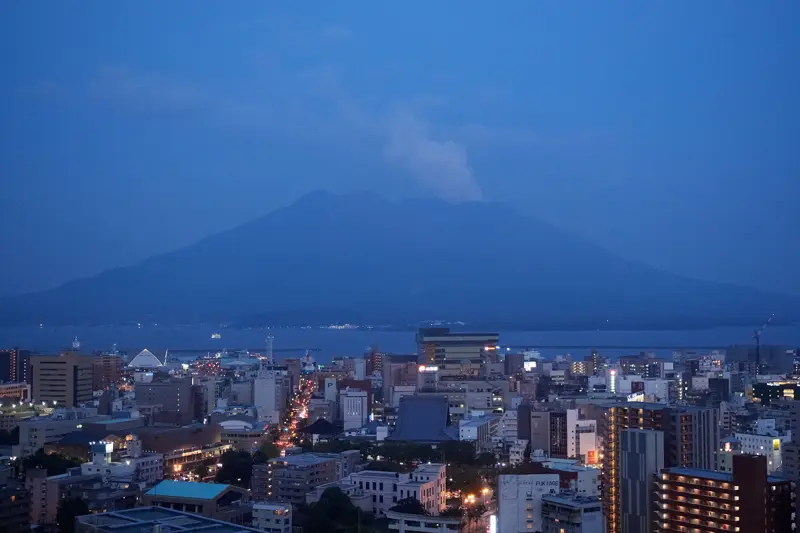
- A rank at the pier, at the main berths. Marine Port Kagoshima has a taxi rank in front of the terminal. Kanazawa’s cruise terminal has 20 bays for taxis and similar cars. At Ishigaki the city says a few taxis often wait on ship mornings, but advises booking.
- The meter is the price. “Fares are calculated by distance on the meter,” says JNTO. The Tokyo Hire-Taxi Association adds that meters are regulated by law and inspected every year.
- No tip. Drivers “do not expect or accept tips” (JNTO).
- Leave the door alone. It opens and closes by itself (JNTO).
- Red means free. The sign at the front of the car is colour-coded: red for available, green for occupied (JNTO).
- Show the place, do not say it. JNTO advises having the destination written in Japanese. The cards further down do that for your berth.
Fares by port: the official tariff
Taxi fares in Japan are approved zone by zone by the regional Transport Bureaus. The table gives the upper fare for a standard car in each port’s zone, as the bureau’s notice prints it. Large and extra-large cars have higher fares in the same notices.
| Port (fare zone) | First fare | Then | Source and date |
|---|---|---|---|
| Aomori (Aomori zone) | ¥700 for 0.9 km | ¥100 per 256 m | Tohoku bureau, table as amended 29 May 2026 |
| Fukuoka (Fukuoka city block) | ¥600 for 1.1 km | ¥100 per 287 m | Kyushu bureau, from 1 July 2026 |
| Hakodate (Hakodate A zone) | ¥700 for 1.35 km | ¥100 per 267 m | Hokkaido bureau, from 1 December 2025 |
| Hiroshima (Hiroshima city zone) | ¥800 for 1.45 km | ¥100 per 300 m | Chugoku bureau, from 5 December 2025 |
| Ishigaki and Miyakojima (Okinawa remote islands) | ¥500 for 1.136 km | ¥100 per 463 m | Okinawa General Bureau, from 14 August 2023 |
| Kagoshima (Kagoshima block) | ¥770 for 1.3 km | ¥50 per 145 m | Kyushu bureau, from 1 April 2026 |
| Kanazawa (Ishikawa zone) | ¥700 for 1.22 km | ¥100 per 226 m | Hokuriku-Shinetsu bureau, from 25 May 2026 |
| Kobe (Kobe city zone) | ¥700 for 1.3 km | ¥100 per 225 m | Kinki bureau, from 27 November 2025 |
| Kochi (Kochi zone) | ¥650 for 1.0 km | ¥100 per 298 m | Shikoku bureau, from 30 November 2026; before that ¥560, then ¥80 per 269 m |
| Nagasaki and Sasebo (Nagasaki mainland block) | ¥770 for 1.0 km | ¥100 per 263 m | Kyushu bureau, from 3 August 2026 |
| Nagoya (Nagoya zone) | ¥500 for 0.91 km | ¥100 per 232 m | Chubu bureau, from 14 October 2025 |
| Naha (Okinawa main-island zone) | ¥650 for 1.65 km | ¥100 per 350 m | Okinawa General Bureau, from 24 August 2026 |
| Osaka (Osaka zone) | ¥600 for 1.2 km | ¥100 per 231 m | Kinki bureau, from 5 November 2025 |
| Shimizu (Shizuoka zone) | ¥700 for 1.17 km | ¥100 per 285 m | Chubu bureau, from 25 November 2025 |
| Tokyo (23 wards, Musashino, Mitaka) | ¥500 for 1.0 km | ¥100 per 232 m | Kanto bureau, from 20 April 2026 |
| Yokohama (Keihin zone) | ¥500 for 1.0 km | ¥100 per 214 m | Kanto bureau, from 16 March 2026 |
Three things add to the distance fare.
- Slow traffic. The meter also counts time. In Tokyo that is ¥100 for every 1 minute 25 seconds below 10 km/h (Tokyo Hire-Taxi Association).
- Late night. From 22:00 to 05:00 the fare is 20% higher. The Tokyo association, the Ishikawa notice and the Tohoku bureau’s fare rules all print that figure. Few port days reach those hours.
- Expressways. If the driver takes one, the toll is added to your fare (JNTO).
Turning a distance into a fare
Take the first fare, then add one step for each further stretch of distance, rounding up. The Hokuriku-Shinetsu bureau works one example itself: Kanazawa Station to Kenroku-en (兼六園), 3.2 km, comes to ¥1,600. The bureau notes that the real fare is higher, because time is charged as well.
Pier to town: the times the ports publish
Few ports publish a taxi fare. Most publish a time. Tap a place name below to see the route and the distance in Google Maps, then apply the tariff above.
| From the berth | To | By taxi or car | Published by |
|---|---|---|---|
| Kagoshima, Marine Port | Tenmonkan (天文館) | about 30 min, about 8 km | Kagoshima Prefecture Tourism Federation |
| Kobe Port Terminal | JR Sannomiya Station (三ノ宮駅) | about 6 min | City of Kobe |
| Nagasaki, Matsugae | JR Nagasaki Station (長崎駅) | about 10 min | Nagasaki Port |
| Kanazawa cruise terminal | JR Kanazawa Station (金沢駅) | about 15 min | Kanazawa Port Promotion Association |
| Tokyo International Cruise Terminal | Tokyo Station (東京駅) | about 25 min | Tokyo Port Terminal Corporation |
| Fukuoka, Chuo Wharf | JR Hakata Station (博多駅) | about 10 min | City of Fukuoka |
| Osaka, Tempozan | Osaka Station (大阪駅) | about 20 min | City of Osaka |
| Kochi New Port | Harimaya-bashi, city centre | 25 min | Japan Tourism Agency port guide |
| Aomori port (wharf not stated) | Aomori Station (青森駅) | 5 min | Aomori Port Internationalization Committee |
| Ishigaki cruise berth | Town centre | about 10 min | City of Ishigaki |
Kagoshima is the one port here with a published fare list. The tourism federation’s taxi map of November 2021 prints ¥3,100 to Tenmonkan and ¥5,100 to Sengan-en (仙巌園), about 12 km and 50 minutes away. The Sakurajima ferry terminal is ¥3,700 and 34 min (the federation’s figure). The map calls these estimated minimums, and fares have risen since: in April 2026 the Kagoshima first fare went from ¥700 to ¥770.
Kagoshima’s rank can run short. The federation says the wait at the rank can be about 30 minutes when a large ship is in. The city, it adds, is short of taxis. A taxi booked in advance comes to a quay nearer the ship instead of the rank. The Kagoshima guide sets out the shuttle and the tram as the other ways into town.
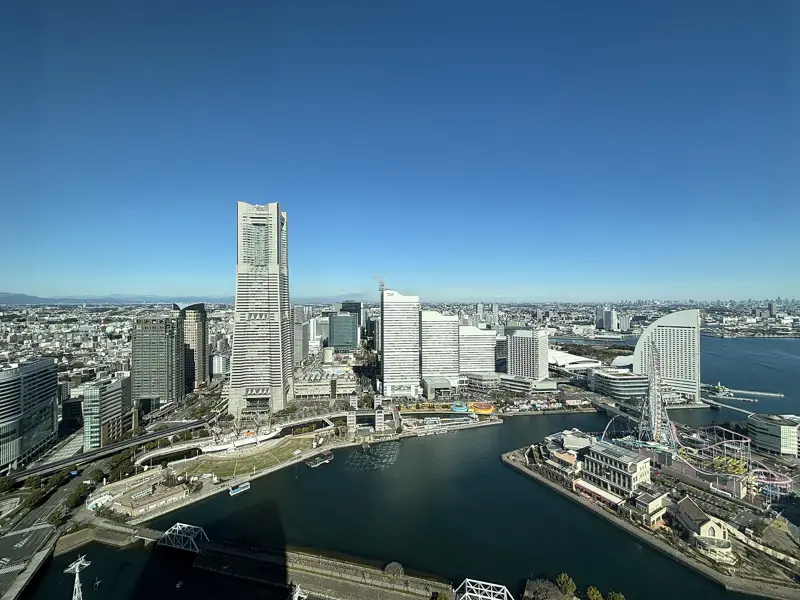
Yokohama’s Daikoku Pier is the one to plan a taxi for. The city’s page gives no walk from a station, only two city bus routes, from Yokohama Station and Tsurumi Station. It warns that the buses can be very crowded on ship days and suggests considering a taxi. The Yokohama guide covers all three terminals.
Apps: which one works at your port
JNTO names four taxi apps that offer an English service: GO, Uber, DiDi and S.RIDE. All four call a taxi to where you stand, and each publishes a list of the places it serves. An app needs mobile data ashore, so sort that out first: see money, Wi-Fi and eSIM.
| App | Where its own list says it works | Sign-up and payment | Know this |
|---|---|---|---|
| GO | Areas in all 47 prefectures, including every city in the fare table except Ishigaki and Miyakojima | A mobile number that receives an SMS code. Visa, Mastercard, JCB, American Express or Diners Club through GO Pay | GO’s help page says some foreign numbers cannot register from outside Japan. If that happens, allow location access and try again once you are in Japan |
| Uber | Cities in all 47 prefectures, among them Kagoshima, Nagasaki, Sasebo, Kobe, Yokohama, Hiroshima, Shizuoka, Naha, Hakodate, Aomori, Kanazawa, Kochi, Fukuoka, Nagoya and Osaka. Not Ishigaki or Miyakojima | The payment method in your Uber account | The fare is the price on the taximeter. A booking fee of up to ¥680 is charged separately |
| DiDi | Ishigaki, Miyakojima, Naha, Nagasaki, Sasebo, part of Kagoshima, Kobe, Yokohama, Hiroshima, Shizuoka, Hakodate, Aomori, Kanazawa, Kochi, Fukuoka, Nagoya, Osaka and Tokyo, among others | A credit or debit card registered in the app | The only one of the four whose list names Ishigaki and Miyakojima |
| S.RIDE | Tokyo, Yokohama, Nagoya, Osaka, Kanazawa, Hiroshima, Sapporo, Sendai and a few more cities | Not stated on its area page | Useful only in those cities |
GO marks several port areas “some areas excluded” without saying which: Kagoshima, Nagasaki, Sasebo, Shizuoka, Hakodate, Aomori, Kochi, Fukuoka and the Okinawa main island, which includes Naha. Open the app at the pier and see whether a car shows before you rely on it. The first ten minutes ashore covers buses and shuttles if it does not.
Show the driver: the taxi card in Japanese
Hold the phone up, point at the line, and say “onegai shimasu” (please). Screenshot the cards you need tonight, so that they work without a signal.
Jump to your berth card: Tokyo Bay and the Pacific coast · Kansai, the Inland Sea and Shikoku · Kyushu and Okinawa · Hokkaido, Tohoku and the Sea of Japan.
The berth names below are written as each port authority or city writes them. Seven of these ports are shown with more than one berth, so read the berth name in your ship’s daily programme before you go ashore. If it names a berth that is not here, ask the ship’s guest desk to write it in Japanese.
For the sights, each port’s day-plan page lists its main places in Japanese under “Show this to a taxi driver”: see Kagoshima, Nagasaki and Kobe.
Tokyo Bay and the Pacific coast
Yokohama has three terminals, and Nagoya has two piers. Tokyo and Shimizu are shown with their main berth.
Kansai, the Inland Sea and Shikoku
Kobe and Hiroshima each have two berths. Osaka and Kochi are shown with their cruise terminal.
宇品外貿第5バースHiroshima-kō Kurūzu Tāminaru, Ujina Gaibō Dai-go BāsuHiroshima Port Cruise Terminal, Ujina foreign-trade berth No. 5
Kyushu and Okinawa
Fukuoka and Naha each have two berths. Nagasaki, Kagoshima and Ishigaki are shown with their main berth.
泊ふ頭8号岸壁Naha Kurūzu Tāminaru, Tomari Futō Hachi-gō GanpekiNaha Cruise Terminal, Tomari Wharf berth No. 8
Hokkaido, Tohoku and the Sea of Japan
Hakodate uses three wharves. Aomori and Kanazawa are shown with their cruise terminal.
函館クルーズターミナルWakamatsu Futō, Hakodate Kurūzu TāminaruHakodate Cruise Terminal, beside JR Hakodate Station
新中央埠頭Aomori-kō Kokusai Kurūzu Tāminaru, Shin-Chūō FutōAomori Port International Cruise Terminal, Shin-Chuo Wharf
On the day, in order
- The night before, on the ship’s Wi-Fi. Read your berth in the daily programme and screenshot its card. Screenshot the Japanese name of where you are going, and the route map from the table above. Install one app if your port is on its list.
- What to carry. Yen for both directions, worked out from the fare table, and a little more for traffic. How much cash for a port day has the wider sums.
- At the pier. Join the line at the rank and take the first car. Stand back from the door: it opens by itself.
- In the taxi. Show the place name. If you mean to pay by card, show the card question before the car moves. The meter starts at the first fare in the table.
- Paying. Pay the figure on the meter, plus any toll, and nothing more. Show the receipt line if you want one.
- When to start back. Be at the gangway an hour before all-aboard. All-aboard is usually 30 minutes before departure and your daily programme prints it, so aim for 90 minutes before the ship sails, on ship time.
- Finding the taxi back. JNTO notes that outside the big cities taxis can usually be found in front of the railway station. Go there, or call one with the app, and show your berth card. In a port with several berths the berth name matters more than the word “port”.
- If no taxi comes. A large ship can empty a rank, as Kagoshima’s federation warns. Try the app, then the nearest station. The hour in hand is there for this.
- If you are going to be late. Missed the ship in Japan sets out whom to call, in order.
Half days and long trips: hire by the hour or book a car
A taxi can also be hired by time. The same bureau notices set a time-based fare for a standard car, and the table gives its upper limit.
| City | Time-based fare, standard car |
|---|---|
| Tokyo | ¥5,900 for the first hour, then ¥2,700 per 30 min |
| Yokohama | ¥6,050 for the first hour, then ¥2,730 per 30 min |
| Shimizu (Shizuoka zone) | ¥3,850 for the first 30 min, then ¥1,920 per 15 min |
| Aomori | ¥3,740 per 30 min |
| Kobe | ¥3,600 per 30 min |
| Hiroshima | ¥3,600 per 30 min |
| Nagasaki | ¥2,950 per 30 min |
| Kagoshima | ¥2,730 per 30 min |
Agree the hours and the total with the driver or the company before you set off. In Tokyo the taxi association also lists sightseeing taxis with certified driver-guides. A three-hour course costs from about ¥18,000 with the guide fee. Parking, admission and tolls are extra.
For a whole day outside the city, compare the meter with a car and driver booked ahead. A private car at Japan’s cruise ports puts the two prices side by side, port by port.
On two days we think the booked car is the safer choice. A rank may not be waiting when you come out of a sight far from town. This is our judgement, not a rule.
- Kagoshima to Chiran. The Chiran samurai gardens and Peace Museum tour is a private tour by car.
- Nagasaki in half a day. The Nagasaki highlights half-day tour is private and by car.
Wheelchairs and universal-design taxis
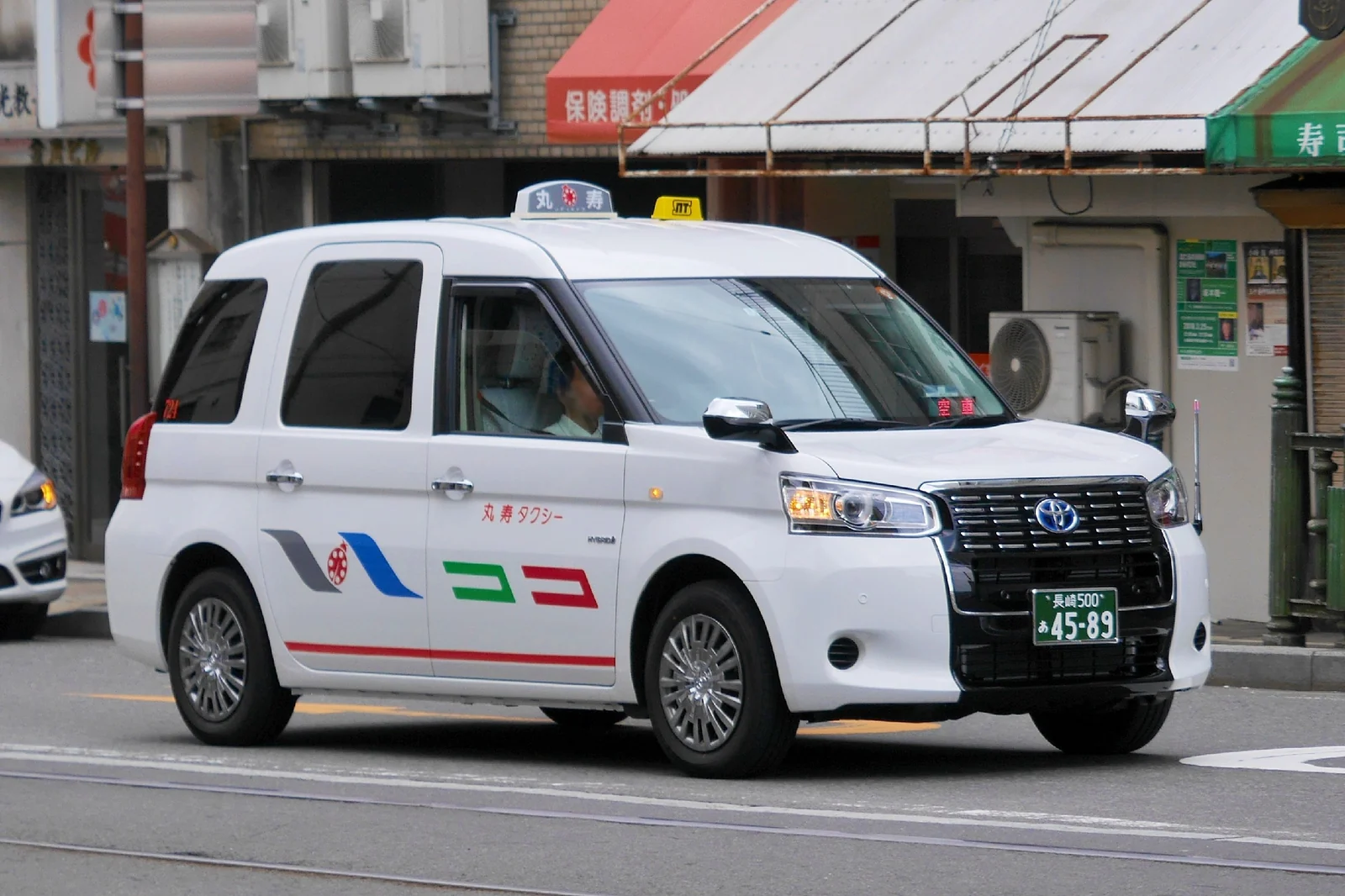
The Tokyo Hire-Taxi Association describes universal-design (UD) taxis as cars with a ramp as standard equipment. The ramp lets a person in a wheelchair get in and out. Uber’s page calls them “Universal Design Toyota Japan Taxi vehicles”, the model known as the JPN Taxi.
What the operators state:
- GO has a “Wheelchair compatible vehicles” option. It calls a UD taxi certified by the transport ministry. It cannot be reserved ahead, and the taxi company may add a vehicle fee.
- Two passengers at most. That means the person in the wheelchair and one companion.
- The ramp carries 200 kg in total. The total counts the chair, the user, luggage and the person pushing. GO says some electric chairs of 640 mm wide, 1,000 mm long and 1,200 mm high or more, user included, may not fit.
- Allow time. GO warns that boarding, with the ramp set up, “may take several tens of minutes” each way.
- Uber Assist is Tokyo only. Uber lists it for the 23 wards, Musashino and Mitaka.
At a rank you take the car that is there. If you need the ramp, ask your ship’s shore desk about an accessible vehicle before the port day.
Guided days at the ports in this article
Shared cars with a guide first; each page says who should skip it. Booked through Viator; there is no tour desk at the pier.
If you book, we may earn a small commission at no extra cost to you. It never decides what we recommend.