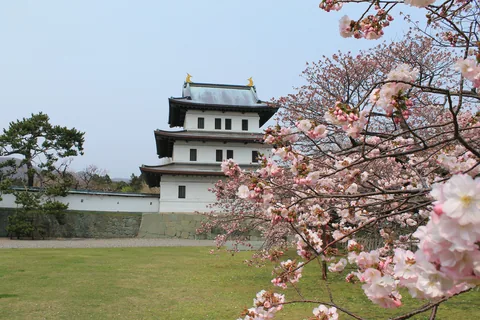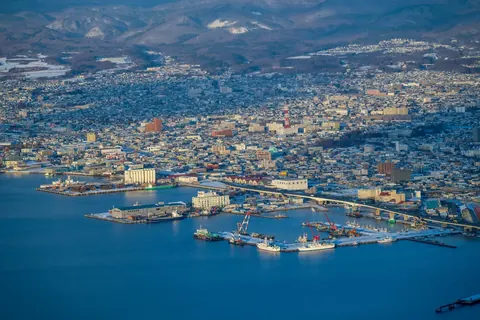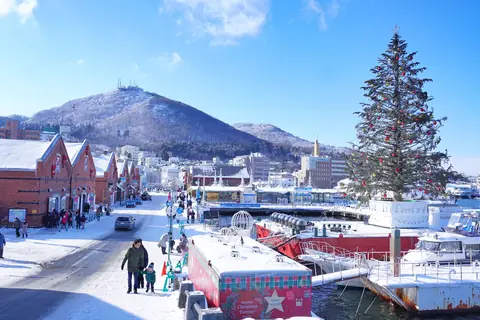
A winter port day in Japan works, and parts of it are better than in any other season. You get Mt Fuji in clear morning air, lanterns and light festivals after dark, and oysters at their best.
Plan around one fact: in mid-December the sun sets between 16:29 and 17:16, and most ships sail after that. So see the outdoor sight first, go indoors after lunch, and keep the lights for the last hour.
This page covers eleven cold-weather ports with winter calls in the published schedule: ten in Japan, and Busan. Okinawa is a different day, at 20 °C: see Okinawa by cruise in winter.
Four things winter changes
- The light goes early. On 15 December 2026 the sun sets at 16:29 in Tokyo and 17:16 in Nagasaki and Kagoshima. On 15 February 2027 it sets at 17:22 in Tokyo and 18:06 in Nagasaki (National Astronomical Observatory of Japan).
- To the end of February, most ships sail after sunset. In the published schedule for December to March, ships usually arrive between 07:00 and 09:00 and most leave at 17:00 or later.
- By mid-March the sun sets after 17:45 at every port here, and many ships sail in daylight. The cruise calendar has every call.
- The Pacific side is cold and bright. January highs are 9 to 13 °C. Tokyo, Yokohama, Shizuoka and Kochi each average 190 to 208 hours of January sunshine; Nagasaki and Fukuoka average about 104 (weather-agency normals).
- Some things are only on now. Fuji’s best odds, Nagasaki’s lanterns, Kobe’s Luminarie, plum blossom at Dazaifu, and oysters, which Hiroshima Prefecture says are best from December to February.
What to wear and how rough the sea gets are in the winter overview.
Eleven ports: temperature, sunset and the route
| Port | January high / low | Sunset, 15 Dec / 15 Feb | The winter route |
|---|---|---|---|
| Shimizu | 11.7 / 2.1 °C (53 / 36 °F) | 16:36 / 17:29 | Fuji from the deck, Nihondaira, tuna lunch |
| Yokohama | 10.2 / 2.7 °C (50 / 37 °F) | 16:30 / 17:23 | Osanbashi deck, harbour walk, Chinatown lights |
| Tokyo | 9.8 / 1.2 °C (50 / 34 °F) | 16:29 / 17:22 | Asakusa early, gardens by 15:30, Marunouchi lights |
| Nagoya | 9.3 / 1.1 °C (49 / 34 °F) | 16:42 / 17:34 | Castle palace, then the Toyota museum indoors |
| Kobe | 9.4 / 3.1 °C (49 / 38 °F) | 16:50 / 17:42 | Kitano and beef by day, the harbour after dark |
| Kochi | 12.2 / 2.1 °C (54 / 36 °F) | 16:59 / 17:50 | Castle, then lunch in Hirome Market |
| Hiroshima | 9.9 / 2.0 °C (50 / 36 °F) | 17:01 / 17:53 | Peace museum, oysters, lights on Peace Boulevard |
| Fukuoka | 10.2 / 3.9 °C (50 / 39 °F) | 17:12 / 18:02 | Dazaifu’s plum trees, a street stall at 18:00 |
| Nagasaki | 10.7 / 4.0 °C (51 / 39 °F) | 17:16 / 18:06 | Museum at opening, Glover hillside, lanterns |
| Kagoshima | 13.1 / 4.9 °C (56 / 41 °F) | 17:16 / 18:04 | Ferry to Sakurajima, foot bath, the island bus |
| Busan | 8.2 / −0.1 °C (47 / 32 °F) | 17:13 / 18:06 | Gamcheon first, markets indoors, the tower at night |
Temperatures are 1991–2020 normals for January, mean daily high and low. Japan’s are from the Japan Meteorological Agency’s station in each city (Shizuoka for Shimizu); Busan’s are the Korea Meteorological Administration’s. Sunsets are for each prefecture’s capital city, from the National Astronomical Observatory of Japan; Busan’s is from the Korea Astronomy and Space Science Institute.
Shimizu, Yokohama and Tokyo: Fuji mornings, lit evenings
Shimizu
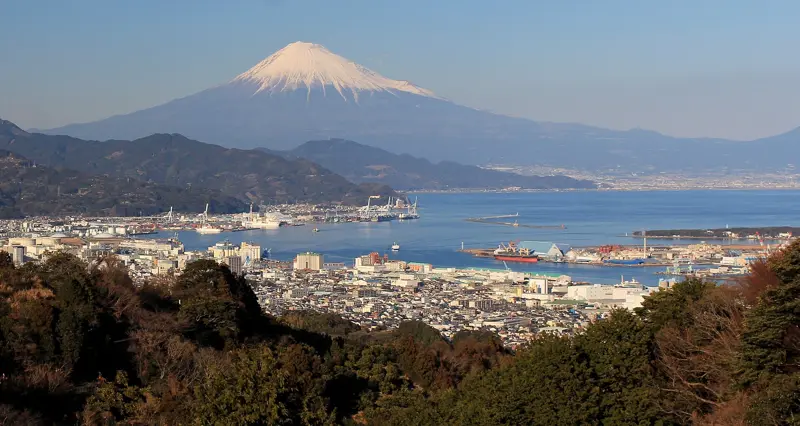
- Fuji first. Go on deck as the ship comes in. Fuji City’s 8:00 record for 2025 shows the whole mountain on 19 mornings in December and January and 22 in February. June had 2.
- Route. If the summit is clear, go straight to Nihondaira Yume Terrace, about 20 minutes by car by the terrace’s own figure. Its observation corridor is open all day; the building costs ¥100.
- Lunch. Tuna at Kashi-no-Ichi. Its market hall opens 9:30–17:30 and closes on Wednesdays; the restaurants keep their own hours.
- If Fuji hides. Take the water bus to Miho: ¥1,000 a leg, first boat 9:55 from Hinode, last boat back from Miho 16:35, cash only on board. The pines are about 35 minutes on foot from the landing.
- Clock. The usual winter departures are 17:00 and 18:00, and the sun sets at 16:36 in mid-December. This is a daylight port.
- Tour. The Fuji Highlights group car tour is a shared car into the Fuji foothills, 6 to 7 hours. With a vehicle, nobody waits at a cold stop.
Plans by call length: the Shimizu guide.
Yokohama
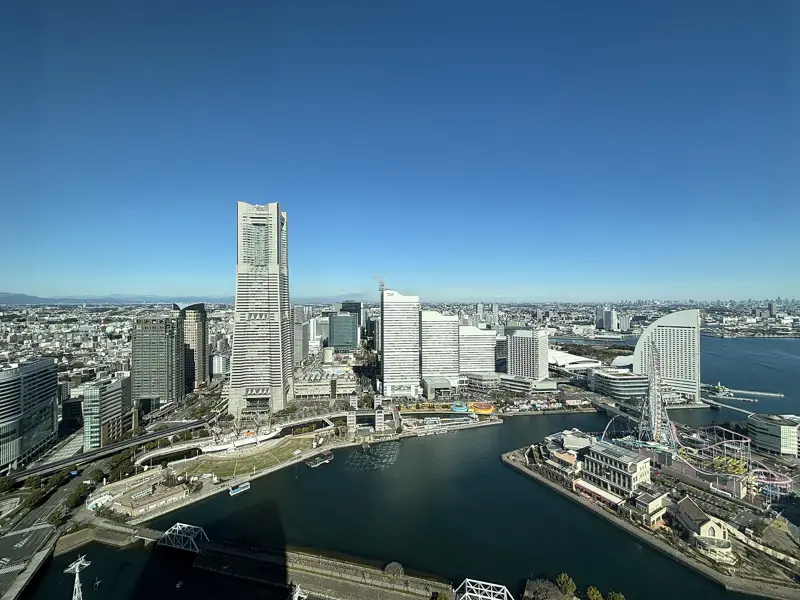
- Route. Start on the Osanbashi rooftop, open 24 hours; the pier’s page says Fuji shows from it in the clear-air seasons. Then the Red Brick Warehouse and the Cup Noodles Museum: 10:00–18:00, last admission 17:00, ¥500, closed Tuesdays and over New Year.
- Only in winter. The Christmas Market at the Red Brick Warehouse runs 20 November to 25 December 2026. Its ice rink runs 28 November 2026 to 14 February 2027. Chinatown’s lantern lights are on 16:00–23:00, 1 November 2026 to 20 February 2027.
- Clock. The usual winter departure is 17:00, and the sun sets at 16:30 in mid-December. You are back on board as the skyline lights up.
- Tour. A guided Cup Noodles Museum visit: a small group, 90 minutes, all indoors. You meet the guide at the museum, not at the ship.
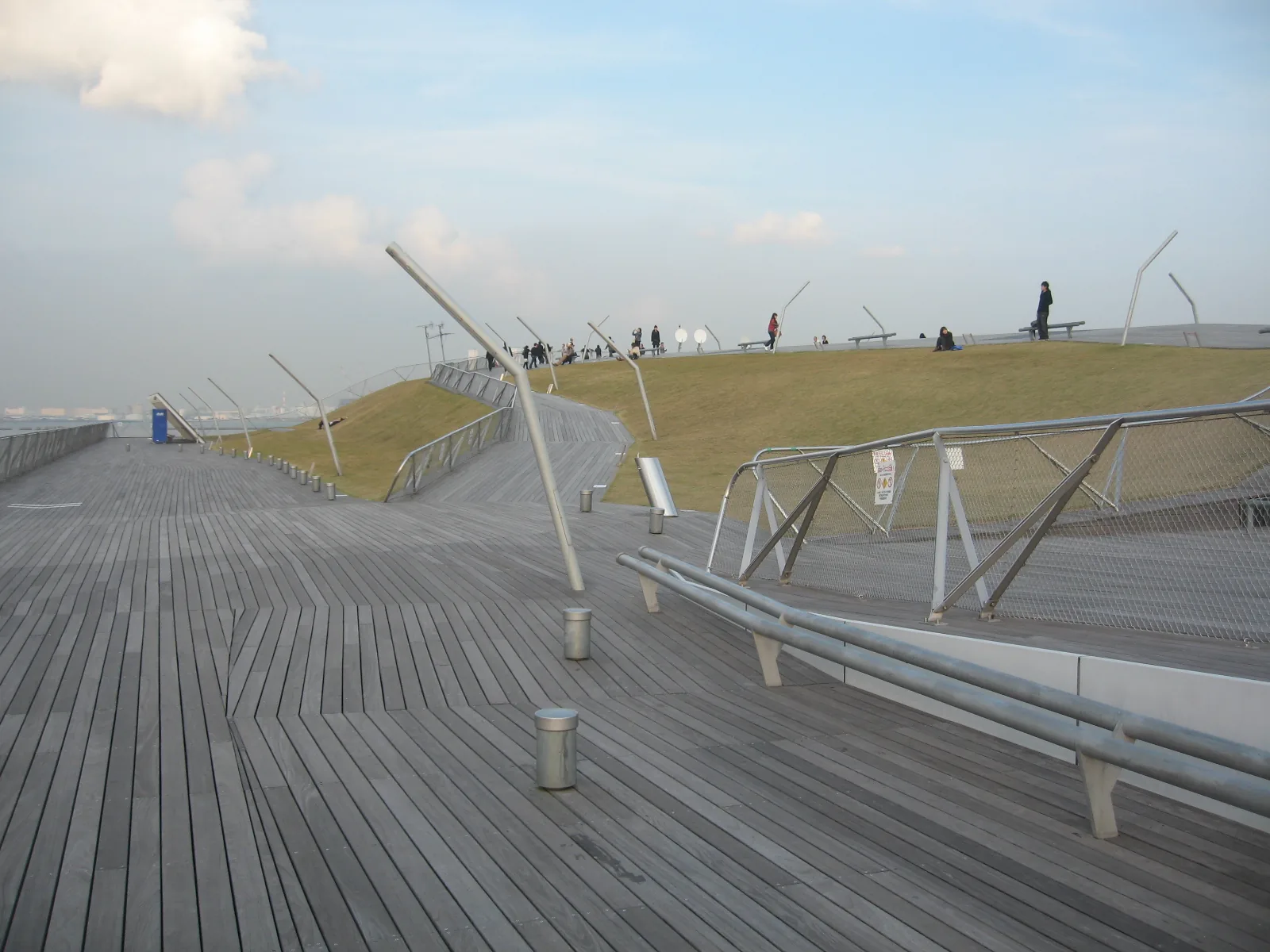
Kamakura’s Great Buddha is still the full-day choice. The timed plan is in the Yokohama guide.
Tokyo
- Route. Asakusa first: Senso-ji’s main hall opens at 6:30 and closes at 17:00 from October to March. Then Ginza or Marunouchi by subway.
- What closes with the light. The Imperial Palace East Gardens take their last entry at 15:30 from November to February. Meiji Jingu shuts its gates at 16:00 in December, 16:20 in January and 16:50 in February.
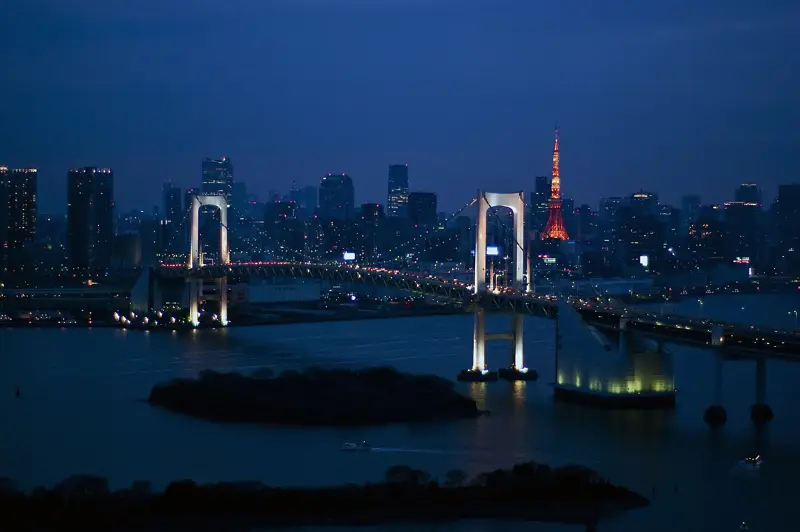
- After dark. The Marunouchi Illumination lights about 200 trees along 1.2 km of Marunouchi Naka-dori, 16:00–23:00, from 12 November 2026 to 14 February 2027. In December it stays on to 24:00.
- Clock. Winter sailings split in two. About half leave by 16:30; the rest leave at 19:00 or stay overnight, and only they see the lights.
- Tour. A private Tokyo guide for 4 to 8 hours, on foot and by train. You choose the start time, so the day can end under the lights.
Both terminals and the routes from each: the Tokyo guide.
Nagoya, Kobe and Kochi: castles by day, Kobe by night
Nagoya
- Clock. Fewer than one winter port day in five ends after 17:00. Plan a daylight day and nothing after it.
- Route. Nagoya Castle opens 9:00–16:30, with entry to 16:00, for ¥1,000. Its keep is closed, so the Hommaru Palace is the visit.
- Indoors. The Toyota Commemorative Museum of Industry and Technology opens 9:30–17:00, entry to 16:30, and closes on Mondays.
- Tour. The guided tour of Nagoya by car is a private car for 5 to 6 hours. The operator writes that it collects you at the boat terminal and returns you there.
Nagoya has two cruise piers. The Nagoya guide says which ships use which.
Kobe
- Clock. About three winter port days in four end after 17:00, and some ships stay the night. Kobe is the evening port.
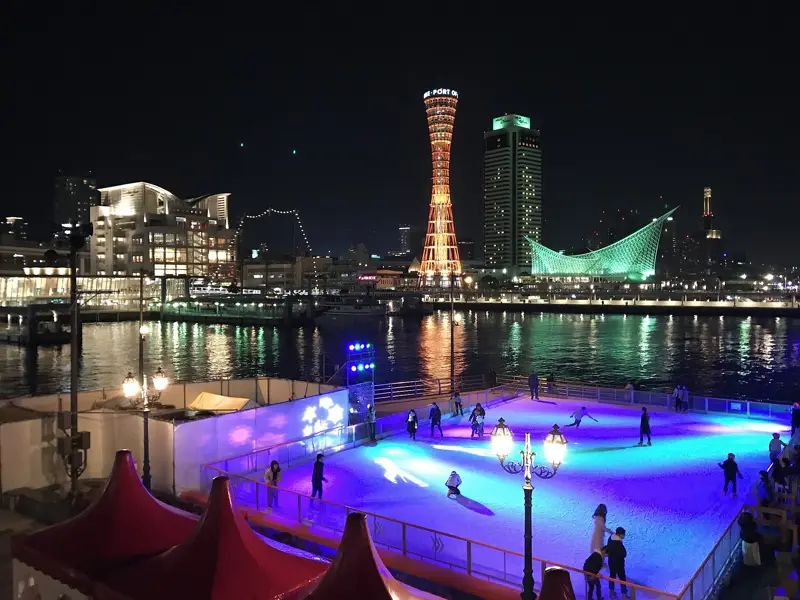
- Route. Kitano’s merchant houses and a Kobe-beef lunch by day, then the harbour as the light goes. Kobe Port Tower is open 9:00–23:00, last entry 22:30: ¥1,200 with the rooftop deck, ¥1,000 without. Entry is by timed ticket, sold online or at the tower’s counter.
- Only in winter. Kobe Luminarie, the city’s light festival, runs 29 January to 7 February 2027, from dusk to 21:30, around Meriken Park and the former Foreign Settlement. Check your ship’s date on the Kobe schedule before you plan around it.
- Tour. The Kobe sake tour is a small group tasting at three or more breweries in the Nada district. It starts at a railway station, not at the pier.
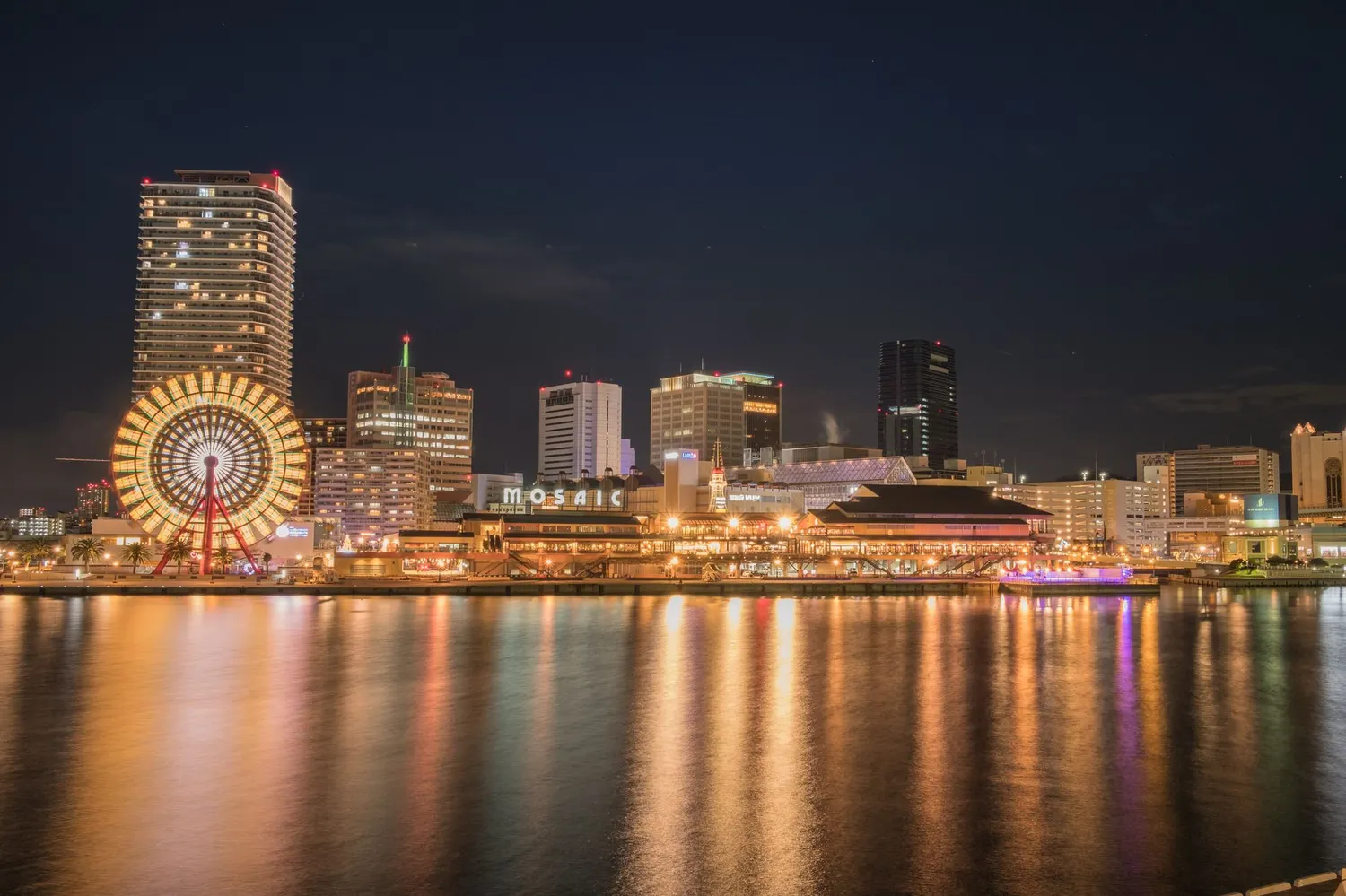
Overnight calls have their own page, the Kobe overnight playbook. Day plans: the Kobe guide.
Kochi
- Route. Kochi Castle opens 9:00–17:00, last entry 16:30, for ¥500. Then lunch in Hirome Market: 10:00–23:00 from Monday to Saturday, and from 9:00 on Sundays.
- Sundays. The Sunday Market fills about 1 km of Otesuji with more than 350 stalls, 5:30–16:00 from October to March. The city says many stalls start packing up in the afternoon.
- Clock. The usual departure is 17:00, and the sun sets at 16:59 in mid-December. The day ends with the light.
- Tour. Best of Kochi half-day is a guided walk of four hours to the castle and Hirome Market. It starts at JR Kochi Station, not at the port.
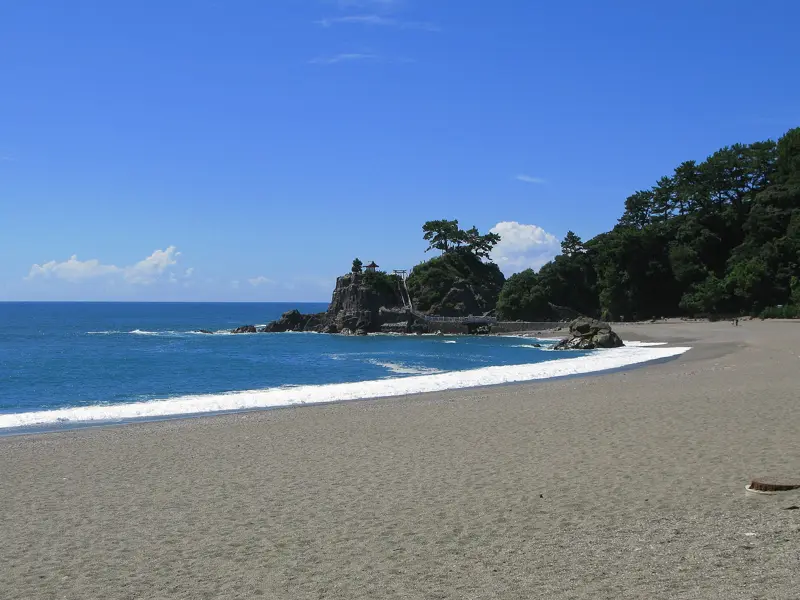
The shuttle from the port, and the beach at Katsurahama: the Kochi guide.
Hiroshima and Fukuoka: oysters, lights and street stalls
Hiroshima
- Route. The Peace Memorial Museum is open 7:30–18:00 from December to February, for ¥200. Before 8:30 and after 16:30 it admits only visitors with a ticket bought online.
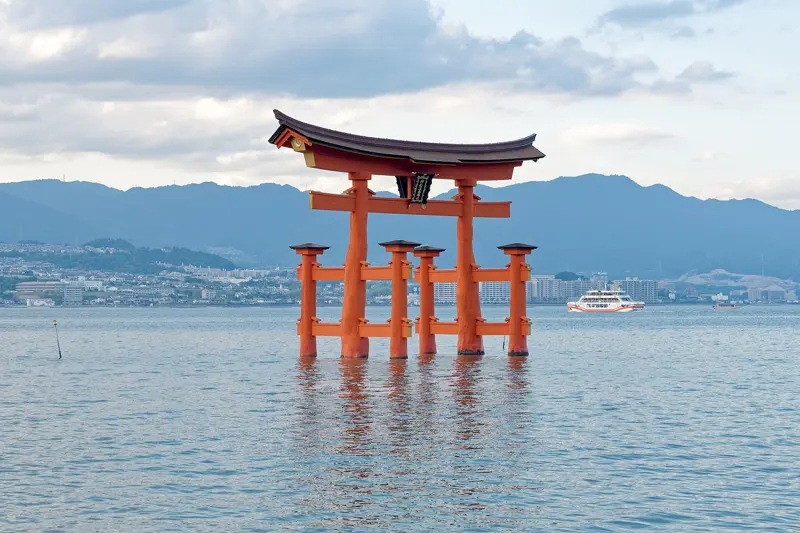
- Miyajima. Itsukushima Shrine opens at 6:30 and costs ¥300. It closes at 17:00 in December, and at 17:30 from 4 January to the end of February.
- In season. Hiroshima Prefecture puts its oysters at their best from December to February. Eat them grilled on Miyajima or in town.
- After dark. Hiroshima Dreamination lights Peace Boulevard 17:30–22:30, from 4 December 2026 to 24 January 2027. Only a ship that sails in the evening sees it.
- Clock. About two winter port days in three end after 17:00.
- Tour. The Hiroshima and Miyajima one-day bus tour covers both by vehicle in 8 hours. It starts at Hiroshima Station at 10:00, so it suits only a ship that sails late in the evening.
Trams, boats and the tide at the torii: the Hiroshima guide.
Fukuoka
- Clock. Four winter port days in five end after 17:00, and 21:00 is the commonest departure. Fukuoka gives you an evening.
- Route. Dazaifu Tenmangu by day: about 35 minutes by Nishitetsu train from Fukuoka (Tenjin) Station, changing at Futsukaichi for Dazaifu Station, then 5 minutes on foot. The gates close at 18:30 from December to March.
- Only in winter. About 6,000 plum trees of 200 kinds flower at the shrine from late January to early March, by the Dazaifu Tourism Association.
- After dark. The city’s guide says the yatai, its street food stalls, open from 18:00, and that a stall may not open in stormy weather.
- Tour. The Fukuoka private tour with a local is a private walk of 2 to 8 hours.
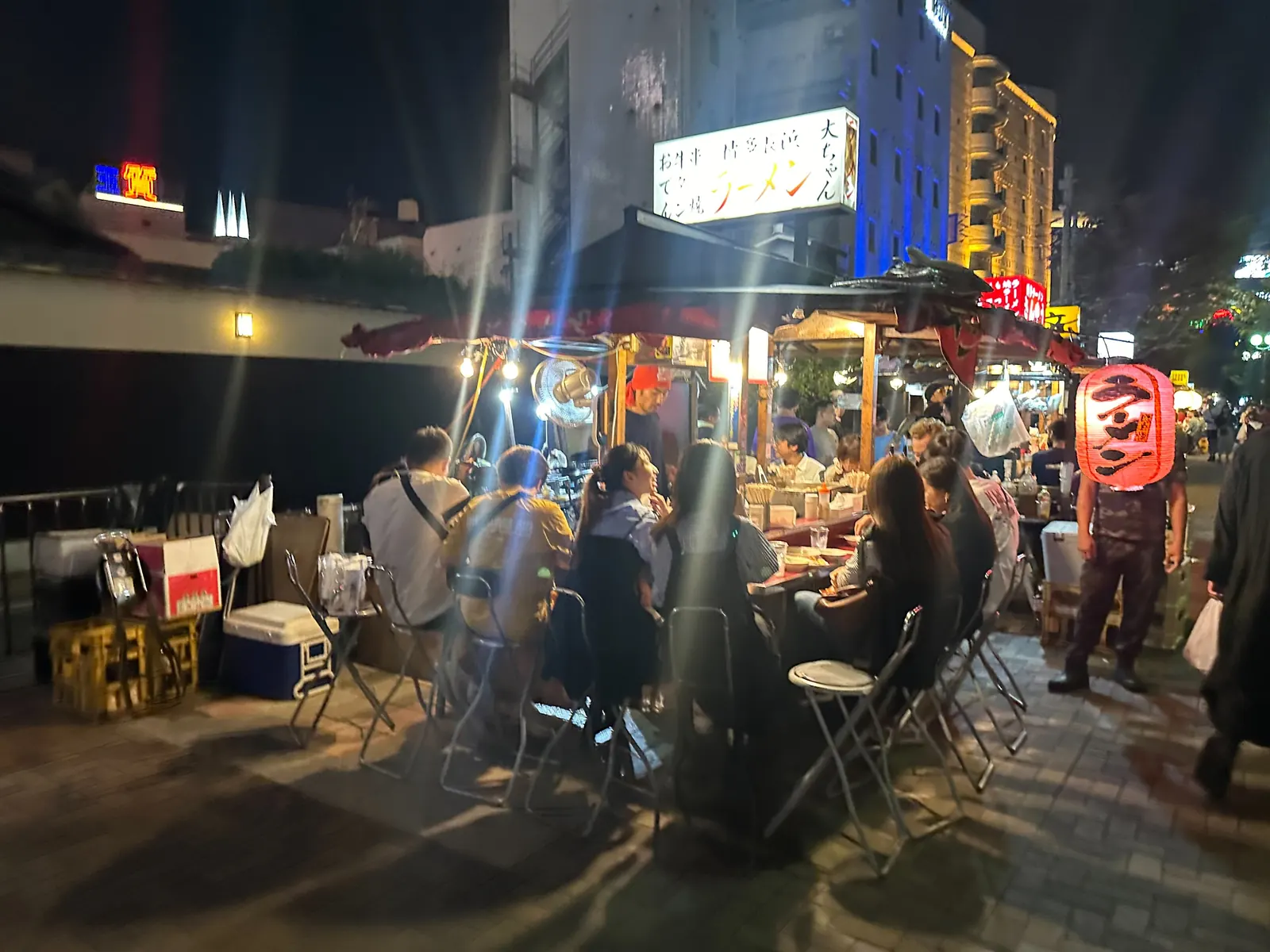
One stall, timed to a 21:00 departure, is a plan in the Fukuoka guide.
Nagasaki, Kagoshima and Busan: lanterns, a volcano, a late sailing
Nagasaki
- Clock. About three winter port days in four end after 17:00, usually at 18:00 or 19:00. Sunset is late here: 17:16 in mid-December.
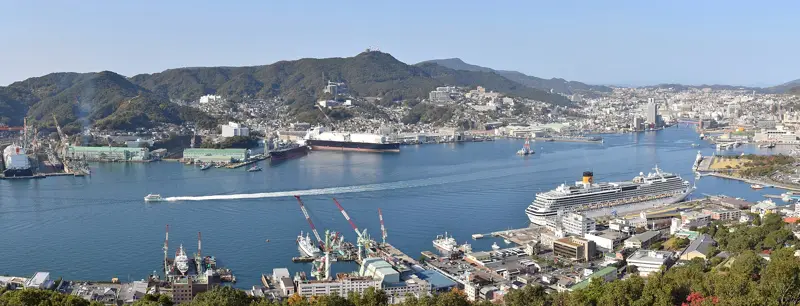
- Route. Be at the Atomic Bomb Museum when it opens at 8:30 (to 17:30, entry to 17:00, ¥200). The tram is ¥150 flat. Then the hillside above the berth: Glover Garden, ¥1,300, is open 8:00–20:00 to 31 December 2026 and 8:00–18:00 from January to March 2027.
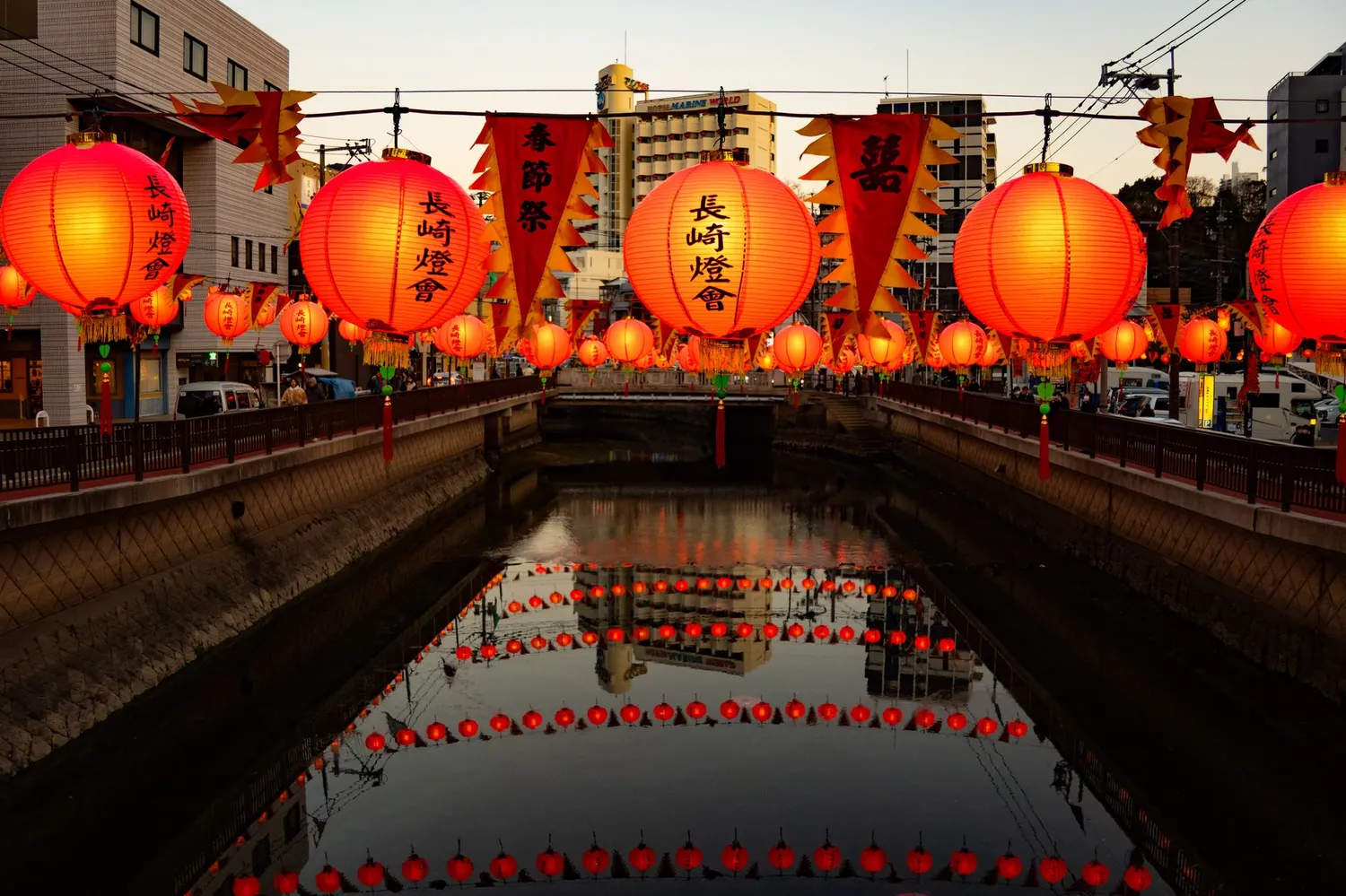
- Only in winter. The Lantern Festival runs 5 to 21 February 2027: about 15,000 lanterns in Shinchi Chinatown and the Hamaichi and Kanko-dori arcades. The Emperor’s Parade is on 13 and 20 February.
- One charge. Minato Park’s special display area costs ¥300 from 17:00 to 22:00 on weekdays, and 10:00–22:00 at weekends and on holidays.
- After dark. The Mt Inasa ropeway runs 9:00–22:00, last car up 21:00, ¥1,900 return. The operator says bad weather can stop it.
- Tour. The Nagasaki highlights half-day by car is a private car for 4 hours. It takes the slopes and the cold out of the day.
Berths, trams and Battleship Island: the Nagasaki guide.
Kagoshima
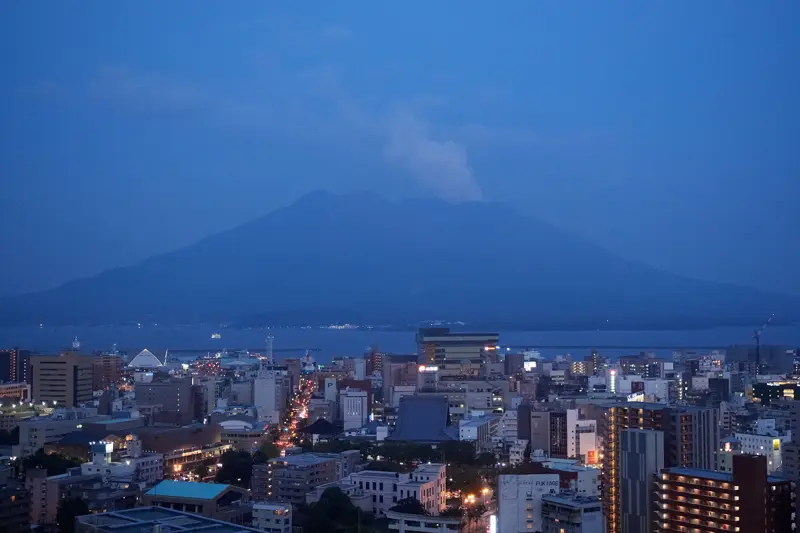
- Route. Cross to Sakurajima: about 15 minutes, ¥250, with 94 sailings on weekdays and 104 at weekends and on holidays. The Visitor Center is free and open 9:00–17:00 all year.
- Warm feet. The foot bath at Nagisa Lava Park, about 100 m long, is open from 9:00 to sunset: 17:16 in mid-December.
- Up the volcano. The Island View bus makes its loop in about an hour and stops at Yunohira Observatory: ¥230 a ride, ¥500 for the day.
- Clock. About two winter port days in three end after 17:00.
- Tour. The Sakurajima half-day tour is a guided half day by ferry and island bus. You meet the guide at the ferry terminal, not at the ship.
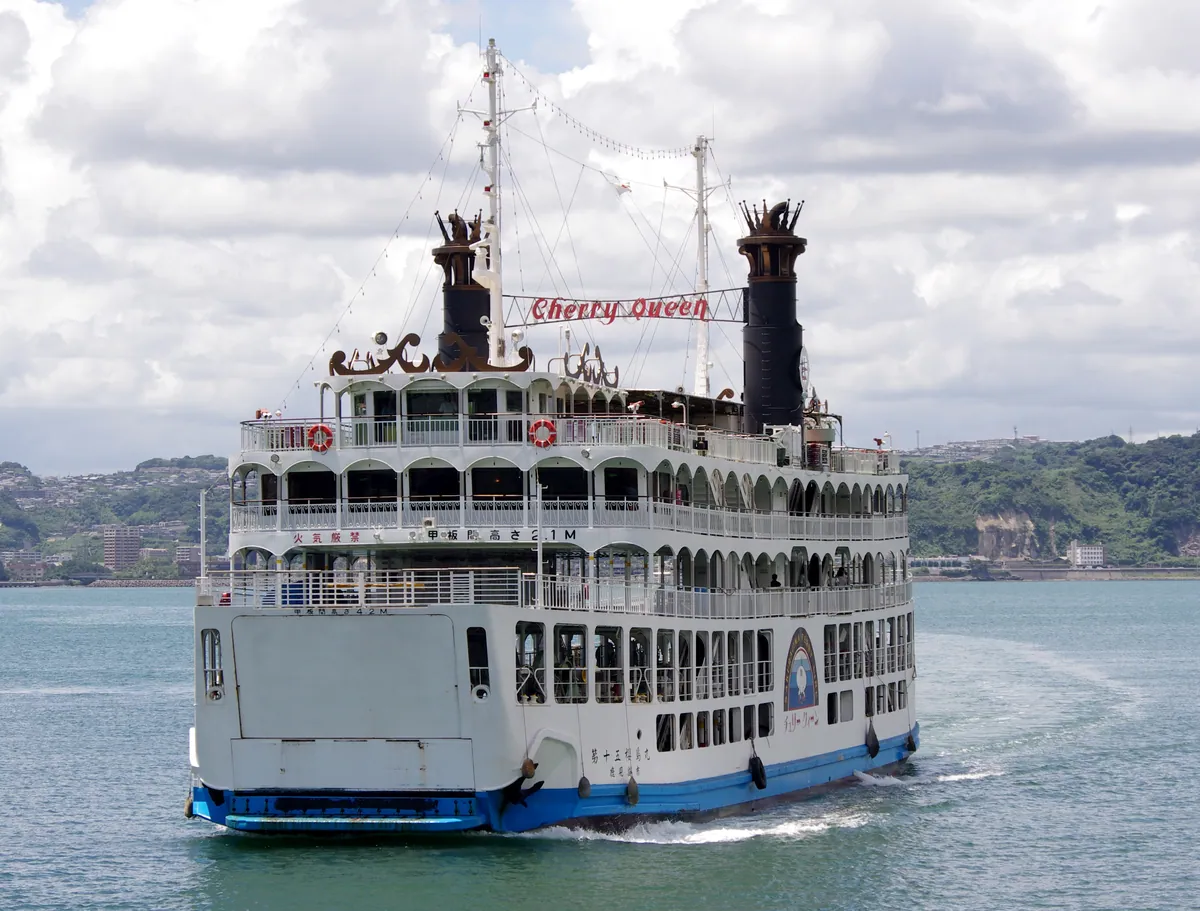
Which berth you get, and the way to the ferry from each: the Kagoshima guide.
Busan
- Clock. About two winter port days in three end after 17:00, and 21:00 is the commonest departure. It is the coldest port here, so bring gloves.
- Route. Gamcheon Culture Village first: free, open 9:00–17:00 from November to February. Take metro Line 1 to Toseong, exit 6, then village bus Saha 1-1, Seo-gu 2 or Seo-gu 2-2 to Gamjeong Elementary School.
- Indoors. Jagalchi Market opens 05:00–22:00 and closes on the 1st, 3rd and 5th Tuesdays. Gukje Market opens 09:00–20:00 and closes on Sundays.
- After dark. Busan Tower is open 10:00–22:00, tickets to 21:30, ₩12,000, every day of the year.
- Tour. The Busan premium small-group tour is a van for at most six guests, 8 hours. Pick-up and drop-off are at the cruise terminal.
Terminals and taxis: the Busan guide.
Tours: year-round days that suit the cold
None of the eleven tours above is a winter product. The site’s tour data holds almost no seasonal tours, so these are year-round tours, chosen because they are indoors or have a vehicle.
- What was checked. The site’s availability data, fetched on 14 November 2026, shows each one open on most winter ship days at its port. Each operator’s page opened on 16 November 2026, and none says it stops in winter.
- What was not. Nothing here promises a place on your date. The tour page shows the operator’s own terms.
- The start time. Several meet in town, not at the pier. Set the start and the length against your ship’s all-aboard time before you pay.
On the day, in order
Screenshot before you leave the ship’s Wi-Fi: your port’s row in the table above, your port guide’s plan, and the ship’s all-aboard time.
Carry: gloves and a hat for decks, ferries and hilltops, and yen in cash. The Miho water bus at Shimizu takes cash only on board.
- At sail-in, go on deck. Ships usually arrive between 07:00 and 09:00, soon after sunrise: 6:50 in Tokyo and 7:23 in Nagasaki on 15 January 2027. At Shimizu, look for Fuji’s summit now.
- Off the ship: the outdoor sight first. Viewpoints, shrines and gardens go in the morning, because several stop entry by 16:00.
- Midday: lunch indoors. A market hall seats you out of the wind.
- Early afternoon: one indoor visit. Your port’s section above has the last entry time.
- From 16:00: the lights, if your ship stays. The switch-on time is in your port’s section.
- Back at the gangway an hour before all-aboard. All-aboard is usually 30 minutes before departure, and the daily programme prints it. Count back from it first, then see how much evening is left.
If a step fails:
- Cloud on Fuji. Skip the viewpoint and take the tuna lunch and Miho.
- A ropeway stopped by the weather. Kobe Port Tower and Glover Garden give a harbour view without one.
- A closed day. Your port guide lists the alternatives by date.
What winter takes away
| Port | What | When |
|---|---|---|
| Shimizu | Nihondaira Ropeway; Kunozan Toshogu stays open by its stone steps | 1–21 December 2026 |
| Shimizu | Yume Terrace building | 2nd Tuesday; 26–31 December |
| Tokyo | Imperial Palace East Gardens | Mondays, Fridays; 28 December–3 January |
| Nagoya | Nagoya Castle | 29 December–1 January |
| Kobe | Nunobiki Herb Gardens and ropeway | 23 January–12 February 2027 |
| Kochi | Kochi Castle | 26 December–1 January |
| Kochi | Sunday Market | 1 and 2 January |
| Kochi | Hirome Market | 1 January; 16–18 February 2027 |
| Hiroshima | Peace Memorial Museum | 30 and 31 December; 15–20 February 2027 |
| Nagasaki | Atomic Bomb Museum | 29–31 December |
Two more things to know. Nagasaki’s Atomic Bomb Museum is screening off parts of its galleries for renewal, to about March 2027. Section C is screened from 25 November 2026, part of B from 14 January 2027 and D from January.
On Miyajima, the tourist association cancelled its February 2026 oyster festival because the oysters had grown poorly. Nothing is posted for 2027 as of 16 November 2026.
Every place keeps its own calendar. Each port guide lists the closed days by date, and winter port by port, 2026–27 has the New Year week.
Guided days at the ports in this article
Shared cars with a guide first; each page says who should skip it. Booked through Viator; there is no tour desk at the pier.
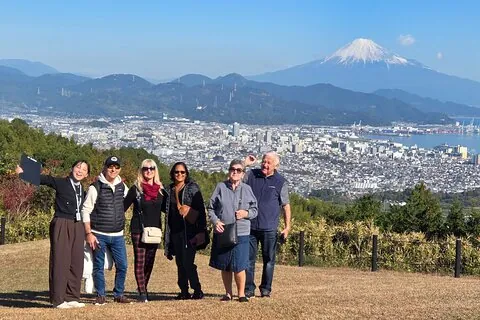 ShimizuShared car · per person5.0★ · 26
All-about Mt.Fuji Short Tour from Shimizu Port
A four-hour small-group outing from Shimizu port to Mt. Fuji viewpoints
from US$130 per person · max 8Why it is here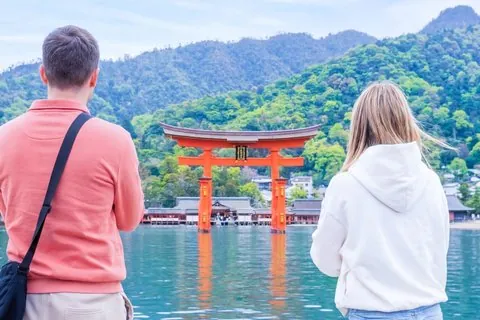 HiroshimaSmall group5.0★ · 56
Miyajima Sea Pilgrimage to Itsukushima Shrine Oyster Farm Visit
Two hours on the water off Miyajima: the floating torii from a boat
from US$97 per person · max 15Why it is here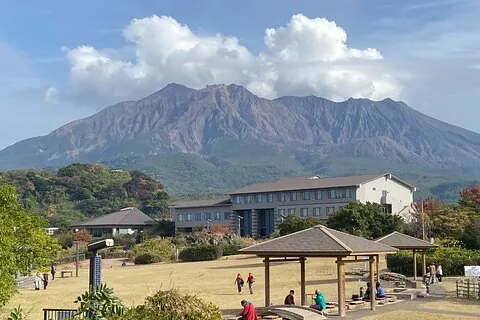 KagoshimaPrivate car · per group5.0★ · 25
Kagoshima Highlights Private Tour, Sakurajima Volcano and more
A customizable private day with an experienced English-speaking guide covering Sakurajima
US$227 per person for 2 · US$453 per carWhy it is hereIf you book, we may earn a small commission at no extra cost to you. It never decides what we recommend.