Updated 1 October 2026 · 41 official and operator sources · Researched from official timetables, operators and the port authority · Takumi Yamada
Kagoshima's reason is Sakurajima, the active volcano across the bay, and a city ferry that crosses to it every 20 minutes for ¥250. Big ships dock at Marine Port, 7–8 km south of town, where a shuttle depends on your cruise line and taxis queue for about 30 minutes on big-ship days — but a 27-minute walk and a ¥200 tram reach the centre without either. On the typical 9-hour call you can cross to the volcano, ride the ¥230 bus up to the Yunohira viewpoint and still lunch in Tenmonkan; adding Sengan-en, the lords' garden that borrows the volcano as scenery, takes about 10 hours. Small ships often use Kita-futo, five minutes' walk from the ferry, where 6 hours is enough for the volcano. The one decision: volcano, garden, or both — and your berth and hours settle it.
Your call, your day
What fits the time your ship gives you?
Pick your ship from the official Kagoshima schedule — or just the hours you have — and this page picks the plan and the tours that fit, with the hour before all-aboard already set aside.
Hours your ship is in port
Why people sail here
The three reasons to get off the ship in Kagoshima
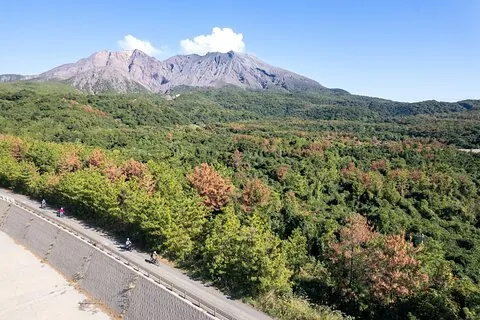
An inhabited volcano that erupted ten times in four days in late September 2026, 15 minutes across the water from the city. You walk a lava shore, soak your feet in a free 100-metre foot bath and look up at the smoking summit from Yunohira, 373 m up — the highest point visitors are allowed.
From the shipFrom Kita-futo, a 5-minute walk to the ferry, then 15 minutes across (¥250 each way, paid on the Sakurajima side). From Marine Port, about 65–70 minutes by walk and tram to the ferry, or 20–35 minutes by taxi (about ¥3,500).
A 1658 stroll garden that uses Sakurajima as its borrowed scenery, with the lords' residence and the Shoko Shuseikan museum — part of the World Heritage listing for Japan's Meiji industrial revolution — on one ¥1,600 ticket. The official time guide adds up to about 100 minutes.
From the shipFrom Marine Port by taxi, 22–50 minutes and about ¥4,400–5,100. From Kita-futo by taxi, about 8 minutes (about ¥1,700), or by the City View bus (¥230) or JR from Kagoshima Station (3 minutes).
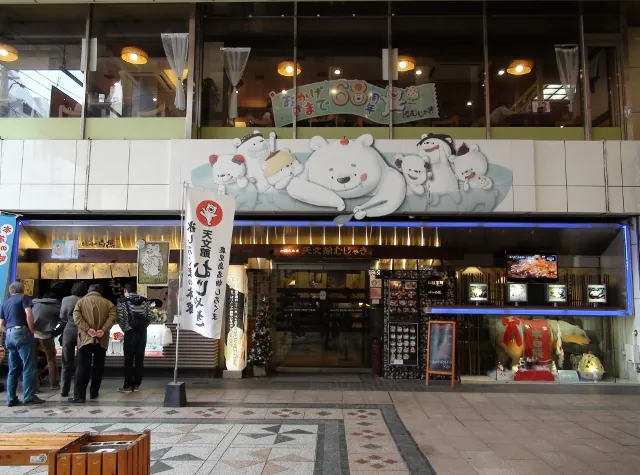
The covered arcades of the city centre, where Mujaki serves shirokuma — shaved ice with condensed milk and fruit — and Kurokatsutei fries Kagoshima's black pork as tonkatsu. It is also the rain plan.
From the shipFrom Marine Port, walk 27 minutes to Wakita and take tram Line 1, 24 minutes, ¥200; taxi about 15–30 minutes and ¥3,000+. From Kita-futo, a 19-minute walk.
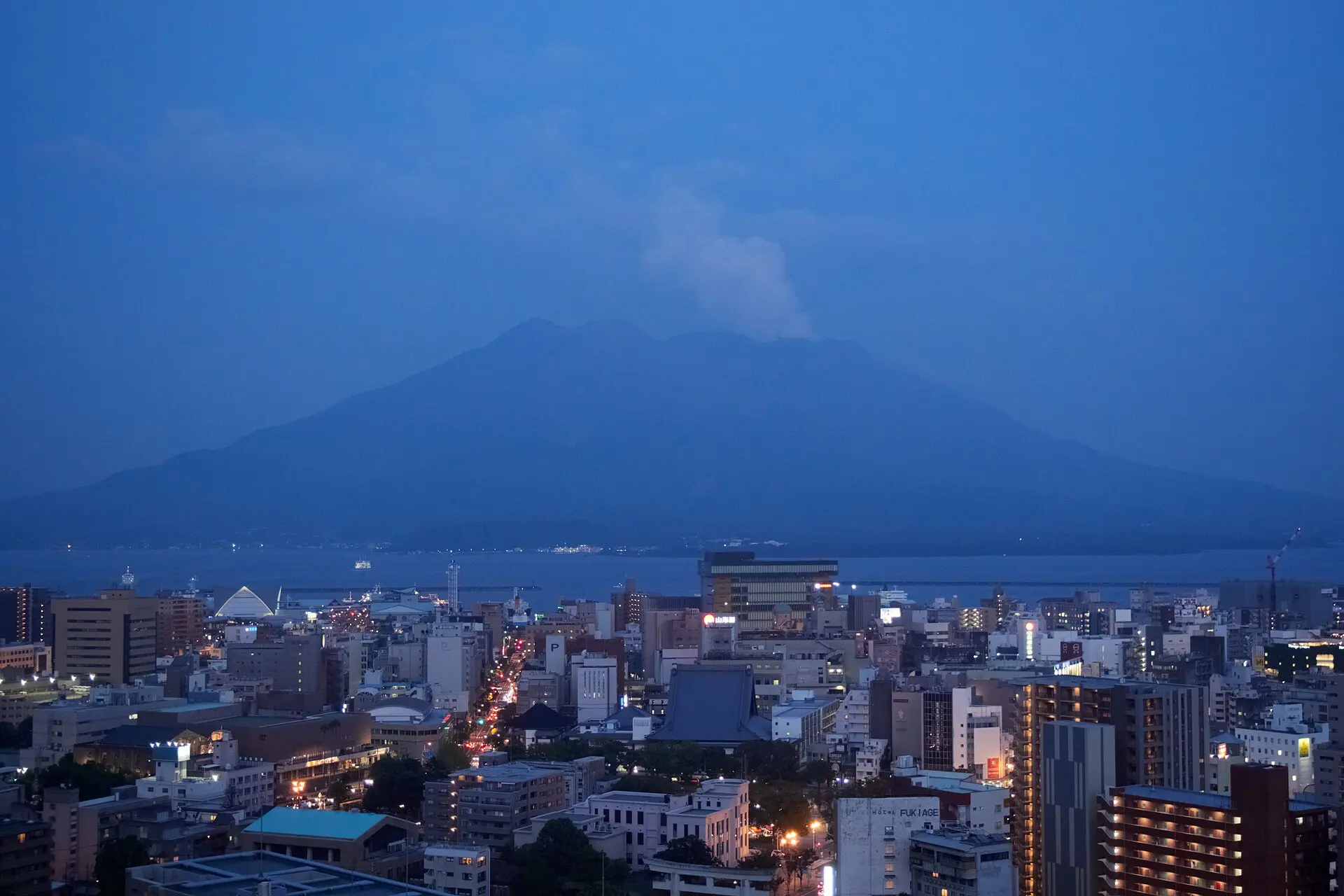
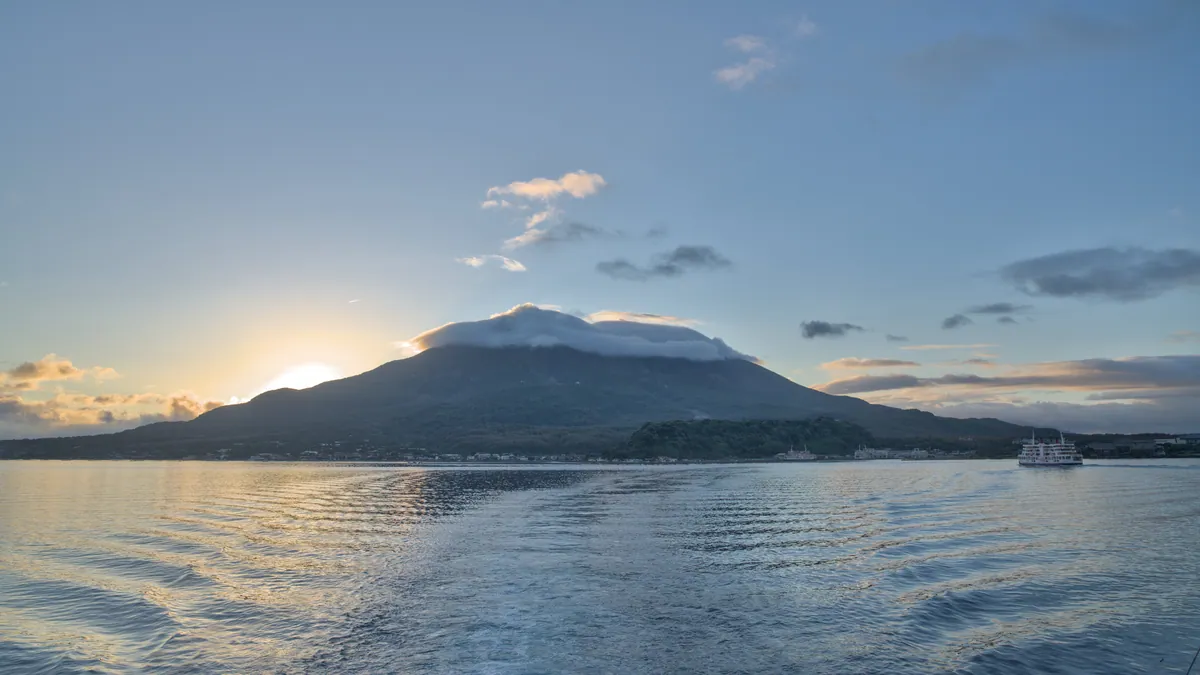
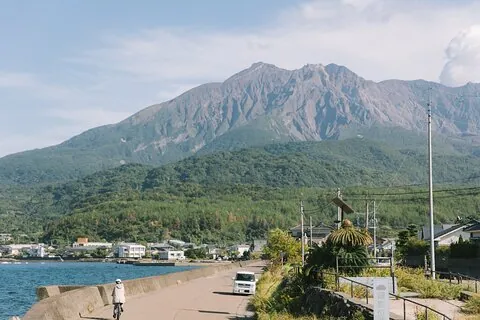
Kagoshima's view is an erupting volcano. Sakurajima sits across the bay, a smoking cone that erupted ten times in the four days to 28 September 2026, and the city treats it as a neighbour: a municipal ferry crosses every 20 minutes like a bus, and on the far shore a free foot bath runs along the lava. That crossing — cheap, unbookable and unforgettable — is why most passengers remember this port.
The second reason is Sengan-en, the garden the Shimadzu lords laid out in 1658 so that the volcano would stand at the end of every view. Behind them are the things Kagoshima eats: shirokuma shaved ice, black pork tonkatsu and satsuma-age fish cakes, all in the covered arcades of Tenmonkan.
The catch is the berth. Most ships tie up at Marine Port Kagoshima, a reclaimed island 7–8 km south of the centre with nothing to see on foot but the bay, so your day starts with a shuttle, a taxi or a walk to the tram. Everything below is built from the prefecture's call schedule, the ferry, tram and bus timetables, and the sights' own published hours, checked on 30 September 2026. Nobody from this site has walked this port; where a time is our own estimate, the text says so.
What Kagoshima is not: a port where you step off into town. From Marine Port every plan starts with getting to the city, and on a short call that journey decides what is possible. Come for the volcano, the garden and the food.
First: which berth are you at?
Kagoshima has two cruise berths, about 7 km apart, and they make two different days.
Marine Port Kagoshima
Kita-futo (North Wharf)
Where
A reclaimed island in the Chuo port district, south of the city
The old harbour, next to the aquarium and the Sakurajima ferry
Who gets it
Every ship over about 50,000 GT, and some small ones
Small ships only (48,072 GT at most in 2026)
On foot
Wakita tram stop about 27 minutes on the prefecture's signed route; nothing to see in between
Shuttle if your line runs one; taxi rank with queues on big-ship days; walk and tram
Walk
Best for
A planned day with the tram or a booked taxi
Sakurajima on any call length
The prefecture's 2026 schedule lists 125 calls: 102 at Marine Port and 23 at Kita-futo. From 1 October to 28 November 2026 the split is 27 to 8. The rule behind it, read from the schedule rather than published anywhere: every large ship goes to Marine Port; small ships — Star Seeker, Luminara, Silver Moon, Le Soléal and their like — usually get Kita-futo, but not always. Silver Moon, for instance, is at Kita-futo on 28 October and at Marine Port on 2 November. Your ship's daily programme names the berth; read it the night before.
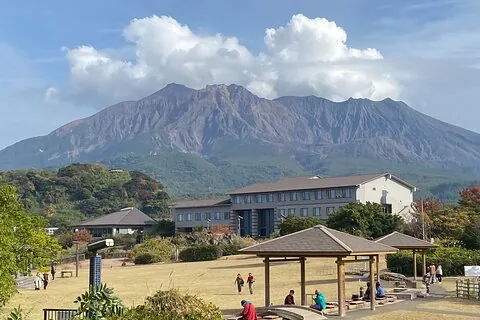
Marine Port has a terminal building, a timber waiting shelter and a large lawn park looking across the bay at the volcano. The prefecture does not publish a facilities list. The national tourism agency's cruise-port guide lists a terminal, tourist information and currency exchange for Kagoshima port, but neither it nor the prefecture says whether these are staffed on your call day, so arrive with yen and your plan. The city's staffed tourist information is in Tenmonkan (by the Tenmonkan-dori tram stop, 9:00–19:00 daily), at Kagoshima-Chuo Station and inside the Sakurajima ferry terminal.
Getting from Marine Port into Kagoshima
Three options, and the one easiest to overlook is the most reliable. The prefecture itself signs a walking route from the cruise terminal to Wakita tram stop — about 27 minutes on foot — from where tram Line 1 runs every 7 minutes into the city. It costs ¥200 and depends on nobody. Our full breakdown, with the real times, is in Kagoshima Marine Port Decoded.
To
How
Time
Cost
Tenmonkan or Kagoshima-Chuo
Ship's shuttle, if your line runs one
about 30 min; every 30–60 min
Free or paid, by line
Tenmonkan
Walk to Wakita, then tram Line 1
about 27 min + 24 min: about an hour door to door (our estimate)
¥200
Sakurajima ferry
Walk to Wakita, tram to Suizokukan-guchi, walk 5 min
about 65–70 min (our estimate)
¥200 + ferry ¥250
Tenmonkan
Taxi
about 15 min free-flowing, 30 min on the taxi map
from about ¥3,000
Sakurajima ferry
Taxi
about 18–34 min
about ¥3,500–3,700
Sengan-en
Taxi
about 22–50 min
about ¥4,400–5,100
Wakita tram stop
Taxi
about 6 min
about ¥1,100
About the taxis. Fares are the official Kagoshima-city tariff for the distance — ¥770 for the first 1.3 km, then ¥50 every 145 m — so they are a floor; the prefecture's own taxi map gives the higher figures. The prefecture also warns that the city is short of taxis and that on big-ship days you may wait about 30 minutes at the rank in front of the terminal. A taxi booked in advance comes to the quay beside the ship instead. The GO taxi app has covered Kagoshima City (except some areas) since January 2023 and is worth having for the ride back from town; at the port on a big-ship day, a booking made the day before is the surer thing. Shared by four, a taxi to the ferry is about ¥900–950 each and saves about 40 minutes on the walk and tram.
About the shuttle. Whether there is one, where it goes and whether it is free is up to your cruise line. When it runs, it takes about 30 minutes to Tenmonkan or Kagoshima-Chuo Station and leaves every 30–60 minutes; the return queue on a big-ship afternoon is the thing to plan around. Older reviews describe a drop at Dolphin Port, the waterfront mall by the ferry: it has gone, and its site is now a prefectural event space and car park, so ignore directions that use it as a landmark.
Transport passes are not sold at either berth, and the CUTE pass (trams, buses and the ferry, ¥1,400 a day) cannot be bought on board — buy the digital version beforehand if you want it.
From Kita-futo
You walk out of the gate into the middle of things.
To
How
Time
Cost
Sakurajima ferry
Walk, past the aquarium
about 5 min
ferry ¥250 each way
Kagoshima Aquarium
Walk
about 2 min
¥2,000
Tenmonkan
Walk, or tram from Suizokukan-guchi
about 19 min on foot; 6 min by tram
¥200 by tram
Kagoshima-Chuo Station
Tram Line 2 from Suizokukan-guchi
about 20 min
¥200
Sengan-en
Taxi, or walk 18 min to JR Kagoshima Station and ride 3 min
about 8 min by taxi
about ¥1,700 by taxi
Shiroyama
Taxi
about 7 min
about ¥1,200
Kagoshima port to Sakurajima: what is actually possible
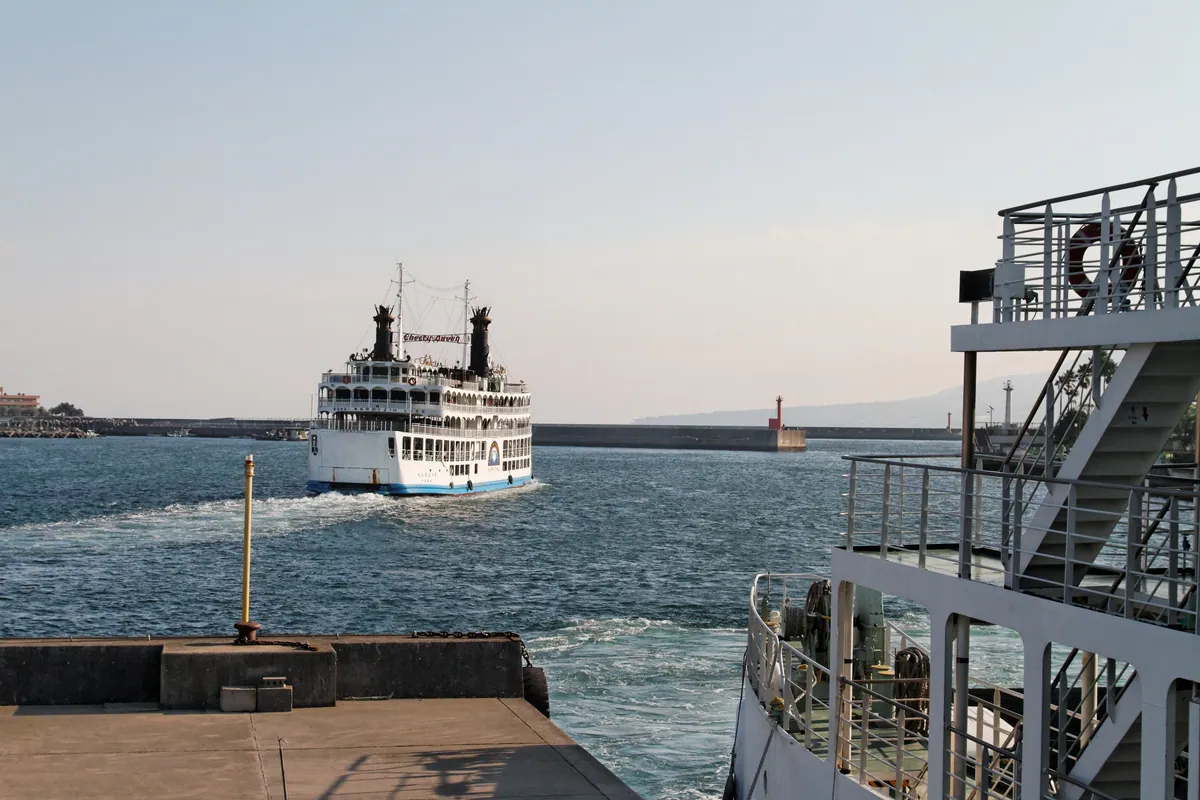
The ferry is the easy part. It sails from the terminal beside the aquarium every 20 minutes (on the hour, :20 and :40) from 7:00 to 18:40, and every 15 minutes on weekend and holiday afternoons from 14:00. The crossing takes about 15 minutes, a little longer in bad weather. You pay only on the Sakurajima side: ¥250 at the gate when you arrive, and ¥250 before you board to come back — by cash, credit card, contactless card or Suica-type IC card. There is nothing to book. Night sailings ended on 1 October 2025, which matters only to the stale guides that still call it a 24-hour ferry.
The hard part, from Marine Port, is reaching the ferry. The honest options:
From Kita-futo. Five minutes' walk. Sakurajima fits any call of four hours or more; with six you can reach Yunohira.
Walk and tram from Marine Port. About 27 minutes on foot to Wakita, 30 minutes on tram Line 1 to Suizokukan-guchi, 5 minutes' walk: 65–70 minutes and ¥200. Slow, but it works on any weekday or weekend and never queues.
Taxi from Marine Port. 20–35 minutes and about ¥3,500, plus the rank queue unless you book. Shared by three or four, it is the way to make a 6-hour call work.
Shuttle plus tram. If your shuttle goes to Tenmonkan, the tram to Suizokukan-guchi is 6 minutes more. Add the shuttle's 30–60-minute interval to your thinking.
What that means in practice: a short visit to the lava shore and the foot bath needs about four usable hours from Marine Port — a 6-hour call, by taxi both ways. Adding Yunohira by bus needs six to seven usable hours, which is the typical 9-hour call. The minute-by-minute arithmetic is in Is 5 Hours Enough for Sakurajima?
Sakurajima: the lava shore, the foot bath and Yunohira
Once you are across, everything a port day needs is either walkable or on one bus.
The Nagisa Lava Park foot bath — about 100 metres long, free, open from 9:00 until sunset, about 8 minutes' walk from the ferry terminal. Bring a small towel.
The Sakurajima Visitor Center — free, 9:00–17:00 daily, 10 minutes from the port: a small museum on the volcano's eruptions, a shop and bicycle hire. The lava-shore promenade runs about 3 km along the water from here.
Yunohira Observatory — at 373 m, the highest point visitors are allowed to reach; climbing the volcano itself is banned. The viewpoint is open-air and free, with a shop open 9:00–17:00.
The Island View bus is how you reach Yunohira without a tour. It loops from Sakurajima port every 30 minutes, with the first departure at 9:30 and the last at 16:30, and costs ¥230 a ride or ¥500 for a day pass; contactless credit cards work, Suica does not. It reaches the Visitor Center stop in 6 minutes and Yunohira in 40, and is back at the port 55 minutes after leaving. In practice you stay at Yunohira for 30 minutes and ride the next bus down: port to port, about 1 hour 25 minutes. The Arimura Lava Observatory on the south side is not on this loop, and the change of bus it needs does not suit a port day.
The volcano itself. The Japan Meteorological Agency has kept Sakurajima at Eruption Alert Level 3 — "do not approach the volcano" — since July 2022. On 28 September 2026 it reported ten eruptions at the Minamidake summit crater over the previous four days, with plumes up to 1,800 m above the crater rim and no explosions, and a danger zone of about 2 km around the Minamidake and Showa craters. The ferry port, the lava shore, the Visitor Center and Yunohira stay open to visitors. The practical effect for a visitor is ash: areas downwind get ash and small stones. Check the agency's Sakurajima page on the morning of your call; if the ferry is suspended, the view from Sengan-en or Shiroyama is the substitute.
On board the ferry there is an udon and soba counter. Coin lockers at both terminals are few, and large ones fewer.
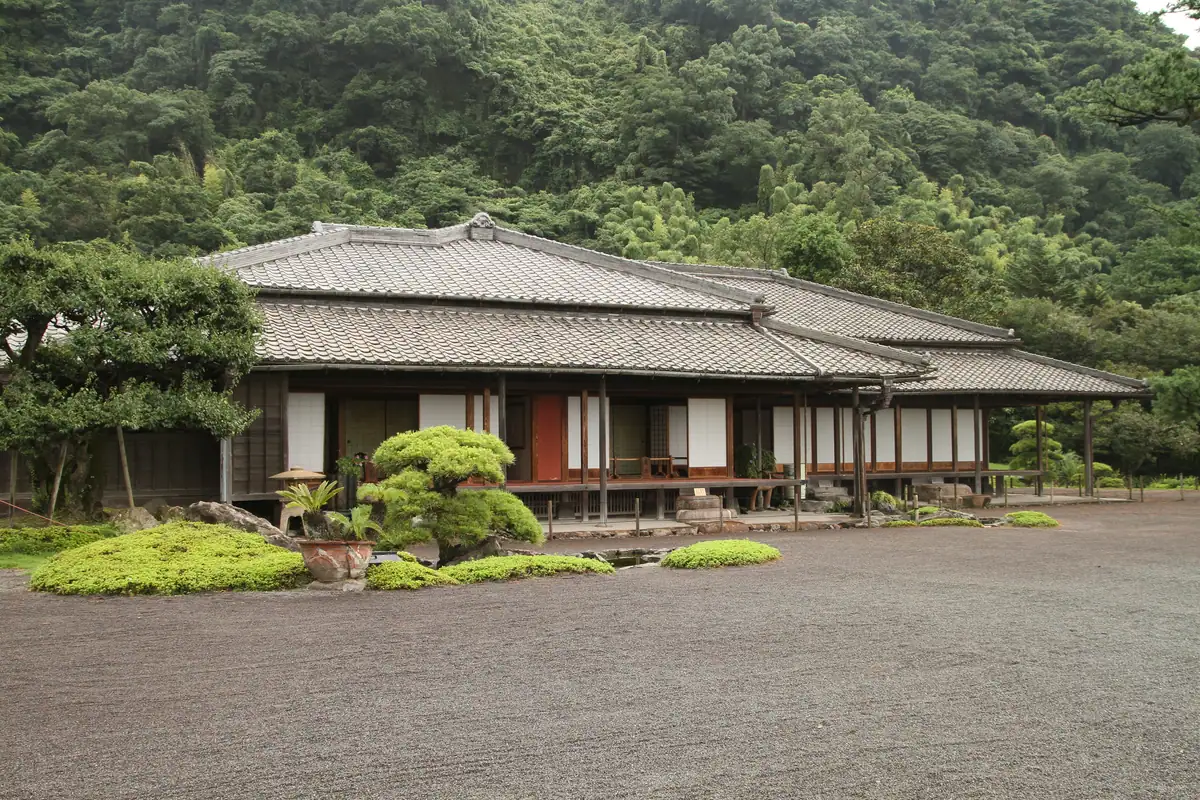
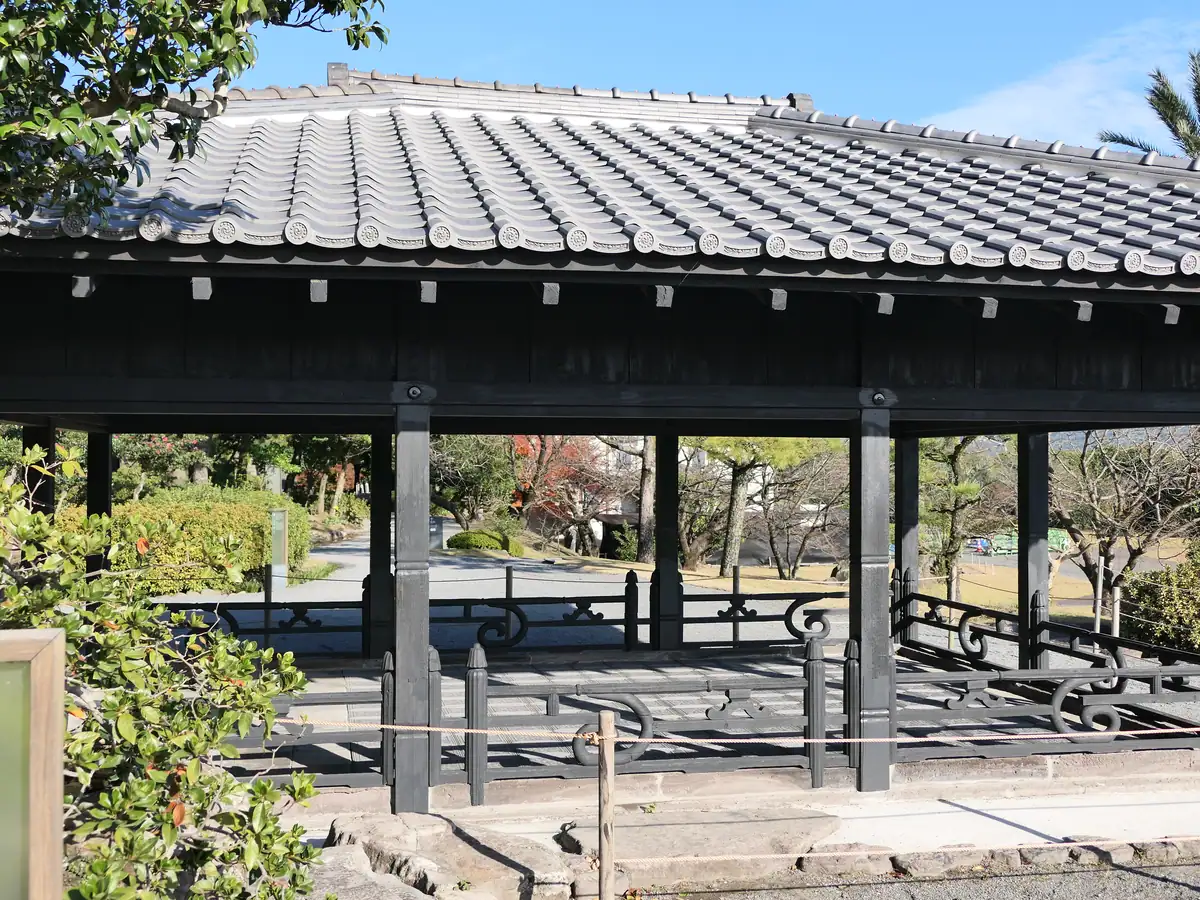
Sengan-en is the Shimadzu family's villa garden, begun in 1658, and its design trick is Sakurajima: the volcano and the bay are the garden's backdrop. One ¥1,600 ticket covers the garden, the lords' residence and the Shoko Shuseikan museum, part of the World Heritage listing for Japan's Meiji industrial revolution. Separate tickets are not sold, and the only senior discount is for local residents.
It opens 9:00–17:00, last entry 16:30, every day except the first Sunday of March, when the Kagoshima Marathon passes (7 March 2027). The official time guide: garden 40 minutes, residence 30, Shoko Shuseikan 30, and 20 for the Satsuma kiriko cut-glass workshop next door. That workshop's factory tour is closed on 5 and 26 October 2026 (Viking Venus and Celebrity Millennium call days) and only partly open on 13 and 14 October (Spectrum of the Seas, MSC Bellissima), when one of the two processes is off for maintenance; the glass shop next door stays open. The jambo-mochi rice-cake shop in the garden runs 9:00–17:00. Cards, Suica-type IC cards and QR wallets are accepted, lockers cost ¥300–500, and wheelchairs can be borrowed for ¥500.
Getting there. From Marine Port it is the farthest of the big sights: 22–50 minutes by taxi and about ¥4,400–5,100. From the city, three routes:
JR train to Sengan-en Station — about 10 minutes from Kagoshima-Chuo or 3 minutes from Kagoshima Station, roughly two trains an hour.
City View bus (¥230) — the loop runs Chuo Station, Tenmonkan (+9 minutes), Shiroyama (+24), Sengan-en (+49), then on to the aquarium and ferry pier (+64). From Tenmonkan to Sengan-en is 40 minutes; from Sengan-en to the ferry, only 15. Buses leave Chuo every 30 minutes from 8:30 to 17:30.
Taxi — about 8 minutes from Kita-futo.
The City View's one-way loop is why the 10-hour model day goes garden first, ferry second.
The best things to do in Kagoshima on a port day
Our full list, with the time each takes from the berth, is on the Kagoshima top 10. In brief:
Sakurajima by ferry — the lava shore and foot bath, and Yunohira by bus if you have the hours.
Sengan-en garden — the volcano as borrowed scenery, with the residence and museum on one ticket.
Shirokuma at Tenmonkan Mujaki — Kagoshima's shaved ice at its best-known counter; 11:00–19:00, closed on irregular days.
Kurobuta tonkatsu — Kagoshima black pork; Kurokatsutei in Tenmonkan serves lunch 11:00–15:00, last order 14:30.
Two day trips come up again and again in passengers' questions. Both take most of a 9-hour call, and both mean giving up the volcano.
Ibusuki and the sand bath. At the Saraku sand-bath hall in Ibusuki, staff bury you in naturally heated volcanic sand on the beach; ¥1,500 including the yukata robe, 8:30–21:00, with no new admissions from 12:00 to 13:00 on weekdays. It is 5 minutes by bus or 20 minutes on foot from JR Ibusuki Station. The way there is the Ibusuki no Tamatebako express from Kagoshima-Chuo, all seats reserved, ¥2,950 each way, running on set days only; seats go on sale a month ahead at 10:00. On an 08:00–17:00 call at Marine Port, by our arithmetic:
Time
Step
08:30
Off the ship; taxi to Kagoshima-Chuo, 15–30 minutes, about ¥2,900–3,100 (book it: the rank queues)
09:56
Ibusuki no Tamatebako 1, arriving Ibusuki 10:47
about 11:00
Bus or taxi to Saraku; sand bath and wash, about an hour (our estimate)
12:57
Tamatebako 4 back, arriving Kagoshima-Chuo 13:48
about 14:30
Taxi to Marine Port, an hour inside a 15:30 gangway target
The afternoon train, arriving at 16:00, is too late for a 17:00 sailing. If the Tamatebako is not running on your date, ask the station for the local trains, which take longer. At roughly ¥10,000 each for a couple sharing the taxis (trains ¥5,900, sand bath ¥1,500, half of about ¥6,000 in taxis), this is a day for sand-bath enthusiasts, not first-timers.
Chiran. The samurai-house gardens (¥530, 9:00–17:00) and the Chiran Peace Museum of the kamikaze pilots (¥500, last entry 16:30) are about 45 minutes each way by car (our estimate). There is no simple public-transport route for a port day, so it is the private-car tour in the tours section below or a chartered taxi, on a call of 9 hours or more.
One day in Kagoshima: model days
The volcano and Tenmonkan: a 9-hour call at Marine Port
Fits 08:00–17:00 at Marine Port — the commonest call here (Asuka III on 8 October and 11 November, Westerdam 27 October, Seven Seas Explorer 28 October). Shift every time by your arrival; for 07:00 arrivals see the note.
Sakurajima done properly — ferry, bus to Yunohira, lava shore and foot bath — then black pork or shirokuma in Tenmonkan, all by public transport and without depending on a shuttle. Times assume 08:00–17:00, so all-aboard around 16:30 and our target back at the gangway 15:30. Tap a contactless credit card on the trams and buses. Transport comes to about ¥1,360 each.
08:30Off the ship. Walk the prefecture's signed route to Wakita tram stop, about 27 minutes. The first convenience stores and bank ATMs are on the way, about 1.5 km out.
09:04Tram Line 1 from Wakita towards the city (every 7 minutes, ¥200), 30 minutes to Suizokukan-guchi, then about 5 minutes on foot to the Sakurajima ferry terminal.
10:00Sakurajima ferry, 15 minutes across, with the volcano filling the bow; there is an udon and soba counter on board. Pay ¥250 at the gate on arrival.
10:30Island View bus from Sakurajima port (¥230), 40 minutes up to Yunohira Observatory, arriving 11:10. Buses leave the port every 30 minutes, 9:30–16:30.
11:40Island View back down, reaching the port at 11:55. Walk about 10 minutes to the Nagisa Lava Park foot bath (free) and the Visitor Center (free, 9:00–17:00).
12:45Ferry back (from Sakurajima at :05, :25 and :45), paying ¥250 before boarding; boarding closes 30 seconds before departure. Ashore at 13:00.
13:11Tram from Suizokukan-guchi to Tenmonkan-dori, 6 minutes.
13:20Lunch: Kurokatsutei black-pork tonkatsu (lunch until 14:30 last order) or shirokuma at Mujaki (from 11:00). Agetateya's satsuma-age fish cakes are a minute from the tram stop.
14:27Tram Line 1 from Tenmonkan-dori to Wakita (24 minutes), then the 27–30-minute walk back.
15:18Back at the gangway between 15:18 and 15:21 — about 10 minutes inside our target and 70 minutes before all-aboard.
The volcano from the gangway: a 6-hour call at Kita-futo
Fits 08:00–14:00 at Kita-futo (North Wharf) — Luminara on 17 October, 27 October and 6 November — and every longer Kita-futo call (Star Seeker, Silver Moon on 28 October).
Kita-futo is the easy berth: the Sakurajima ferry is a five-minute walk, so even six hours reach Yunohira. Times assume 08:00–14:00, all-aboard around 13:30 and our target back at the gangway 12:30. The Saturday timetable is the same until 14:00.
08:30Off the ship. Walk about 5 minutes past the aquarium to the Sakurajima ferry terminal.
08:40Sakurajima ferry, arriving 08:55. Pay ¥250 at the Sakurajima gate — card, Suica or cash.
09:00Walk about 10 minutes to the Visitor Center as it opens at 9:00, then the foot bath along the lava shore.
09:36Island View bus from the Visitor Center stop (the 9:30 from the port), ¥230, reaching Yunohira at 10:10.
10:10Yunohira Observatory, 373 m up: the summit craters straight ahead, the city and bay behind you. The next bus is in 30 minutes.
10:40Island View down to Sakurajima port, arriving 10:55.
11:05Ferry back, ashore at 11:20, and walk 5 minutes back towards the ship; the aquarium is on the way.
11:25Kagoshima Aquarium (io World, ¥2,000, last entry 17:00) next to the ship, or the free Waterfront Park with the volcano across the water.
12:25Back at the gangway by 12:30 — our target, an hour before all-aboard.
Garden, volcano and city view: a 10-hour call at Marine Port
Fits 08:00–18:00 or longer at Marine Port (Viking Orion 24 October, Seabourn Encore 13 November), and the 08:30–19:00 MSC Bellissima calls if you start and finish 30 minutes later.
Kagoshima's three best views in one day: Sengan-en with the volcano as its backdrop, the lava shore, and the panorama from Shiroyama. Taxis at both ends buy back the hours Marine Port costs you. Book the morning taxi the day before — booked cars come to the quay, the rank queues. Target back at the gangway 16:30. Taxis come to about ¥8,000–9,000 per car, plus about ¥1,160 each in bus, ferry and tram fares.
08:30Pre-booked taxi to Sengan-en, 22–50 minutes depending on traffic, about ¥4,400–5,100.
09:15Sengan-en (¥1,600, opens 9:00): the garden, the Shimadzu residence and the Shoko Shuseikan museum. The official guide gives them 100 minutes and this slot has about 90, so keep the museum short — or take the next bus, 30 minutes later, and shift the ferry to 11:40.
10:49City View bus from the Sengan-en stop (¥230, contactless card) to Kagoshima Aquarium (Sakurajima pier), arriving 11:04.
11:20Sakurajima ferry, ashore at 11:35; pay ¥250 at the gate.
11:45The foot bath, the Visitor Center and the lava shore promenade, about 50 minutes.
12:45Ferry back, ashore at 13:00, then the tram from Suizokukan-guchi (every 7 minutes) to Tenmonkan-dori, 6 minutes.
13:20Lunch, shirokuma and the Tenmonkan arcades.
14:39City View bus from Tenmonkan to Shiroyama, arriving 14:54 — the city and the volcano in one frame from the observatory.
15:30Taxi from Shiroyama to Marine Port, 18–35 minutes, about ¥3,500–3,900. We could not confirm a taxi rank at the park, so book the car ahead.
16:00Back at the gangway between 16:00 and 16:10, 20–30 minutes inside our target.
How to think about your hours
Work backwards from the ship. All-aboard is usually 30 minutes before departure (check the daily programme), you want to be back at the gangway an hour before that, and the first half hour goes on getting off. So the time you can actually use is the call length minus about two hours — and at Marine Port, take another hour or so off that for getting to and from the city.
Call
Usable
From Marine Port
From Kita-futo
4 hours
about 2
Stay by the ship: the Marine Port park faces the volcano. A taxi to Tenmonkan and back leaves under an hour there.
The ferry over and back with a look at the foot bath, or the aquarium, or a walk to Tenmonkan.
6 hours
about 4
One thing: Tenmonkan and shirokuma, or Sakurajima's shore and foot bath by taxi both ways (about ¥3,500 each way). Not both.
Sakurajima with Yunohira, then the aquarium.
8–9 hours
about 6–7
Sakurajima with Yunohira and lunch in Tenmonkan by walk and tram; or Sengan-en and Tenmonkan by taxi.
Sakurajima, Yunohira, Sengan-en and Tenmonkan.
10 hours+
about 8
Sengan-en, Sakurajima, Tenmonkan and Shiroyama, with taxis at the ends.
All of that, or Chiran by private car (about 45 minutes each way).
Of the 35 calls from October to 28 November 2026, 16 are 9 hours, 10 are 10–10.5 hours and 3 are Luminara's 6-hour calls at Kita-futo. The commonest arrival is 08:00 (15 calls), then 07:00 (6), and there are no overnights. Norwegian Jade makes its first call on 18 November (10:30–18:30) and returns on 24 November for 7½ hours; both are shortened-volcano days. See every date on cruises to Kagoshima, and our ready-made plans on the Kagoshima plans page.
Tours worth booking, by how many hours you have
Every pick opens our own page first — what the operator actually includes, who should skip it, and which upcoming Kagoshima calls it fits. Prices are the operator's "from" price as of 26 Sep 2026.
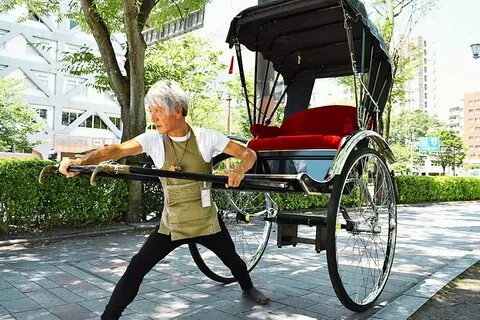
6h+A private guide from the terminal, or a rickshaw
The only Kagoshima listing that meets you at the Marine Port terminal is the first one. Both are short: add Sakurajima or Tenmonkan on your own afterwards.
The sunrise paddleboard listing is left out: it needs you ashore before dawn, and no call on the official schedule arrives that early or stays overnight.
Tours are booked through Viator (a Tripadvisor company). If you book, we may earn a small commission at no extra cost to you. It never decides what we recommend — which is why each tour page has a "think twice" note.
About the return to the ship. None of the seven Kagoshima listings on Viator says in writing that it will get you back to the ship on time, and the only one that mentions cruise passengers at all ends at Kagoshima-Chuo Station, not the berth. The Sakurajima e-bike tours start on the island, so the ferry and the trip to the meeting point are yours. Three habits protect you: choose a tour that meets you at the terminal or whose operator confirms a port pickup in writing, tell the guide your all-aboard time when you meet, and plan to be back at the gangway an hour before it. All our guided options carry the same caveat.
Money, cards and the practical stuff
Kagoshima's public transport is card-friendly but not Suica-friendly — the reverse of most Japanese cities.
Place
Pay with
Trams (¥200) and city buses, City View, Island View (¥230)
Contactless credit or debit card (tap on and off), or cash — no Suica-type IC cards
Sakurajima ferry (¥250, paid on the Sakurajima side)
Cash, credit card, contactless card, or Suica-type IC card
Sengan-en
Cards, IC cards, QR wallets
Taxis, small restaurants, the arcades
Carry cash: we could not confirm card acceptance
Transport passes
Not sold at either berth; buy CUTE online in advance
Contactless payment on trams and buses covers Visa, Mastercard, JCB, Amex, Diners, Discover and UnionPay — the separate touch reader is by the door. The tram, bus and City View one-day pass is ¥700; the CUTE pass, which adds the ferry, is ¥1,400 for a day. For the 9-hour volcano day neither beats single fares.
Cash machines. Marine Port has none within about 1.3 km; the nearest convenience stores, bank ATMs and a post office are about 1.5–1.6 km away, on the walk to Wakita. At Kita-futo a bank ATM and a 24-hour Lawson are about 530 m away. The Sakurajima ferry terminal no longer has an ATM. Seven Bank (7-Eleven) and Japan Post machines generally take foreign cards.
Komurasaki, the Tenmonkan ramen shop founded in 1950, closes on the third Thursday — 19 November, Diamond Princess's call.
The Reimeikan history museum (¥430) closes on Mondays and on the 25th: 5 October, 26 October, 2 November and 25 November are all call days.
The Ishin Furusatokan, the Museum of the Meiji Restoration (¥600), closes for renovation from 24 November 2026 to 22 January 2027, covering the calls on 24, 25, 27 and 28 November.
Mujaki closes on irregular days; check its monthly notice.
Ohara Matsuri, the city's big dance festival, fills the Tenmonkan tram street on the evening of Monday 2 November (18:50–20:30). Silver Moon sails at 19:00 that day, just as the night festival begins; road closures and tram changes along that street are likely, but their times are not published.
Autumn (October–November) is the cruise season and the best weather: average highs of 25.8 °C in October and 20.6 °C in November, and about 100 mm of rain a month. Autumn colour comes late this far south — ginkgo yellowing around 25 November, maples around 15 December.
Spring. Cherry blossom opens around 26 March in a normal year (27 March in 2026) and is in full bloom about 5 April. In 2026 the port had 15 calls in March.
Summer is hot and wet: 31.9 °C in July, and June brings 570 mm of rain, the wettest month by far. The wind also turns southerly from June to August, which by our reading of the wind records makes ash on the city side more likely in summer; from September to May the prevailing wind is from the north-north-west.
Typhoons approach southern Kyushu about four times a year, most often in September (1.2 a year) and August; October averages 0.5. The ferry operator announces cancellations on the day.
Rain plan: the Tenmonkan arcades, the aquarium beside Kita-futo, the Sakurajima Visitor Center, and the museums (on their open days). The ferry sails in rain.
Crowds. No official visitor figures are published for these sights. The ferry adds sailings on weekend and holiday afternoons, which suggests where the local crowds go.
The prefecture has not yet published calls for December 2026 to March 2027; in the 2026 schedule January and February had three calls each. For the season-by-season picture across Japan, see Winter Cruises in Japan and Typhoons and Your Japan Cruise.
What other guides get wrong about Kagoshima
Things you will read about Kagoshima elsewhere — in older port guides, forum posts and some cruise-line pages — set against what the official source says today.
You may read
What the official source says
Source
Ships dock at a pier in the city centre, and downtown is a 30–40-minute walk.
Most calls use Marine Port Kagoshima, south of the city. The prefecture's own route is about 25 minutes on foot just to Wakita tram stop, then the tram; shuttles, where your line runs one, take about 30 minutes to Tenmonkan or Kagoshima-Chuo Station.
Taxis are cheap: nowhere in the city costs more than about ¥2,000.
Kagoshima's regulated tariff for a standard taxi is at most ¥770 for the first 1.3 km, then ¥50 per 145 m, so the 7–8 km ride from Marine Port to the centre is about ¥3,000 before any time charge — and on big-ship days you may queue about 30 minutes first.
The Sakurajima ferry runs around the clock, so there is no last boat to worry about.
The 24-hour service ended on 1 October 2025: there are no sailings from midnight to 3:59. Check the last sailing before you plan an evening on the island.
The cruise shuttle drops you at Dolphin Port, the waterfront mall.
Dolphin Port is gone: the prefecture now lets its former site out as an event space and car park. Shuttles, when they run, go to Tenmonkan or Kagoshima-Chuo Station.
Counting on a shuttle.The prefecture says a Marine Port shuttle depends on the ship, can be free or paid, and runs every 30–60 minutes to Tenmonkan or Kagoshima-Chuo Station. Check your line's daily programme — and know the walk to Wakita tram stop, about 27 minutes, as the backup.
Expecting a quick taxi at Marine Port.Kagoshima is short of taxis; on big-ship days the prefecture warns of about 30 minutes in the queue. Book a car for the morning if your plan depends on it: booked taxis come to the quay.
Tapping Suica on the tram.Kagoshima's trams and city buses do not take national IC cards. Tap a contactless credit card on and off, or pay ¥200 in coins. The ferry, confusingly, does take Suica.
Booking a tour just for Yunohira.The Island View bus goes up from Sakurajima port every 30 minutes from 9:30 to 16:30, takes 40 minutes and costs ¥230. Older advice that the viewpoint needs a tour is wrong.
Looking for a day pass at the port.Neither berth sells transport passes, and the CUTE pass cannot be bought on board. For most port days the passes save nothing anyway: the 9-hour volcano day costs about ¥1,360 in single fares.
Missing the ferry back by a few seconds.At Sakurajima port boarding closes 30 seconds before departure, and you pay before you board. Be at the gate five minutes early; the next boat is 20 minutes later.
Assuming you know your berth.Small ships usually get Kita-futo but not always — Silver Moon is at Kita-futo on 28 October and Marine Port on 2 November. The daily programme names the berth; the two days look nothing alike.
Planning to take out cash on Sakurajima.There is no ATM at the Sakurajima ferry terminal. From Marine Port, the nearest machines are about 1.5 km away on the walk to Wakita.
Researched from official timetables, operators and the port authority. Every time and fare in this guide was checked against the sources listed above on 1 October 2026; where we had to estimate (a walk, a taxi in traffic), the text says so. Timetables change — if you find one that has, tell us and we will fix it.
Quick answers
Kagoshima cruise port questions
Where do cruise ships dock in Kagoshima?
At two berths. Marine Port Kagoshima, a reclaimed island 7–8 km south of the city centre, takes every large ship and most calls: 102 of the 125 calls on the 2026 schedule. Kita-futo (North Wharf), in the old harbour next to the aquarium and five minutes' walk from the Sakurajima ferry, took the other 23 — all ships of 48,072 GT or less. Small ships sometimes use Marine Port too, so check the daily programme.
How do I get from the Kagoshima cruise terminal to the city centre?
Marine Port is 7–8 km south of the centre, so you ride. Three ways. Your ship's shuttle, if it runs one: about 30 minutes to Tenmonkan or Kagoshima-Chuo Station, every 30–60 minutes, free or paid by line. Walk and tram: about 27 minutes on foot to Wakita stop, then tram Line 1 to Tenmonkan-dori in 24 minutes for ¥200 — about an hour door to door. Or taxi: about 15–30 minutes and from about ¥3,000, after a queue of up to 30 minutes on big-ship days.
Can you walk from the Kagoshima cruise port into town?
From Marine Port, not to the sights: the centre is 7–8 km away. What you can walk is the prefecture's signed route to Wakita tram stop, about 27 minutes, then ¥200 by tram; beside the ship there is only a lawn park facing the volcano. From Kita-futo, yes: the Sakurajima ferry is 5 minutes away, Kagoshima Aquarium 2 minutes, Suizokukan-guchi tram stop 7 minutes and the Tenmonkan arcades about 19 minutes on foot.
Is there a free shuttle bus from the Kagoshima cruise port, and where does it drop you?
Sometimes. The prefecture says that depending on the ship there may or may not be a shuttle, and that it may be free or paid. When it runs it goes to Tenmonkan or Kagoshima-Chuo Station, takes about 30 minutes and leaves every 30–60 minutes. Older reviews mention a drop at Dolphin Port by the ferry: that shopping centre is gone, and its site is now a prefectural event space and car park. From Kita-futo you need no shuttle.
How much is a taxi from the Kagoshima cruise port?
From Marine Port, by the official city tariff for the distance alone: about ¥3,000 to Tenmonkan, ¥3,500 to the Sakurajima ferry or Shiroyama and ¥4,400 to Sengan-en, and more in traffic — the prefecture's taxi map gives ¥3,100, ¥3,700, ¥3,900 and ¥5,100. A short hop to Wakita tram stop is about ¥1,100. Time hire is up to ¥2,730 per 30 minutes.
Can I use Uber or a taxi app like GO in Kagoshima?
GO, Japan's main taxi app, has covered Kagoshima City (except some areas) since 31 January 2023, so you can try to call a car to the port or back from town. On a big-ship day the prefecture's advice is still the safer one: Kagoshima is short of taxis, the rank at Marine Port can mean a 30-minute wait, and a car booked the day before comes to the quay beside the ship.
How do I get to Sakurajima from the cruise port?
Take the city's Sakurajima ferry from the terminal beside the aquarium: 15 minutes across, every 20 minutes from 7:00 to 18:40 (every 15 minutes on weekend and holiday afternoons), ¥250 each way paid on the Sakurajima side, no booking. From Kita-futo the terminal is a 5-minute walk; from Marine Port, about 65–70 minutes by walk and tram, or 20–35 minutes and about ¥3,500 by taxi. The old 24-hour service ended on 1 October 2025; the last boat from Sakurajima is now 23:00.
Do I need a tour to reach Yunohira Observatory on Sakurajima?
No. The Sakurajima Island View bus leaves the ferry port every 30 minutes from 9:30 to 16:30, reaches Yunohira in 40 minutes and costs ¥230 a ride (day pass ¥500). Contactless credit cards work. The round trip with a 30-minute stop takes about 1 hour 25 minutes.
Is Sakurajima safe to visit, and will it be erupting?
The volcano has been at Eruption Alert Level 3 since July 2022, meaning people must stay out of about 2 km around the Minamidake and Showa craters; climbing it is banned, and Yunohira, 373 m up, is as high as visitors go. It erupted 10 times between 25 and 28 September 2026, with plumes up to 1,800 m above the crater rim. The ferry, the lava shore, the visitor centre and Yunohira stay open. Downwind areas can get ash; check the Japan Meteorological Agency's Sakurajima page on the day.
Can I see Sakurajima and Sengan-en in one port day?
Yes on a call of about 10 hours at Marine Port, with a taxi to Sengan-en in the morning, the City View bus to the ferry, and a taxi back. On 9 hours choose one, or visit Sakurajima's lava shore without Yunohira. From Kita-futo both fit a 9-hour call, because the ferry is five minutes away and Sengan-en eight minutes by taxi.
How much is Sengan-en and how long do you need?
¥1,600 for adults, covering the garden, the Shimadzu residence and the Shoko Shuseikan museum; separate tickets are not sold and there is no senior discount for visitors. Open 9:00–17:00, last entry 16:30, every day except the first Sunday of March. The official guide gives the garden 40 minutes, the residence and the museum 30 each, and the Satsuma kiriko glass works next door 20. From Marine Port a taxi takes 22–50 minutes (about ¥4,400–5,100).
What are the best things to do in Kagoshima on a cruise port day?
Five, in order: the ¥250 ferry to Sakurajima for the lava shore, the free foot bath and the Yunohira viewpoint (¥230 bus); Sengan-en, the 1658 garden with the volcano as backdrop (¥1,600); shirokuma shaved ice and black-pork tonkatsu in the Tenmonkan arcades; the free Shiroyama observatory for the city-and-volcano panorama; and Kagoshima Aquarium (¥2,000) if you are at Kita-futo. A 9-hour call at Marine Port fits Sakurajima and Tenmonkan; Sengan-en as well needs about 10 hours.
What can I do in Kagoshima on a short 4–6-hour port stop?
Take about two hours off for getting off and back, and at Marine Port another hour or so for the trip to town. On 4 hours at Marine Port, stay near the ship; at Kita-futo, cross to Sakurajima and back or visit the aquarium. On 6 hours at Marine Port, do one thing: Tenmonkan with shirokuma, or Sakurajima's shore and foot bath by taxi both ways (about ¥3,500 each way). On 6 hours at Kita-futo, Sakurajima with Yunohira fits.
How do I get to the Shiroyama observatory from the cruise port?
From Marine Port, a taxi takes about 18–35 minutes and costs about ¥3,500–3,900. Or reach Tenmonkan by walk and tram and take the City View bus: 15 minutes to the Shiroyama stop, ¥230, every 30 minutes. From Kita-futo a taxi is about 7 minutes and ¥1,200. The observatory is free and gives the city and Sakurajima in one view. We could not confirm a taxi rank at the park, so book the car back.
What should I eat in Kagoshima on a port day?
Three local things, all in or near Tenmonkan. Shirokuma, shaved ice with condensed milk and fruit, at Mujaki (11:00–19:00, closed on irregular days). Kagoshima black pork as tonkatsu at Kurokatsutei (lunch 11:00–15:00, last order 14:30). Satsuma-age fried fish cakes at Agetateya (10:00–19:00 daily), a minute from Tenmonkan-dori tram stop. On Sengan-en days, the garden's jambo-mochi rice cakes; on the ferry, an udon and soba counter.
Does Suica work on Kagoshima's trams and buses?
No. Kagoshima City trams and buses, including the City View and Island View tourist loops, do not accept Suica or other national IC cards. They do take contactless Visa, Mastercard, JCB, Amex, Diners, Discover and UnionPay: tap on and tap off. The Sakurajima ferry accepts Suica, cards and cash. A ¥700 tram-and-bus day pass exists, but no pass is sold at either cruise berth.
Do I need cash in Kagoshima, and is there an ATM at the cruise terminal?
Less than elsewhere in Japan: trams, buses, the ferry and Sengan-en all take cards. Carry some yen for taxis, small restaurants and shops, which we could not confirm take cards. There are no ATMs within about 1.5 km of Marine Port and none at the Sakurajima ferry terminal. The national tourism agency lists currency exchange at Kagoshima port, but the prefecture does not confirm a counter, so bring yen. From Kita-futo, ATMs are 530–700 m away.
What is the best tour from the Kagoshima cruise port?
For a 6–9-hour call, the private gardens, shrines and Shiroyama tour (5575701P1), the only one that meets you at the Marine Port terminal: about $88 each for up to three, plus about ¥15,000 for the taxi. For a group of up to eight on 10 hours or more, the per-group private highlights day (473820P3), non-refundable, with a chartered taxi of about ¥40,000–52,000 on top. For Sakurajima alone, you do not need a tour.
Can I visit the Ibusuki sand baths or Chiran from the Kagoshima cruise port?
Both take most of a 9-hour call and replace the volcano. Ibusuki: the reserved-seat Ibusuki no Tamatebako express leaves Kagoshima-Chuo at 9:56 and arrives 10:47 (¥2,950 each way, set days only); the Saraku sand bath (¥1,500) is 5 minutes by bus, and the 12:57 train back reaches Chuo at 13:48. Chiran's samurai gardens (¥530) and Peace Museum (¥500) are about 45 minutes each way by car (our estimate), by private car or tour.
What can I do in Kagoshima if it rains or the Sakurajima ferry stops?
The ferry sails in rain; it stops for typhoons and occasionally ash, announced on the day. Indoors: the covered Tenmonkan arcades, Kagoshima Aquarium beside Kita-futo (¥2,000), the free Sakurajima Visitor Center, the Reimeikan history museum (¥430; closed Mondays and the 25th) and the Museum of the Meiji Restoration (¥600), which closes for renovation from 24 November 2026 to 22 January 2027. Sengan-en and Shiroyama still show the volcano from the city side.
What is the weather like in Kagoshima during cruise season, and when are typhoons?
October averages highs of 25.8 °C and November 20.6 °C, with about 100 mm of rain a month — the best weather of the year. July reaches 31.9 °C and June, with 570 mm, is the wettest month. Typhoons approach southern Kyushu about four times a year, most in September (1.2) and August, with 0.5 in October. Cherry blossom opens around 26 March. Summer's southerly winds make ash on the city side more likely, by our reading of the wind records.
Is Kagoshima manageable with limited mobility or a wheelchair?
Mostly, with a taxi from Marine Port: the 27-minute walk to the tram is the hard part. City View buses are low-floor and take wheelchairs, some trams are ultra-low-floor, and three barrier-free Sakurajima ferries run to published timetables; on other boats wheelchair users may be moved to a later sailing. The Sakurajima Visitor Center has slopes and accessible toilets, and Sengan-en lends wheelchairs for ¥500. The only Kagoshima tour flagged wheelchair accessible is the private highlights day (473820P3).