Tap a photo to see it large. 3 photographs, each credited.
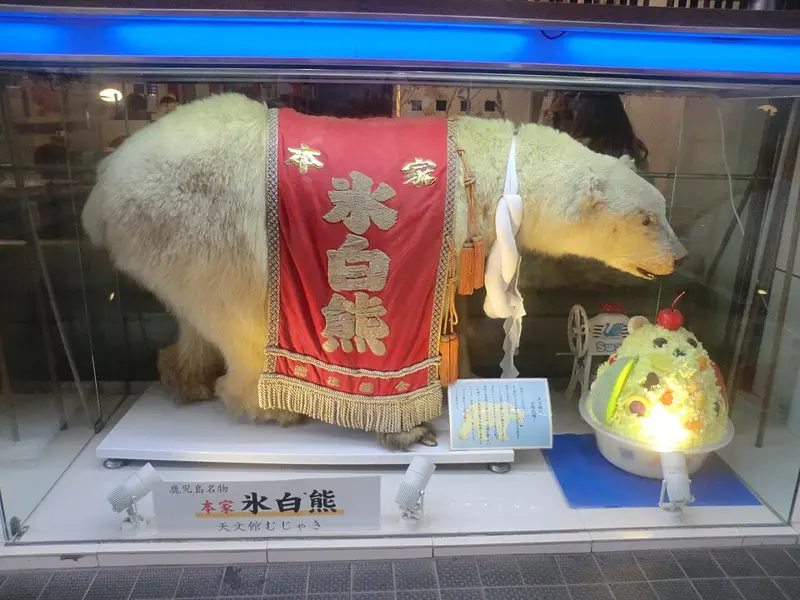
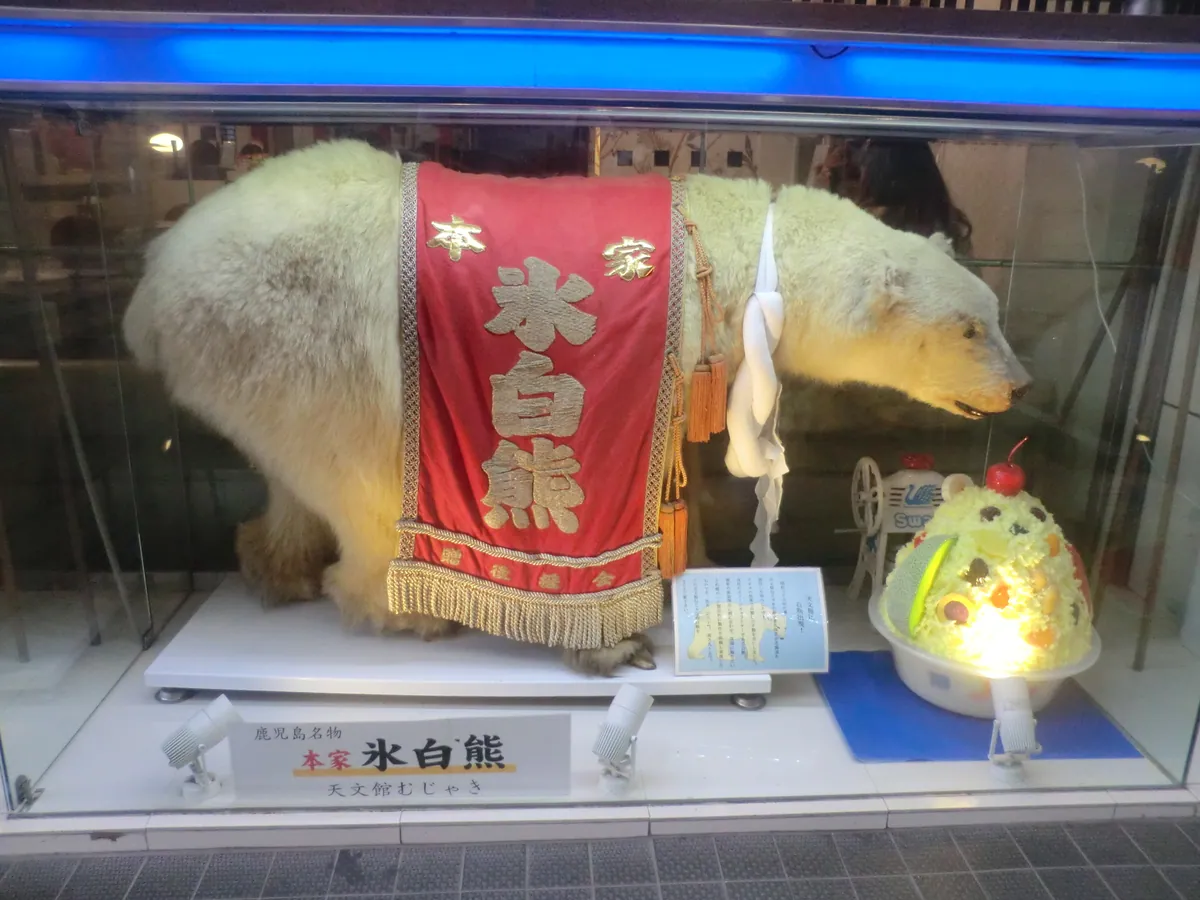
The original “polar bear” shaved ice — condensed milk, fruit, a face you will photograph before you eat it. This is the shop that invented it in 1946.
Not sake. Not soju. The spirit a volcano made inevitable
Shirokuma, 'polar bear', is shaved ice under condensed milk, fruit and beans, and Mujaki has served it since 1949. The name is said to come from the way the fruit arrangement looked from above. It is a Kagoshima civic dish rather than a dessert trend, and the portions are built for sharing whether or not you intend to.
Kagoshima has no meaningful sake tradition, because the soil that grows a volcano does not grow good rice. It grows sweet potatoes — and around 113 distilleries turning them into something Scotland would recognise as a protected regional spirit.
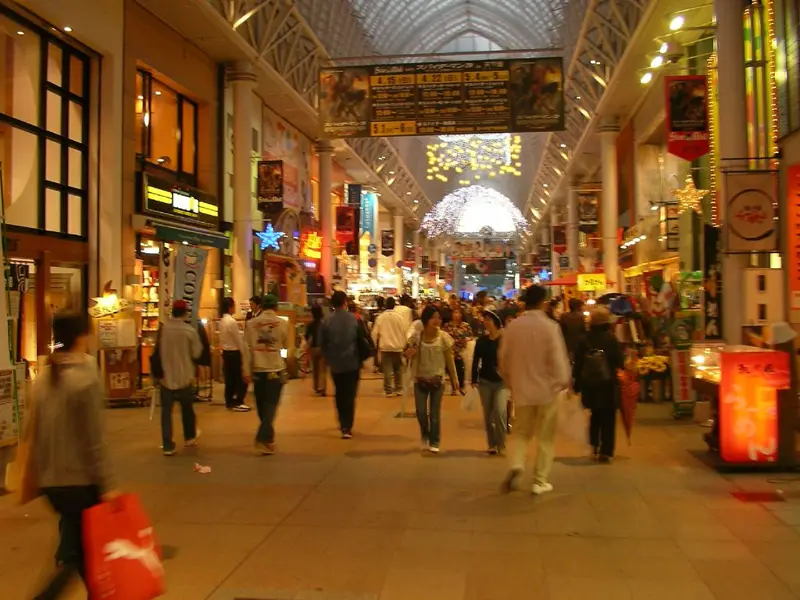
Named for an Edo-era observatory, Tenmonkan is where Kagoshima actually lives: kilometers of covered arcades holding the shirokuma parlor that invented the dessert, satsuma-age fryers, shochu bottle shops, and the department-store basements where locals buy the good karukan. When ash drifts or rain falls, the roofs make it the city’s all-weather room.
For a cruise call it is the perfect pressure valve: reachable in fifteen minutes, satisfying in ninety, expandable to half a day, and positioned so the shuttle takes you straight back. Every Kagoshima plan we publish either starts here, ends here, or shelters here.
Via the Ryukyus and the continent, into a province that could not grow rice well
Kawachi Gen'ichirō finds a mutation of black kōji in Kagoshima — now the industry standard
The same class of protection as Scotch or Cognac
Over 2,000 labels; most houses more than a century old
Tenmonkan's bottle shops pour tastings and ship home. Ask for oyuwari at six-to-four, and let them pick your first bottle.
The one the queue agrees on, the one people who live here use instead, and the one nearest your ship. Opening days change; check before you build a day around one.
Serving shirokuma since 1949 and the shop that named it. The standard size is built for two people who will not admit it.
Open in Google MapsWhere locals goZajiざぼんラーメン 天文館店Kagoshima eats shirokuma after ramen as often as after lunch, and the arcade shops do a smaller, cheaper version.
Open in Google MapsClosest to the berthMujaki, Amu Plazaむじゃき アミュプラザ鹿児島店In the station complex, useful if the shuttle drops you there rather than in the arcade.
Open in Google MapsBoth pins on one map, so the distance is a fact rather than a feeling.
Each of these still lands you back aboard with the hour to spare on a 6-hour stop ashore.
A shaved-ice “polar bear”: condensed milk, fruit arranged into a face, invented at Tenmonkan Mujaki in 1946. The original parlor still serves it in the arcades — expect a fast-moving queue, and know that one regular size feeds two.
Yes — it is the honest 2–3 hour answer: fifteen minutes from the berth, everything under cover, the city’s food icons within three blocks, and the shuttle straight back.
Each one is a finished day we have walked and timed, with this stop in it. Read the route rather than assembling it yourself.
Each of these still lands you back aboard with the hour to spare.
 4 hr for both
Thirty minutes at strolling pace past the stone walls of the samurai quarter, narrated by the runner.
See the detail →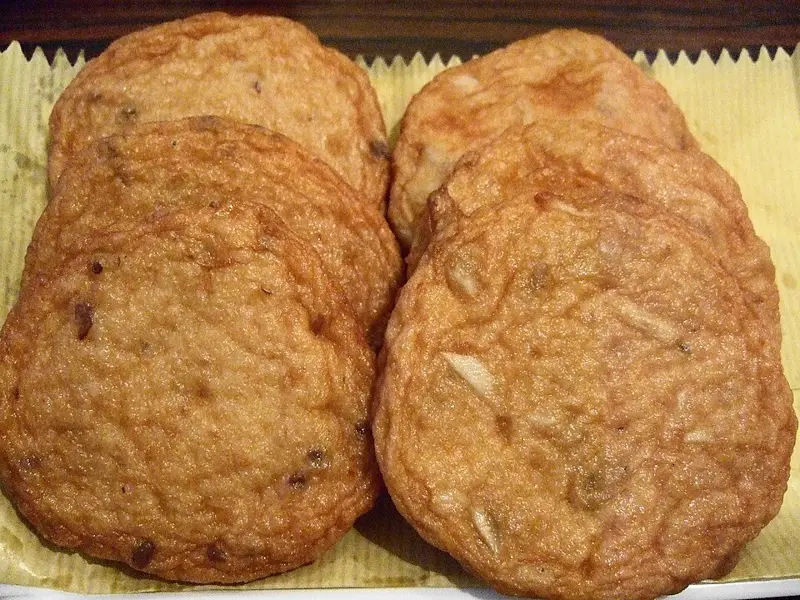 4 hr 30 min for both
The fish cakes every Japanese supermarket imitates, eaten warm at the source.
See the detail →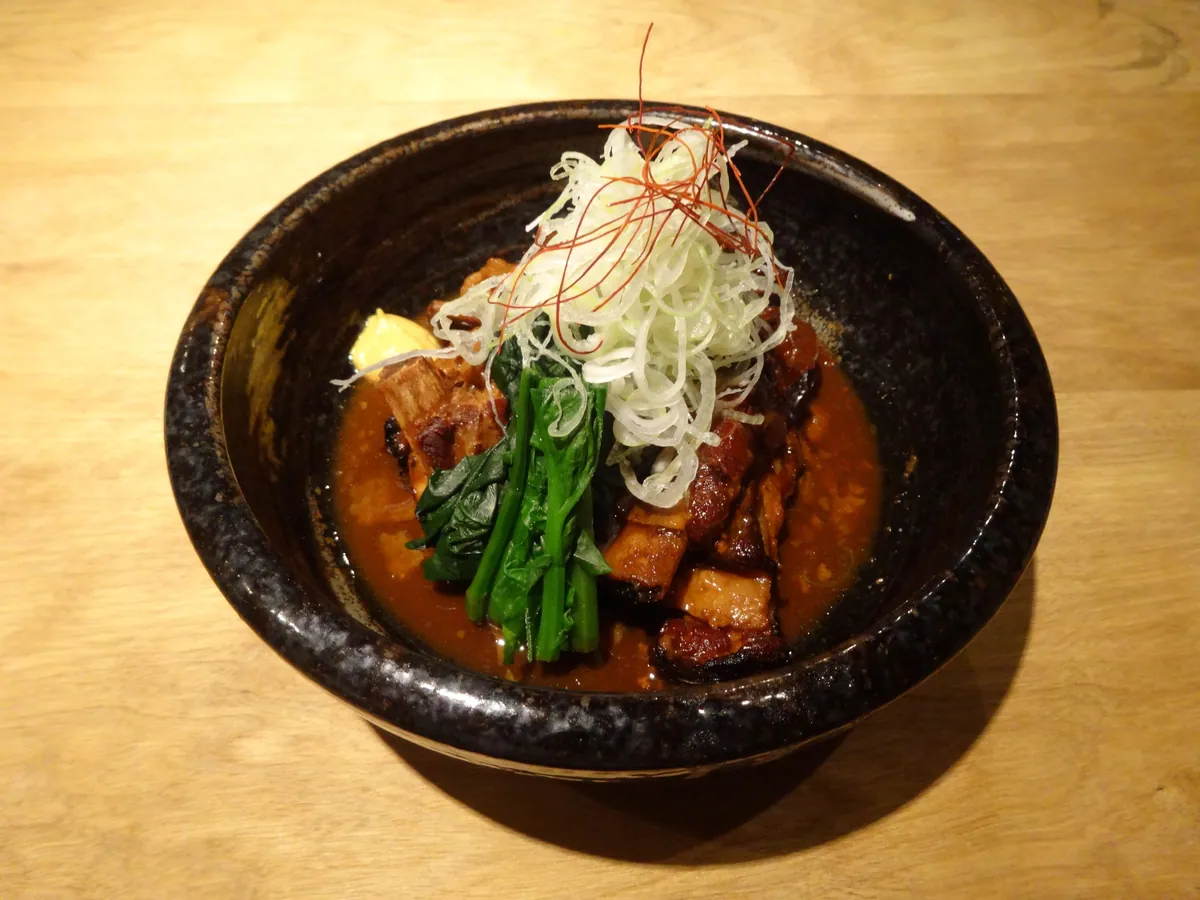 5 hr for both
Berkshire pork raised on sweet potatoes, fried in whisper-light panko.
See the detail →No typing needed — jump straight in:
Just docked? — the gangway toolStart from your shipThe ride from every berthAsk the editorGlossary