~4h — the round trip from the gangway, with the 60-minute margin kept aside.
Tap a photo to see it large. 7 photographs, each credited.
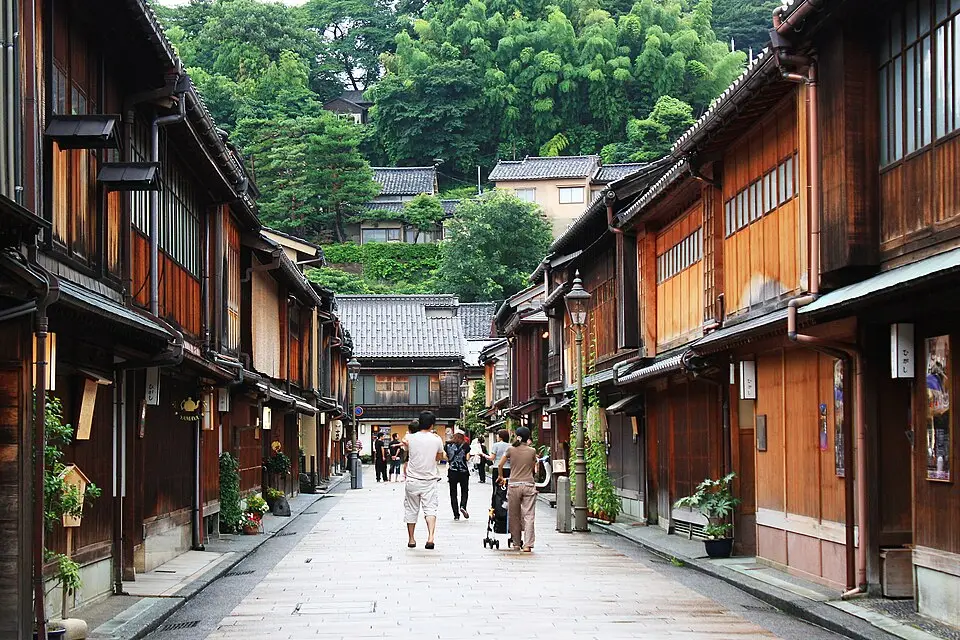
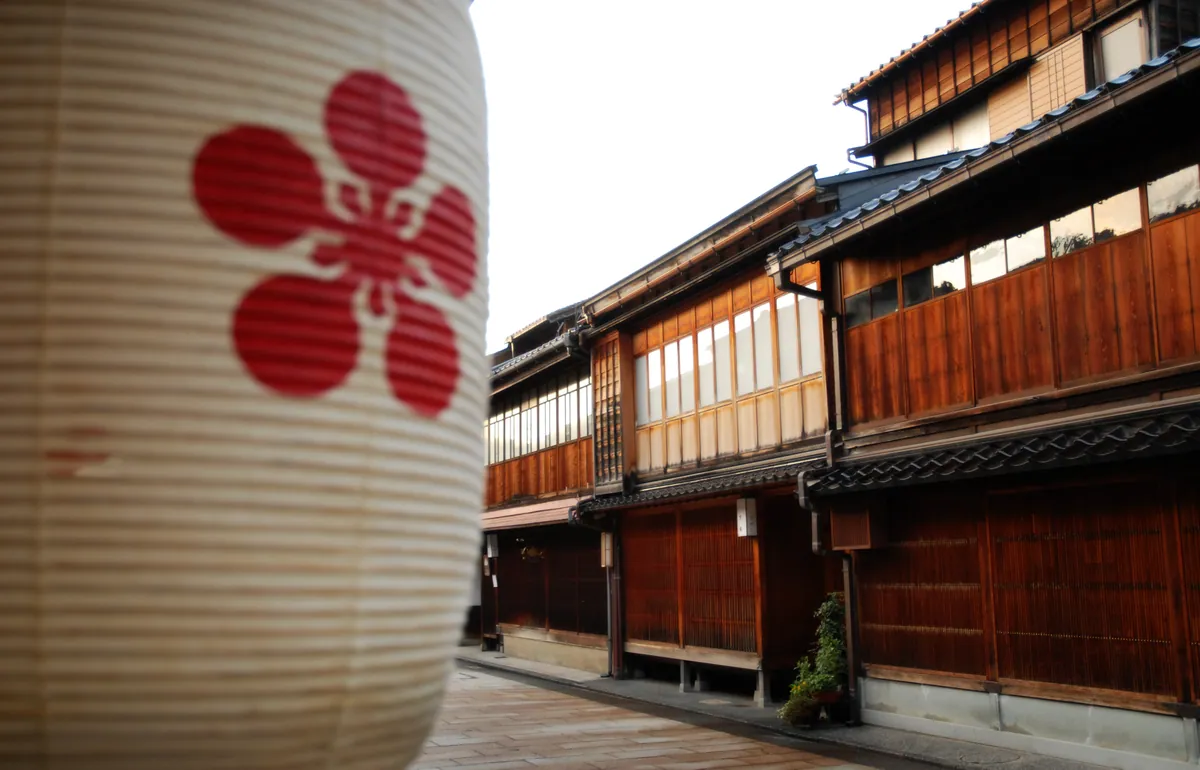
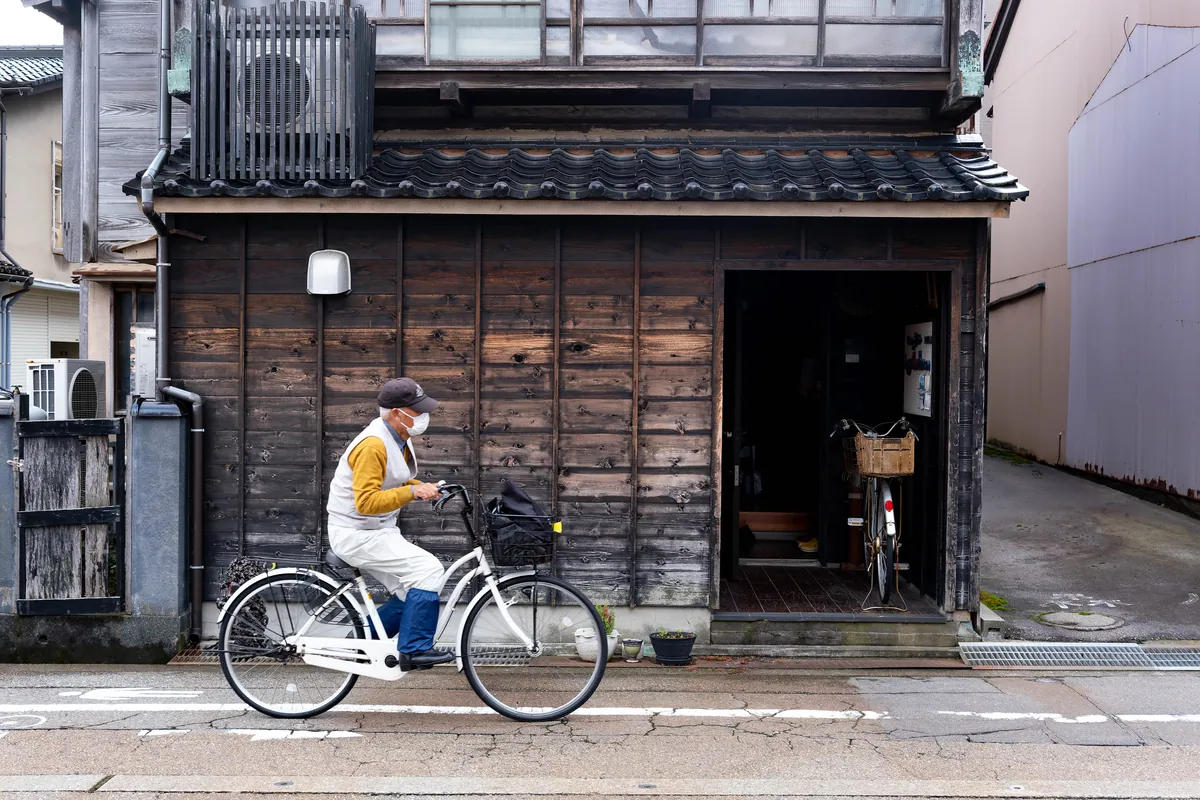
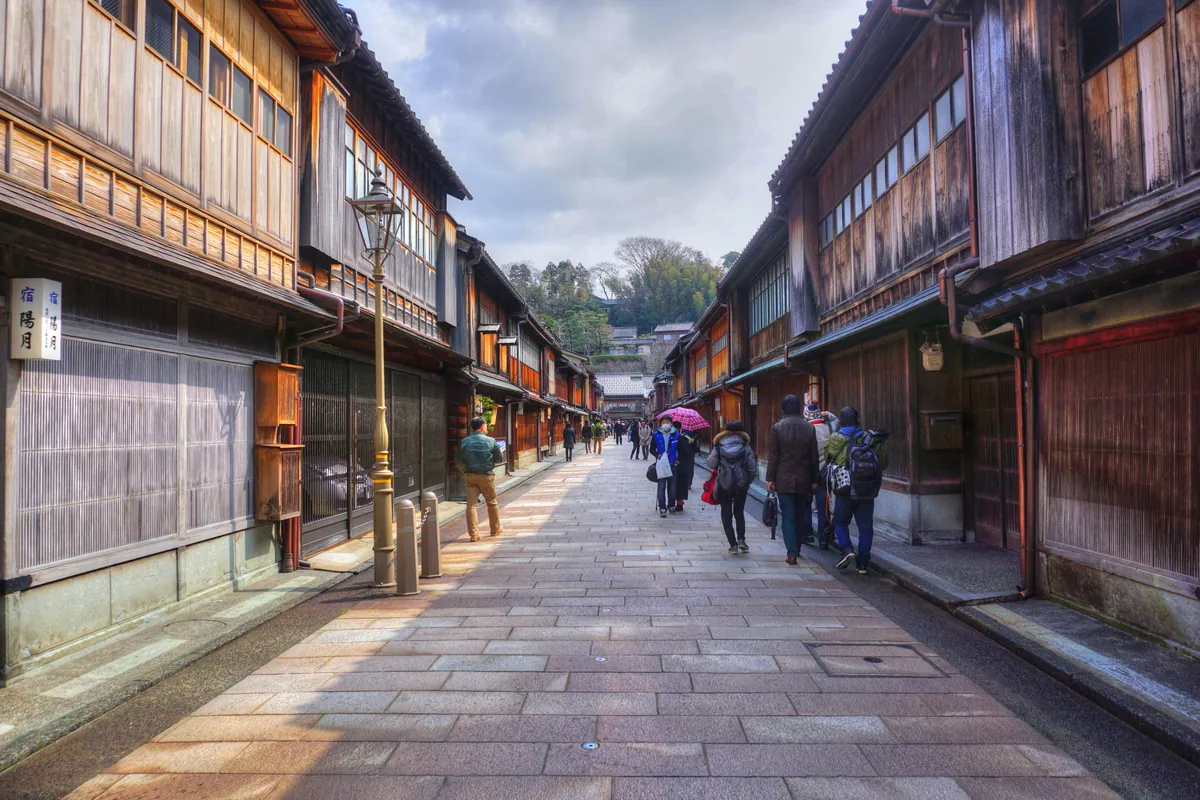
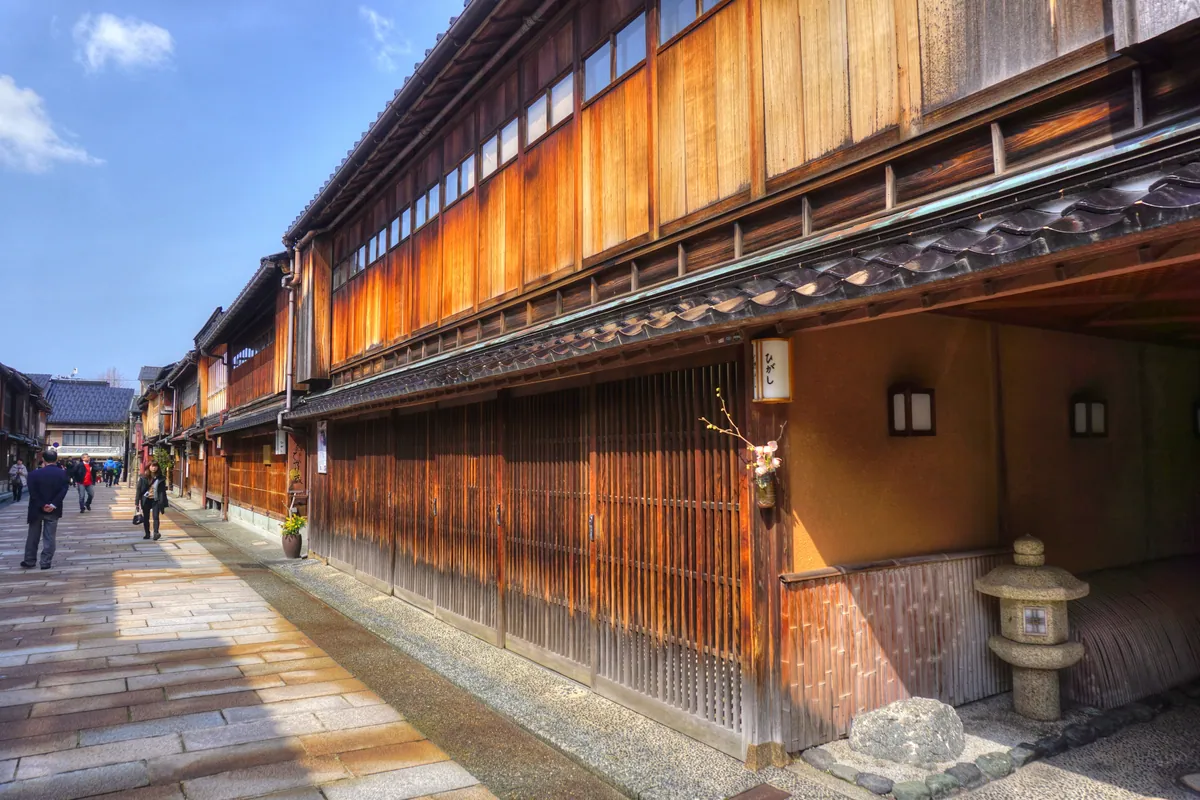
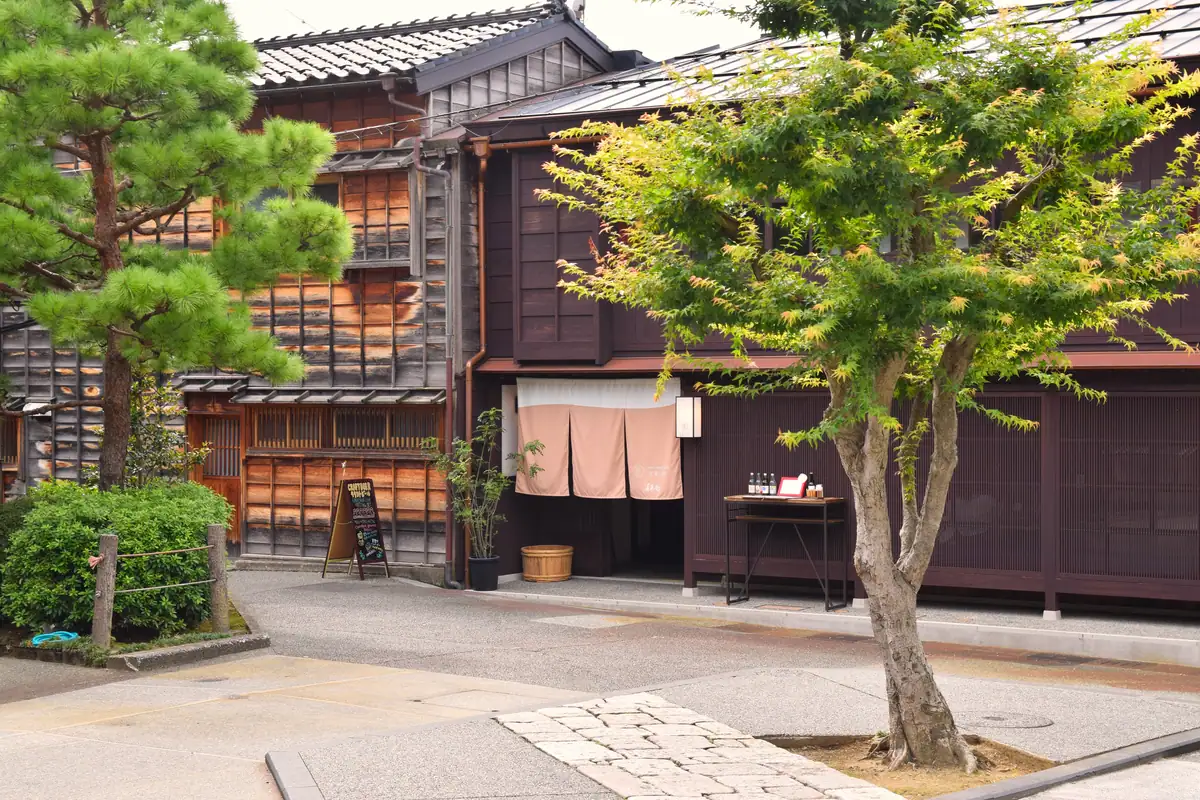
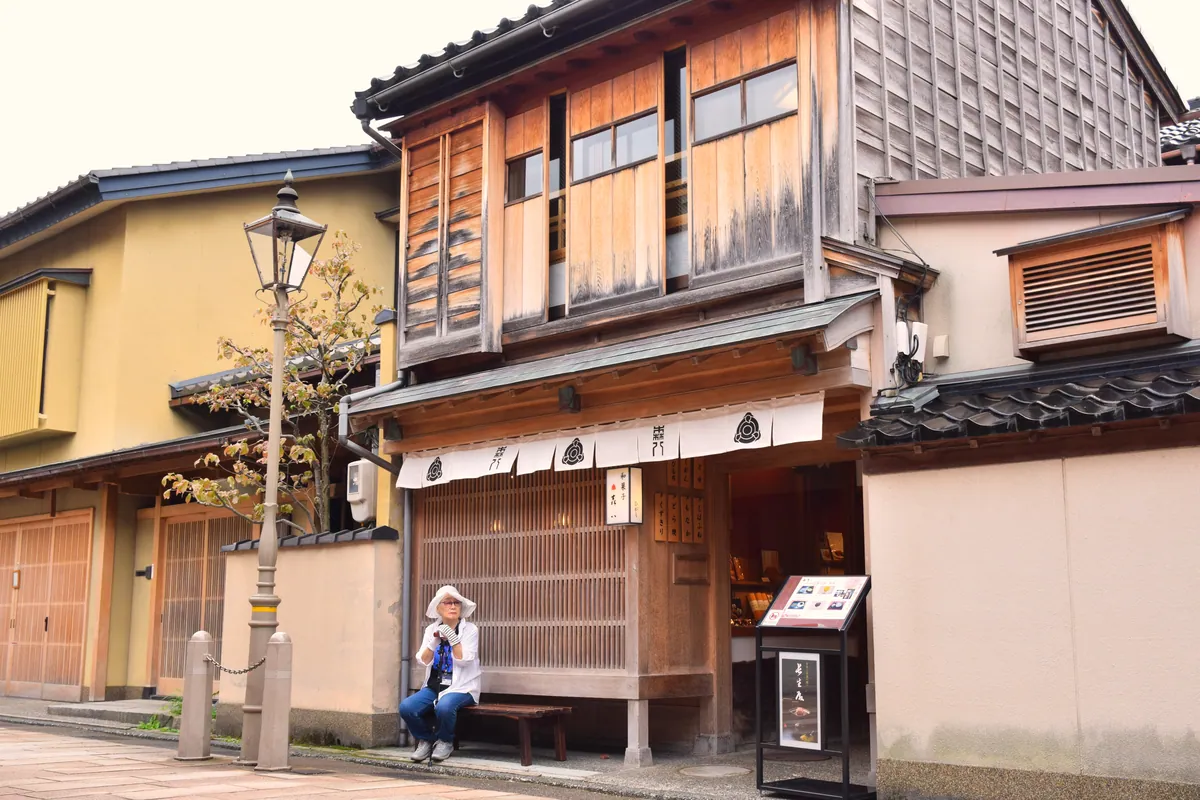
Lattice-fronted geisha houses from the 1820s, now cafes and gold-leaf ateliers. Go early or late — mid-day belongs to the crowds, dawn belongs to you.
Chaya were licensed teahouse districts where geisha entertained, and Higashi Chaya was laid out in 1820. Its wooden lattice fronts and two-storey height are unusual: most of Japan's were burned or rebuilt. Kanazawa was never bombed, which is why this street and the samurai quarter both survive intact.
Both pins on one map, so the distance is a fact rather than a feeling.
Each one is a finished day we have walked and timed, with this stop in it. Read the route rather than assembling it yourself.
Each of these still lands you back aboard with the hour to spare.
 See · ~4.5h with transfers
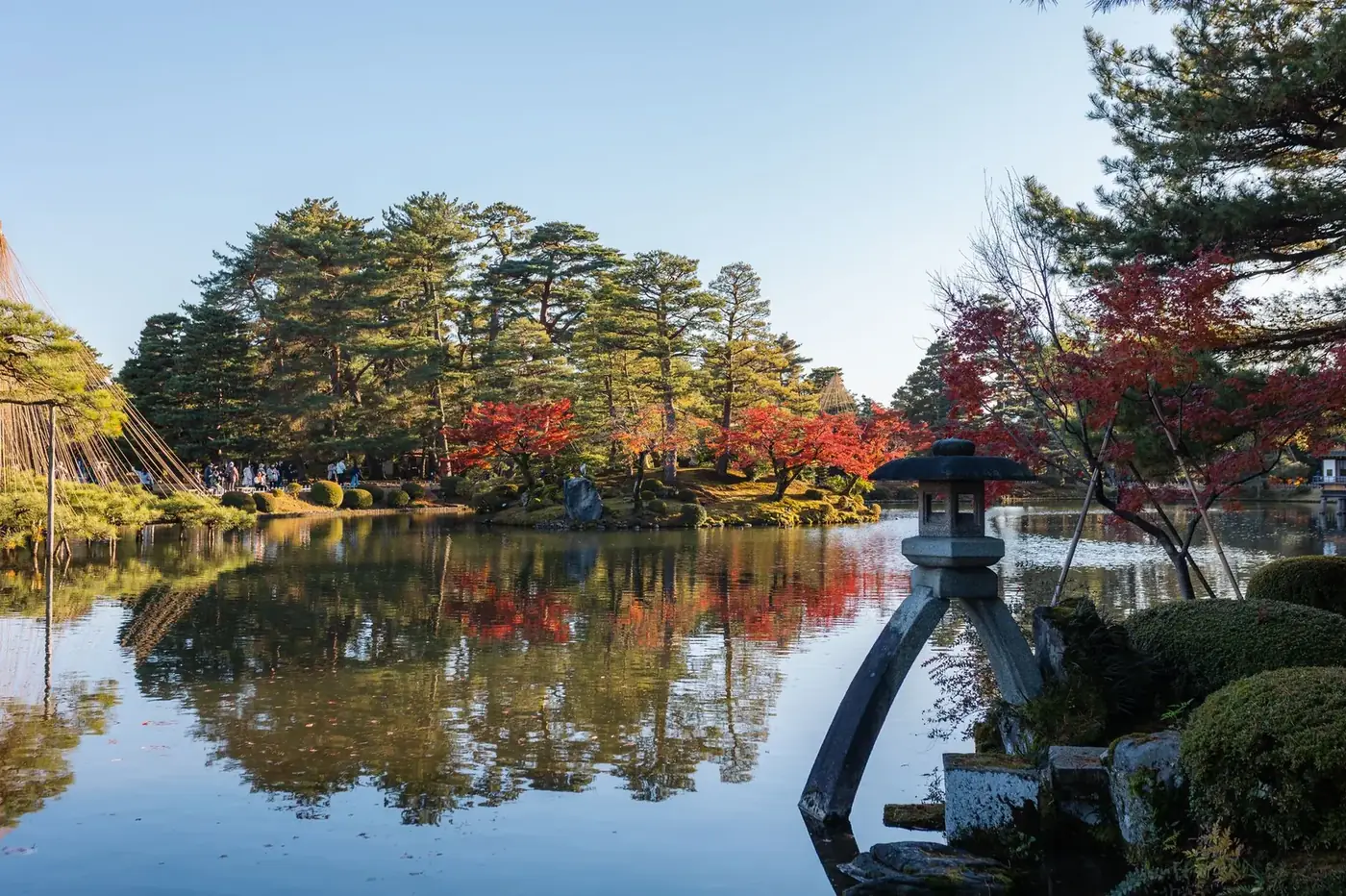
One of Japan’s three perfect gardens — two-legged lanterns, ancient pines under snow ropes, water borrowed from a river ten kilometers away.
See the detail → Eat · ~3.5h
The 300-year-old market’s morning glory: snow crab in season, sweet shrimp and uni year-round, stacked over rice while the stallholders shout.
See the detail → Do · ~4.5hThe garden explained — why that stone, why that pine, what the lords were saying with water.
See the detail →No typing needed — jump straight in:
Just docked? — the gangway toolStart from your shipThe ride from every berthAsk the editorGlossary