~3.5h — the round trip from the gangway, with the 60-minute margin kept aside.
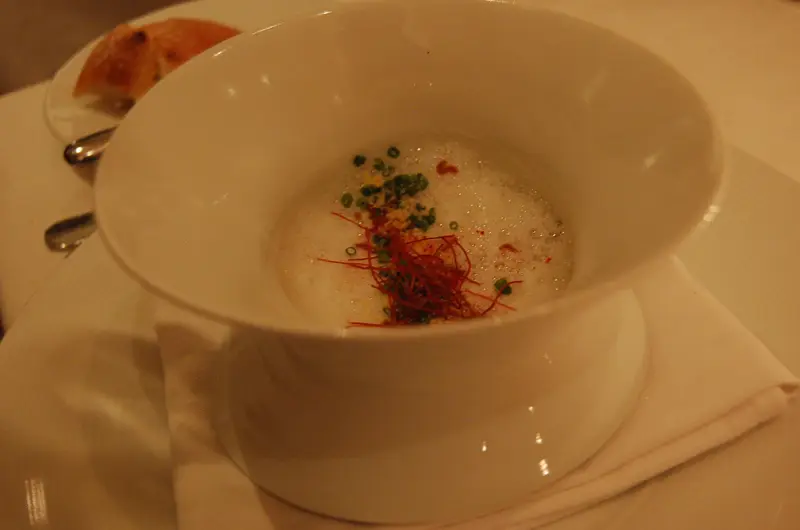
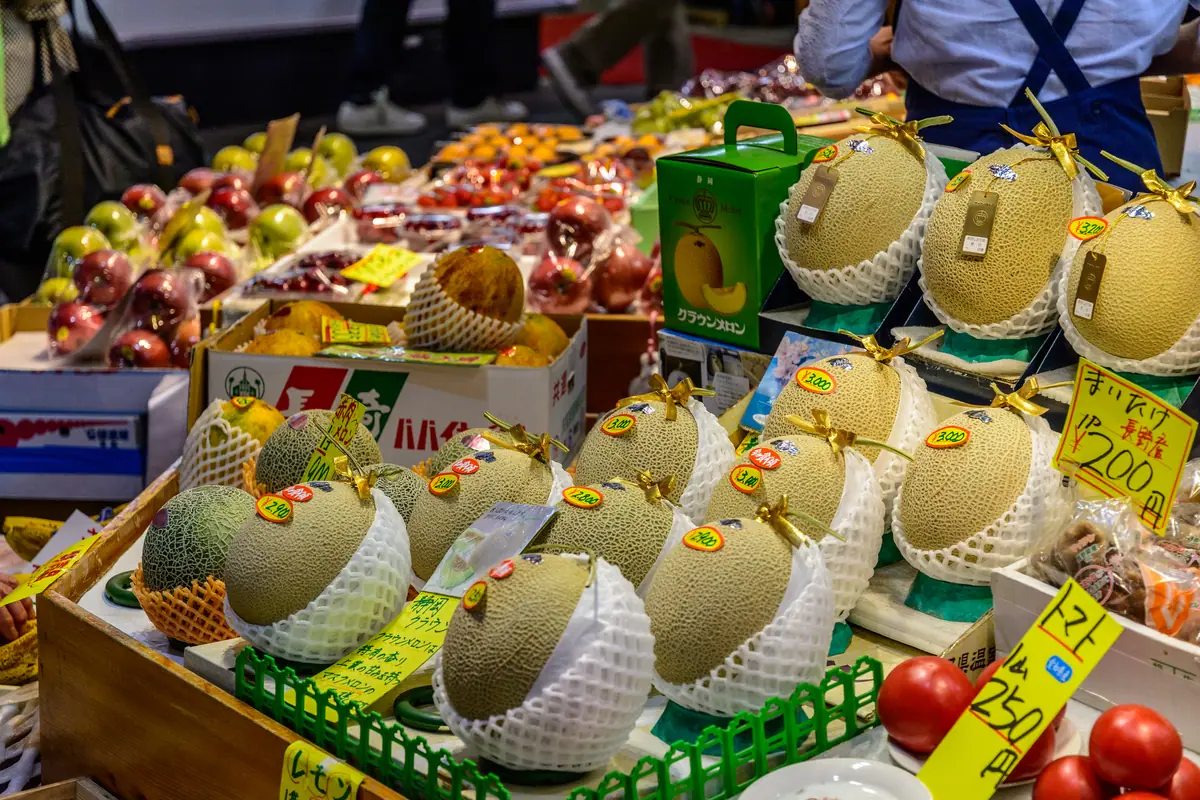
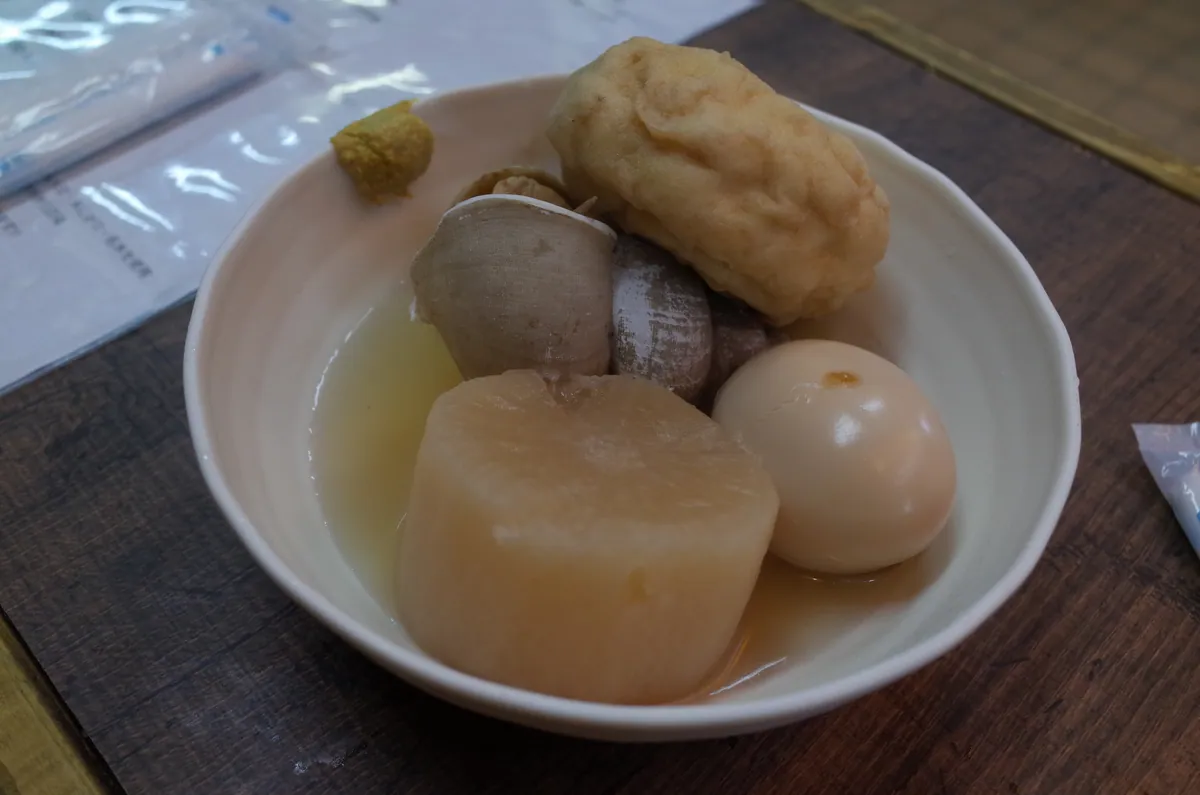
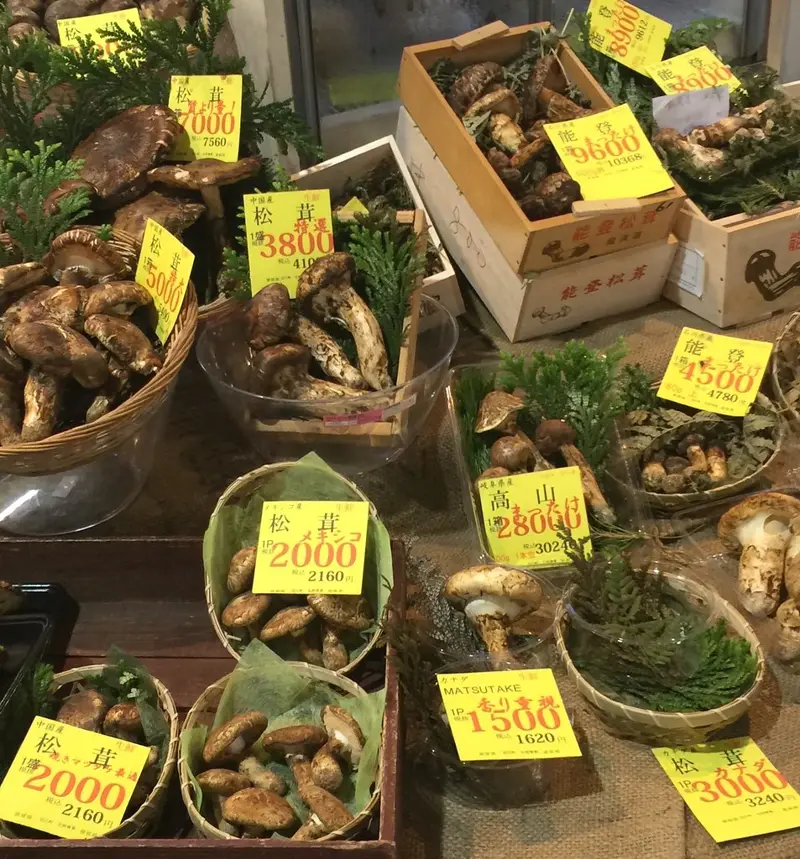
Tap a photo to see it large. 4 photographs, each credited.
The 300-year-old market’s morning glory: snow crab in season, sweet shrimp and uni year-round, stacked over rice while the stallholders shout. Arrive before eleven.
Winter crab, cold-water fish, and a soy sauce district beside the port
Omicho has been Kanazawa's kitchen since 1721, about 180 shops under one roof. The Sea of Japan is cold and the catch shows it: snow crab in winter, sweet shrimp, yellowtail. The bowls upstairs are assembled from the cases downstairs, which is why the price tracks the season so exactly.
The Sea of Japan in winter is cold, rough and shallow over a wide shelf — which is a bad combination for fishermen and an excellent one for fish. Kanazawa eats the result, and it eats it with a soy sauce brewed in a district ten minutes from where your ship ties up.
Around 180 shops under one roof, running since the Edo period, and still the market Kanazawa households actually use. The Sea of Japan in winter is cold, rough and shallow over a wide shelf — bad for fishermen, excellent for fish — and this is where the result arrives.
Snow crab season runs from early November to about March. Every legally landed crab carries a coloured tag identifying its port, and locals read the tag before the price. Outside the season an honest shop will tell you the crab is frozen or imported.
One of Japan's five historic soy towns
And still is
Kanazawa joins Kyoto and Matsue at the top
Running to about March, with tagged catch by port
Kaisen-don at a counter inside Omicho Market, then a bottle of Ono soy sauce on the way back to the ship.
The one the queue agrees on, the one people who live here use instead, and the one nearest your ship. Opening days change; check before you build a day around one.
Bowls built from the cases downstairs. Snow crab in winter, sweet shrimp most of the year.
Open in Google MapsWhere locals goYamasan Sushi山さん寿司 本店A market counter locals use, generous rather than delicate.
Open in Google MapsClosest to the berthOmicho Ichiba近江町市場About 180 shops under one roof since 1721, and the price tracks the auction rather than the season’s tourists.
Open in Google MapsBoth pins on one map, so the distance is a fact rather than a feeling.
Kaisen-don — sliced raw fish over rice — at a counter inside the market rather than a restaurant with a view; the fish is better and the price lower. From early November to March, snow crab. Outside that window, order nodoguro grilled with salt instead, because out-of-season crab here is frozen or imported.
Less than most. It has around 180 shops under one roof, has run since the Edo period, and is still where Kanazawa households buy food. Many stalls close on Wednesdays, which is a good sign — it operates on the city's schedule, not a visitor's.
Each one is a finished day we have walked and timed, with this stop in it. Read the route rather than assembling it yourself.
Each of these still lands you back aboard with the hour to spare.
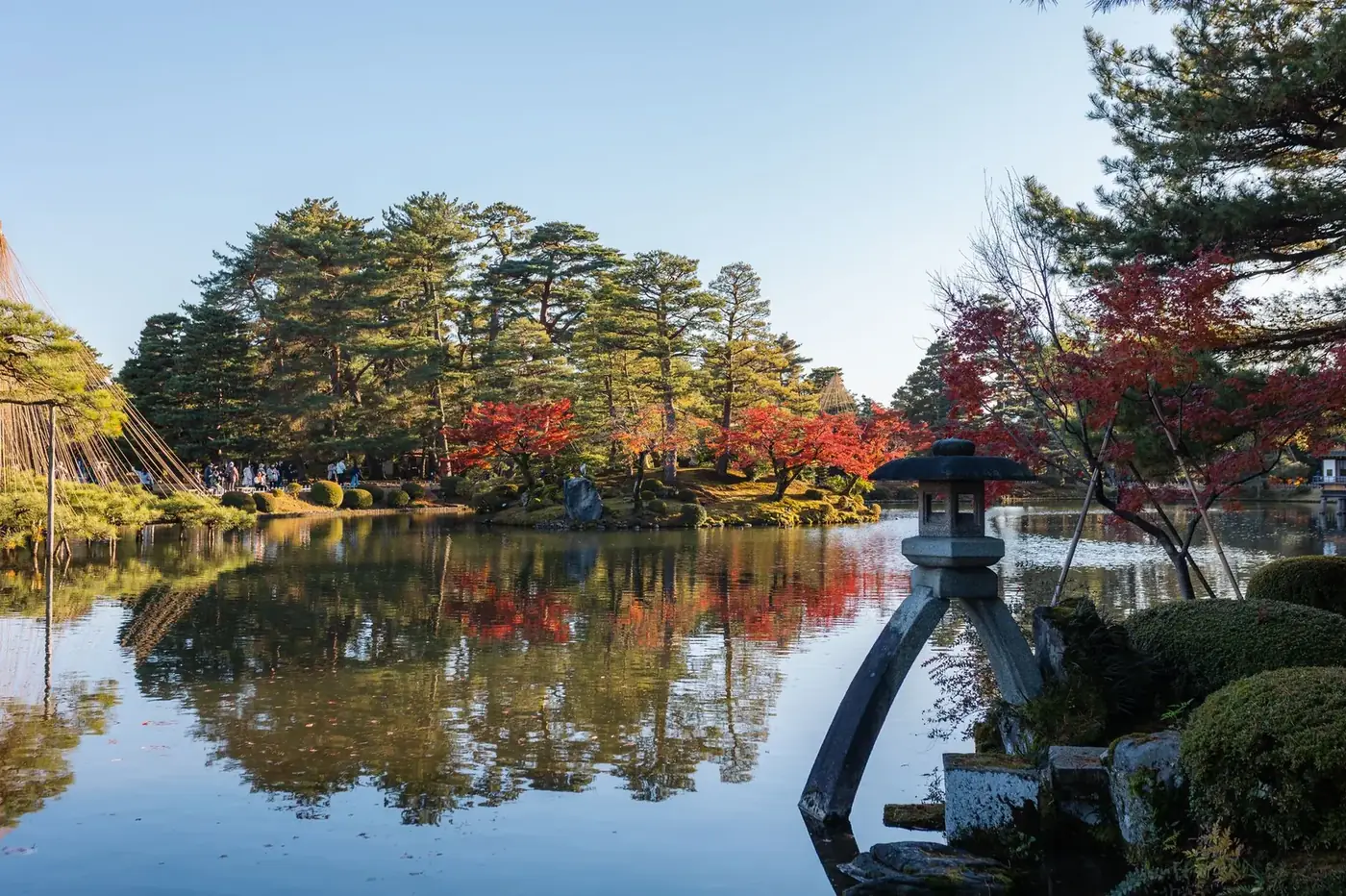 See · ~4.5h with transfers
One of Japan’s three perfect gardens — two-legged lanterns, ancient pines under snow ropes, water borrowed from a river ten kilometers away.
See the detail →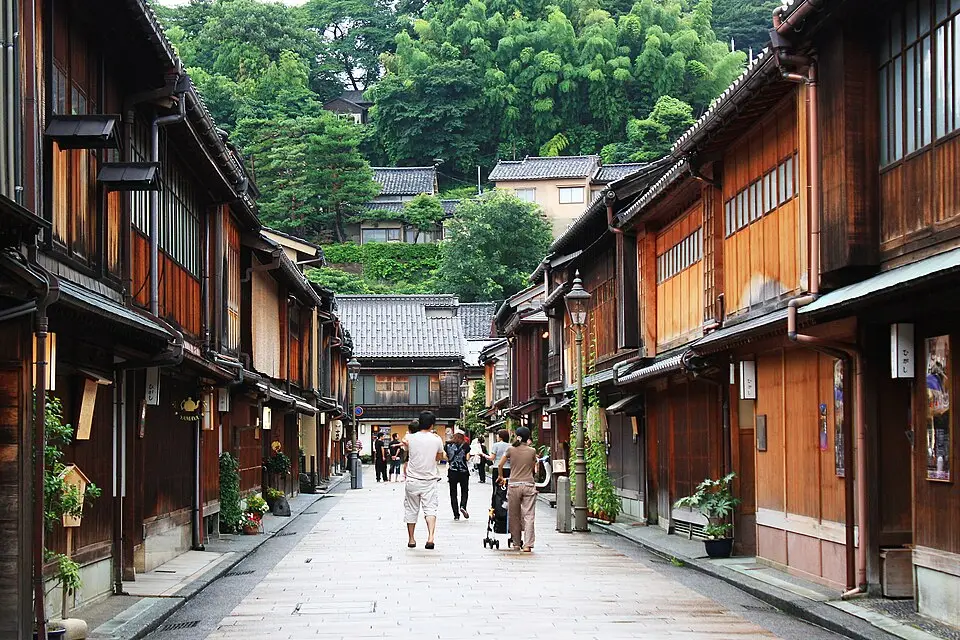 See · ~4h
Lattice-fronted geisha houses from the 1820s, now cafes and gold-leaf ateliers.
See the detail → Do · ~4.5hThe garden explained — why that stone, why that pine, what the lords were saying with water.
See the detail →No typing needed — jump straight in:
Just docked? — the gangway toolStart from your shipThe ride from every berthAsk the editorGlossary