
Home / Fushiki–Toyama / Culture
Culture & history · Fushiki–ToyamaTakaoka copper
Seven casters, one lord, and four centuries of bronze
In 1611 a lord gave seven metalworkers a plot of land and a tax break. The town they founded now casts most of the bronze statues in Japan, and a basket you can bend with your hands.
Maeda Toshinaga, second lord of the Kaga domain, built Takaoka Castle and founded the town in 1609. Two years later, in 1611, he invited seven casters from Nishibu-Kanaya in the Tonami district. He set them up in a new quarter outside the castle. The plot measured fifty ken east to west and a hundred north to south, roughly 90 by 180 metres. The casters were excused taxes. The quarter was called Kanaya-machi, and it is still there.
The first products were iron: pots, kettles and farm tools. From the middle of the Edo period the workshops turned to copper, casting temple bells and lanterns. By the late Edo period they were making Buddhist altar fittings and vases. In the Meiji era Takaoka bronzes went to the world expositions in Vienna and Paris and exports grew. In 1975 the craft was designated a national Traditional Craft, and in 2008 "Takaoka dōki" became a registered regional trademark.
Takaoka's own guides put it simply: nine in ten of the bronze statues in Japan are cast here.
The street
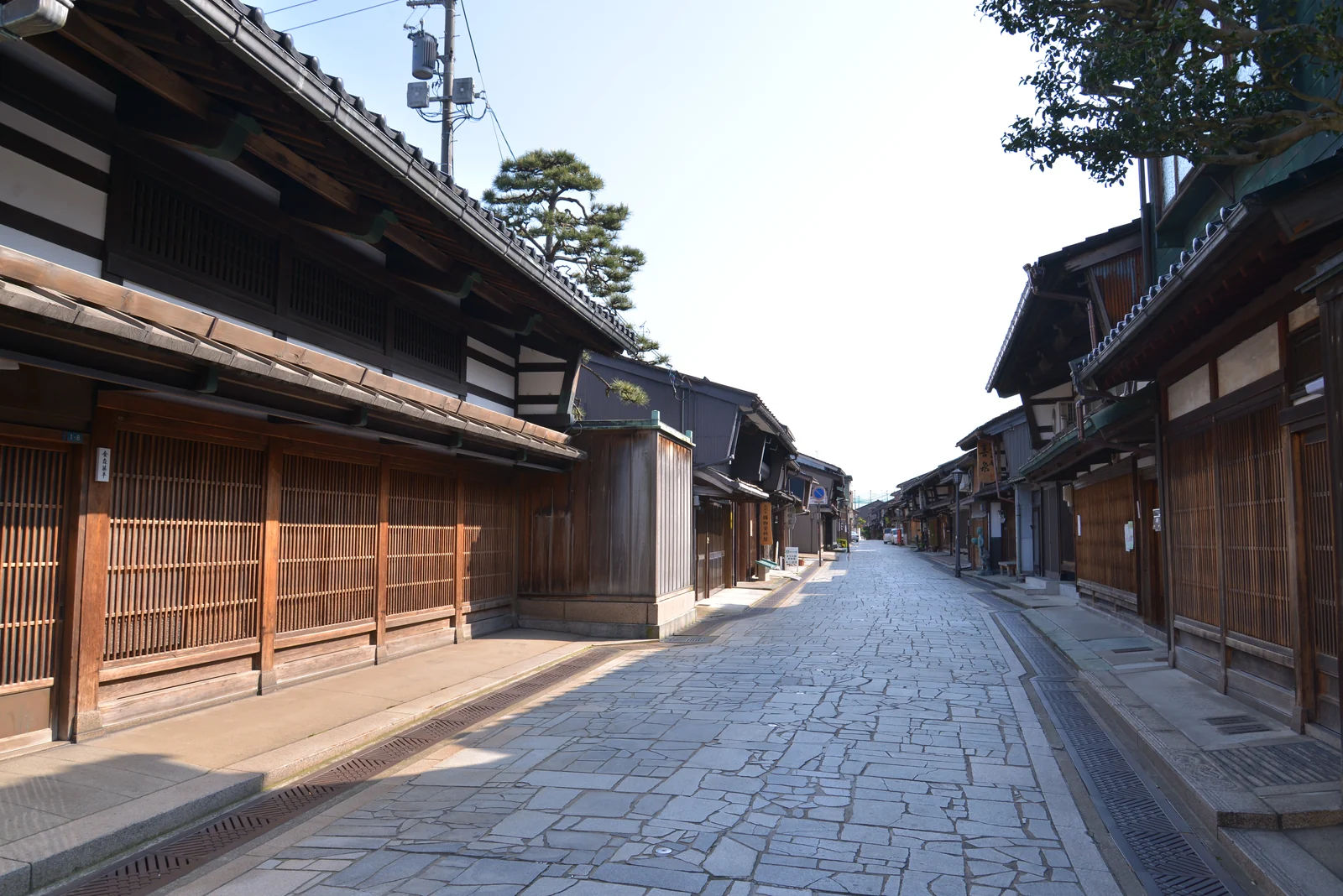
Kanaya-machi was selected as an Important Preservation District for Groups of Traditional Buildings on 28 December 2012. About 6.4 hectares are covered, under the category "casters' town". The houses run along a stone-paved street of roughly 500 metres, their fronts closed by fine wooden lattices the locals call samanoko. Look down as you walk: small pieces of copper are set into the paving, hearts and the seven stars of the Plough.
The plots tell you what the trade was. Each is long and narrow. The house stands on the street, then a courtyard, then a storehouse, and only at the back the workshop with its furnace. The layout was fire control. If the foundry burnt, the courtyard and storehouse stood between the flames and the family.
The lattices have no sharp corners. Generations of wiping away soot and ash from the furnaces rounded them off.
Two small museums sit on the street. The Takaoka Casting Museum opened in 2007 and the Kanaya Casters' Town Exchange Hall in 2020. At one corner stand the iron cupola and brick chimney of the old Nambu foundry, built in 1924 and now a registered cultural property. The quarter was not rebuilt as a showpiece; the industry simply never left.
A lord's birthday, every year
On 20 June, the anniversary of Toshinaga's death, Kanaya-machi holds the Goin-sai, a thanksgiving for the land and protection he gave. On the eve, the casters' old work song, Yagae-bushi, is danced through the streets by around a thousand people. A town is still thanking a man who died in 1614 for a tax break.
The Buddha that would not burn
Ten minutes on foot from Takaoka Station sits the Takaoka Daibutsu, a bronze Amida sixteen metres high including its base. Its wooden predecessors kept burning; the last was lost in the great fire of 1900. The town decided the next one would not. Takaoka's copper craftsmen carried out every stage, from casting to the final colouring, over twenty-six years, paid for by citizens' donations. The eye-opening ceremony was held in 1933.
It is open from six in the morning to six at night, every day, for a donation.
Nousaku, and the basket that bends
The best-known name in Takaoka metal today is Nousaku, founded in 1916 in the town's Kyoto-chō. It began with brass Buddhist altar fittings, tea utensils and vases. In 2003 the company began casting tableware in 100% tin, which it describes as a world first. Pure tin is soft, so the pieces can be bent by hand into shape. In 2017 the Museum of Modern Art in New York took the KAGO square basket into its shop.
The same year Nousaku moved to a new headquarters and factory in Takaoka Office Park. It runs factory tours and a casting workshop where visitors pour their own piece, and had 253 employees at the end of 2025. It has a subsidiary in Taiwan and a brand store in Taipei, which tells you where the next customers are expected.
The festival float connection
The craft explains one more thing about Takaoka. The seven floats of the Mikurumayama festival, paraded every 1 May, are covered in metalwork, lacquer and textiles. A city document describes them as the place where Takaoka's copper and lacquer skills are displayed without restraint. The Takaoka Mikurumayama Kaikan, opened in 2015, shows a real float all year. See the dance story for the festival itself.
How it happened
- 1609Takaoka founded
Maeda Toshinaga builds the castle and the town
- 1611Seven casters arrive
Granted land and tax relief in Kanaya-machi; iron pots and kettles first
- mid-EdoCopper replaces iron
Temple bells and lanterns, then altar fittings and vases
- Meiji eraVienna and Paris
Takaoka bronzes at the world expositions; exports grow
- 1933The bronze Daibutsu is consecrated
Cast by local craftsmen after the 1900 fire destroyed the wooden statue
- 1975National Traditional Craft
Designation of Takaoka copperware
- 2003Nousaku casts 100% tin
Tableware that bends by hand; MoMA stocks it from 2017
- 2012Kanaya-machi protected
Important Preservation District, 28 December, 6.4 hectares
Where this becomes real on your port day
Kanaya-machi, the Daibutsu and the Mikurumayama museum are all walkable in Takaoka, a short train ride from the berth. Nousaku's factory tour needs a taxi and a booking.
The vocabulary of Takaoka copper
- Takaoka dōki 高岡銅器
- Takaoka copperware: bells, statues, altar fittings and vases cast here since 1611.
- Imoji 鋳物師
- A caster. Seven of them founded the trade; the word still names Kanaya-machi's district type.
- Samanoko さまのこ
- The fine wooden lattices on Kanaya-machi house fronts, worn round by generations of soot.
- Goin-sai 御印祭
- The 20 June thanksgiving for Lord Toshinaga, with the casters' work song danced through the streets.
- Suzu 錫
- Tin. Nousaku's 100% tin tableware is soft enough to bend by hand.
FAQ
What is Takaoka famous for?
Metal casting. Seven casters were invited by Lord Maeda Toshinaga in 1611 and settled in Kanaya-machi. The trade moved from iron to copper and bronze, and Takaoka now produces most of Japan's bronze statues and temple bells. It was designated a national Traditional Craft in 1975.
How big is the Takaoka Daibutsu?
About sixteen metres including the base. The bronze Amida was consecrated in 1933 after twenty-six years of work by local craftsmen. It replaced a wooden statue lost in the great fire of 1900. It is open daily from 6:00 to 18:00 for a donation, ten minutes on foot from Takaoka Station.
Can I visit Nousaku?
Yes. The headquarters and factory in Takaoka Office Park, opened in 2017, run factory tours and a casting experience. It is a taxi ride from central Takaoka and bookings are advisable. The shop sells the 100% tin tableware, including the KAGO baskets stocked by MoMA.
More from Fushiki–Toyama
Hell, paradise and a wall of snow, 3,000 metres above the bay
Read →
A fish tank a kilometre deep, and the three creatures that define it
Read →
Use it first, pay later: the sales idea that built a prefecture
Read →
Three nights to calm the wind, and a float given by a warlord
Read →