Home / Fushiki–Toyama / Culture
Culture & history · Fushiki–ToyamaToyama Bay
A fish tank a kilometre deep, and the three creatures that define it
The sea floor drops to a thousand metres within sight of the shore. That one fact explains a glowing squid, a translucent shrimp caught nowhere else, and a yellowtail with its own annual press announcement.
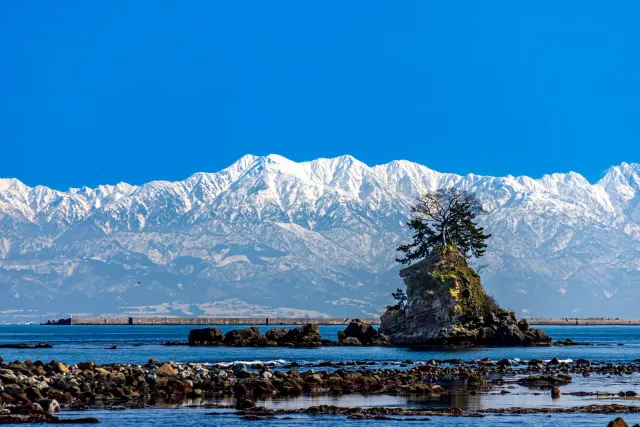
The Ministry of Agriculture calls Toyama Bay a natural fish tank. The bay is about 1,000 metres deep and the Tateyama peaks above it reach 3,000. The prefecture measures the place as a single 4,000-metre drop. About 500 of the roughly 800 fish species known in the Sea of Japan live here.
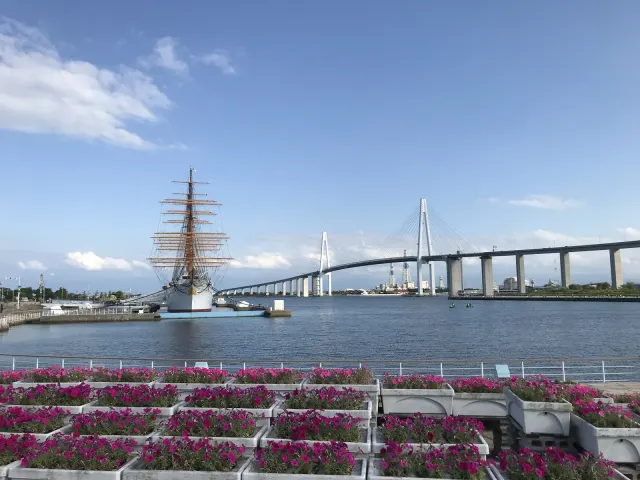
The reason is structure. Steep underwater valleys, called aigame locally, run from the river mouths straight down into the deep. Three layers of water sit on top of each other. The surface is freshened by the rivers and the middle layer is the warm Tsushima current. Below about 300 metres lies the cold deep water of the Sea of Japan. Fish that normally live far offshore are a short boat ride from the quay. Shinminato, where your ship berths, holds its morning auction at five and a second at one in the afternoon.
White shrimp: the one you cannot get elsewhere
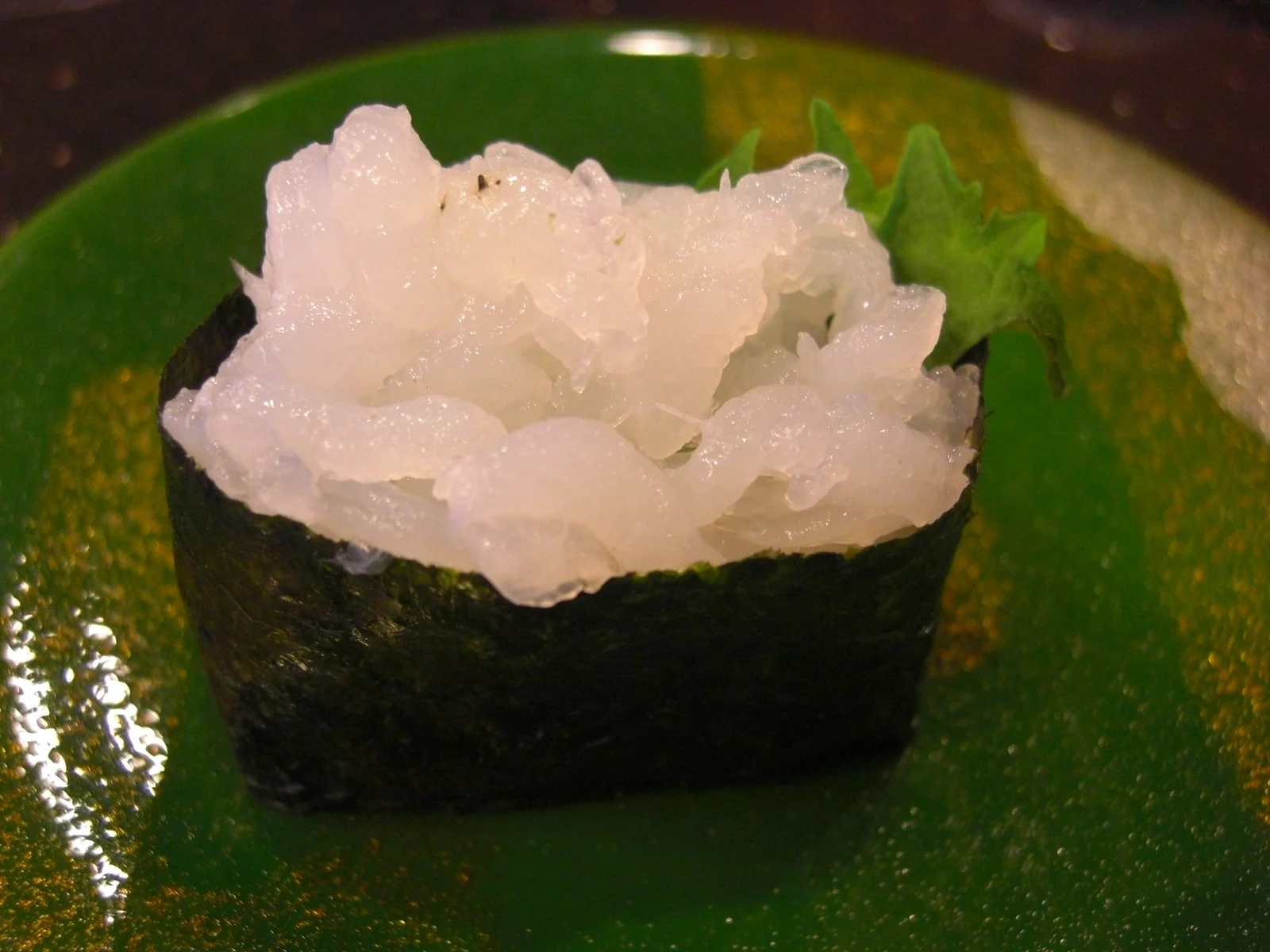
Shiroebi is a small, pale pink shrimp that turns glassy when raw. The prefecture's fisheries office states that Toyama Bay is the only place in Japan where it is caught in any quantity. It calls the shrimp the jewel of the bay. The Shinminato fishing co-operative, based in Imizu, works the aigame canyon off the mouths of the Shō and Oyabe rivers. There the sea floor falls away steeply within a few kilometres of the port.
The shrimp come up from deep water in the morning and are sold the same day. Eat them raw as sashimi or sushi, peeled by hand, or as kakiage, a loose tempura fritter. Shinminato has run a seafood festival with white shrimp in its name since 2008; the prefecture named shiroebi one of its three official "Toyama fish".
Jewel, mystery, king: the prefecture gives each of its three fish a title. The shrimp is the jewel.
Firefly squid: the mystery
Hotaruika is a squid the length of a finger. Females grow to 5.5 to 7 centimetres, males to about 4.5, and all of them live roughly a year. They spend that year 200 to 300 metres down. In spring the females rise to the shore of Toyama Bay to spawn, each carrying around 10,000 eggs. Their bodies carry light organs that glow blue-white, a cold light made by the same chemistry as a firefly's. The museum lists three uses for it: startling predators, matching the light from above as camouflage, and signalling to each other.
The spawning season is March to May. The sea surface from the Jōganji river mouth to Uozu port, out to 1.3 kilometres offshore, has been protected since 1952. It is a national Special Natural Monument: the protected thing is the water itself, for what gathers in it each spring. The town of Namerikawa sits in the middle of that stretch, and has records of catching the squid going back to 1585. Fixed-net fishing opens there on 1 March.
The thing to do is get up early. Namerikawa has sent sightseeing boats out to the nets since the 1910s and settled on the pre-dawn version in 1987. From early April to early May, boats leave in the dark, and as the fixed nets are hauled the squid flash blue in the mesh. Then the sun comes up over the Tateyama range. Booking is required, and the operator warns that weather cancels sailings.
If the hour is impossible, the Hotaruika Museum near Namerikawa Station keeps live squid in a dark theatre. The show runs from 20 March to late May; admission is ¥820 in season. The squid was named in 1905 by the zoologist Watase Shōzaburō, and it has been the prefecture's official fish since 1996.
Winter yellowtail: the king
Yellowtail, buri, migrates north through the Sea of Japan in spring and summer and turns south in winter to spawn. In winter the fish passing Toyama Bay are at their fattest. The ones taken in the fixed nets off Himi are sold as Himi kan-buri, winter yellowtail, the prefecture's "king".
Himi has fished with fixed nets for over 400 years. Its "Etchū-style buri-otoshi net" became the model for fixed-net fishing across Japan. The Ministry of Agriculture listed the fishery as a Japan Agricultural Heritage in February 2021. The yellowtail once went to the rulers of the domain as tribute.
The brand is policed. A judging committee of the Himi Fish Brand Council watches the first winter landings for size, numbers and condition. It is made up of fishermen, wholesalers and the co-operative. When it is satisfied it issues the Himi kan-buri declaration. From then until it calls time, only fixed-net fish auctioned at Himi port may carry the name, each with a certificate. In 2022 the declaration came on 26 November.
Masu-zushi: the one you take away
Toyama's portable dish is masu-zushi, pressed trout sushi in a round wooden box. The usual story dates it to 1717. A domain retainer named Yoshimura Shinpachi presented a sushi of Jinzū river sweetfish and local rice to the third lord of Toyama, Maeda Toshioki. The lord sent it on to the shogun Yoshimune, who praised it. The ministry notes older claims and treats the date as tradition rather than record.
The sweetfish gave way to cherry salmon between the late Edo period and Meiji, which is the version you will meet. Bamboo leaves are laid in the box and vinegared rice spread over them. Salted and vinegared trout goes on top, and the whole thing is weighted for hours. It is sold as a station lunch, has been since the Hokuriku line opened, and Toyama City alone has more than thirty makers. Keep it at room temperature; the fridge hardens the rice. It is said to be best on the second day, which makes it the right thing to carry back to a ship.
How it happened
- 1585Firefly squid in the records
The earliest catch record at Namerikawa
- 1717Masu-zushi presented to the lord
Sweetfish sushi from Yoshimura Shinpachi; the shogun Yoshimune praises it
- 1905The squid gets its name
Watase Shōzaburō names hotaruika; the species carries his name in Latin
- 1952A stretch of sea becomes a Special Natural Monument
Jōganji river mouth to Uozu port, 1.3 km offshore
- 1987Pre-dawn squid cruises begin
Namerikawa settles on the early-morning format
- 2014Most Beautiful Bays in the World
Toyama Bay joins in October
- 2021Himi fixed nets become Agricultural Heritage
Ministry listing in February for a 400-year-old method
Where this becomes real on your port day
Shinminato's market and shrimp are at the berth. The squid cruise and Himi's yellowtail belong to specific months, and the squid museum covers the gap.
The vocabulary of Toyama Bay
- Shiroebi シロエビ
- White shrimp. Caught commercially only in Toyama Bay; translucent raw, "the jewel of the bay".
- Hotaruika ホタルイカ
- Firefly squid. A finger-length squid that glows blue and comes inshore to spawn, March to May.
- Kan-buri 寒ぶり
- Winter yellowtail. At Himi the name is granted only after a committee issues its annual declaration.
- Aigame あいがめ
- The steep underwater valleys that drop from the river mouths to the deep; the shrimp fishery works them.
- Masu-zushi ます寿し
- Pressed trout sushi in a round wooden box; a station lunch since the Hokuriku line opened.
FAQ
What is special about Toyama Bay seafood?
Depth. The bay drops to about 1,000 metres close to shore, with underwater valleys and three layers of water. Deep-sea species are landed the same morning. The prefecture names three signature catches: white shrimp, firefly squid and winter yellowtail, and only Toyama Bay has a commercial white-shrimp fishery.
When can I see the firefly squid?
The spawning season runs March to May. Pre-dawn boat trips from Namerikawa run from early April to early May and must be booked. The Hotaruika Museum near Namerikawa Station shows live glowing squid from 20 March to late May.
What is the Himi kan-buri declaration?
An annual announcement by a judging committee of the Himi Fish Brand Council that the winter yellowtail season has properly begun. Only fixed-net yellowtail auctioned at Himi port during the declared period may be sold as Himi kan-buri, each with a certificate. In 2022 the declaration was made on 26 November.
Is masu-zushi safe to carry back to the ship?
It is designed for exactly that. It is pressed cherry-salmon sushi in a wooden box, sold as a station lunch. It keeps at room temperature and is said to taste best on the second day. Do not refrigerate it; the rice hardens.
More from Fushiki–Toyama
Hell, paradise and a wall of snow, 3,000 metres above the bay
Read →
Seven casters, one lord, and four centuries of bronze
Read →
Use it first, pay later: the sales idea that built a prefecture
Read →
Three nights to calm the wind, and a float given by a warlord
Read →