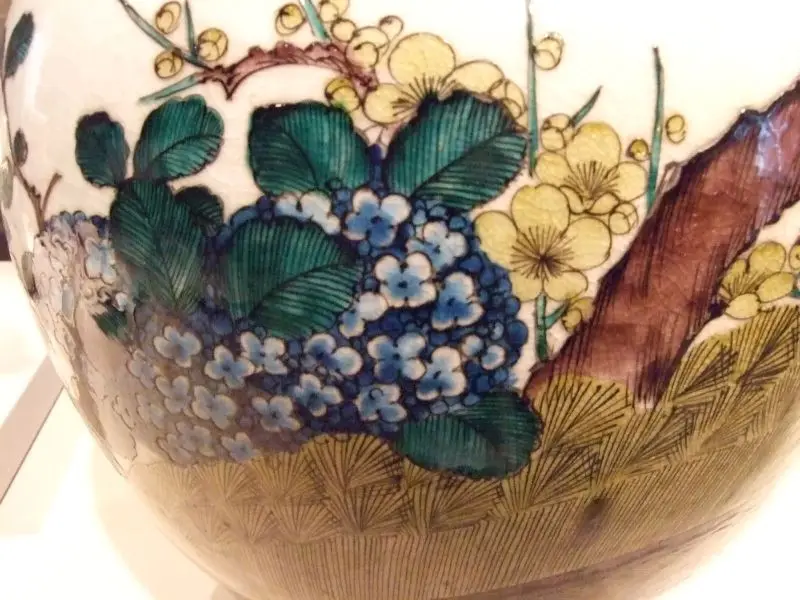
 Photo: Mary Harrsch from Springfield, Oregon, USA / CC BY
Five-color porcelain painted since 1655 — Kaburaki has dealt it since 1822 and ships worldwide. One guinomi sake cup carries the whole tradition home.
Dyeing with five colours and a deliberate insect bite
Kutani ware is porcelain in five heavy overglaze colours, made in this region since the 1650s, abandoned for about a century, then revived. It is unusually bold for Japanese porcelain: green, yellow, red, purple and blue laid on thick. Kaburaki has produced it since 1822.
Kyoto's yuzen dyeing is bright, gold-touched and stylised. Kanazawa's is dark, realistic, and deliberately includes a hole eaten in a leaf. That difference is a two-hundred-year argument about what beauty means, and it is still going.
Then stop after about fifty years
The Kyoto technique arrives and diverges
The old work becomes ko-Kutani, and collectable
Kutani becomes what the West called "Japan ware"
Look for the mushikui — the painted insect holes. Once you see them you cannot mistake Kaga yuzen for Kyoto again.
Each of these still lands you back aboard with the hour to spare.
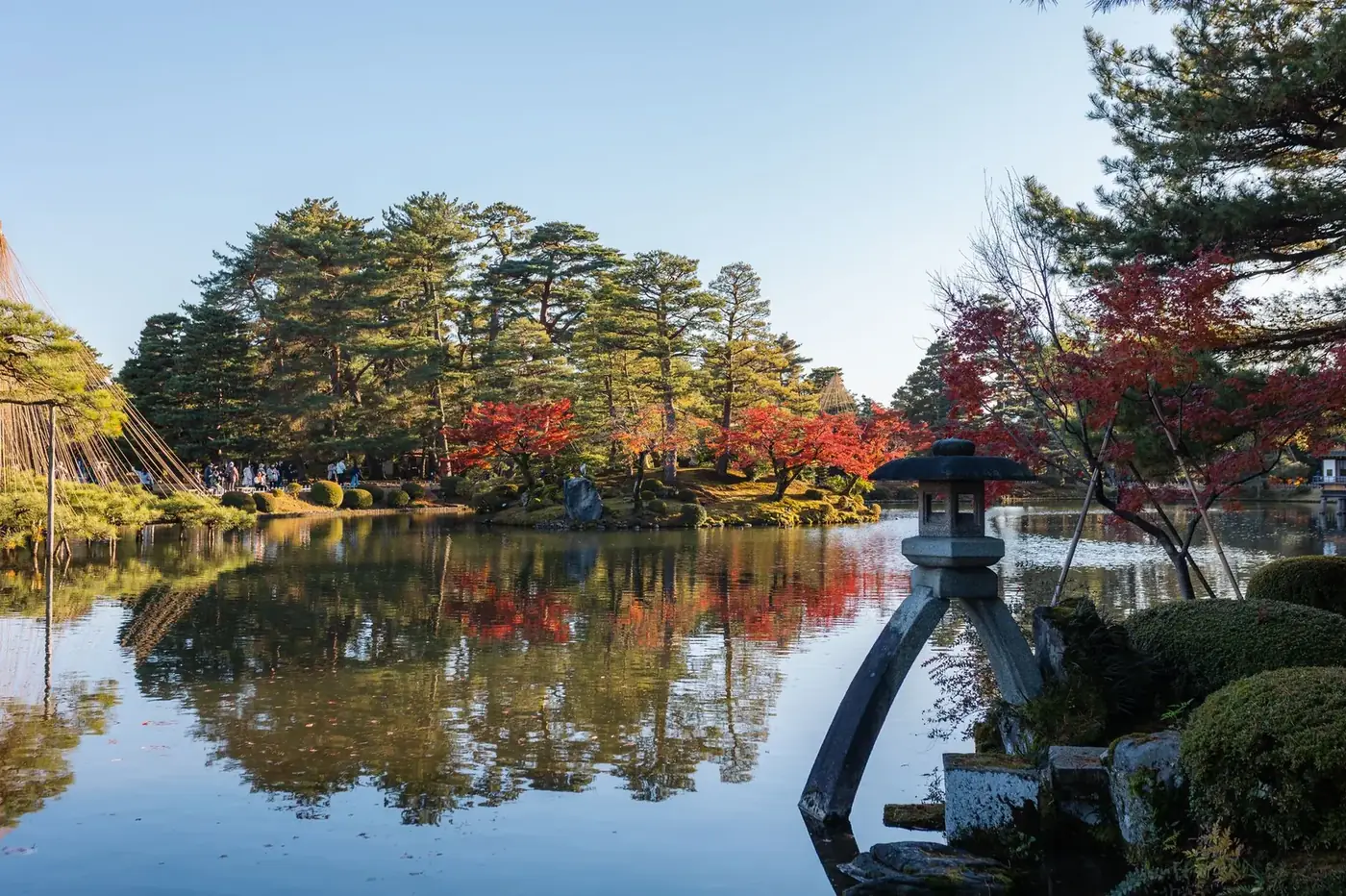 See · ~4.5h with transfers
One of Japan’s three perfect gardens — two-legged lanterns, ancient pines under snow ropes, water borrowed from a river ten kilometers away.
See the detail →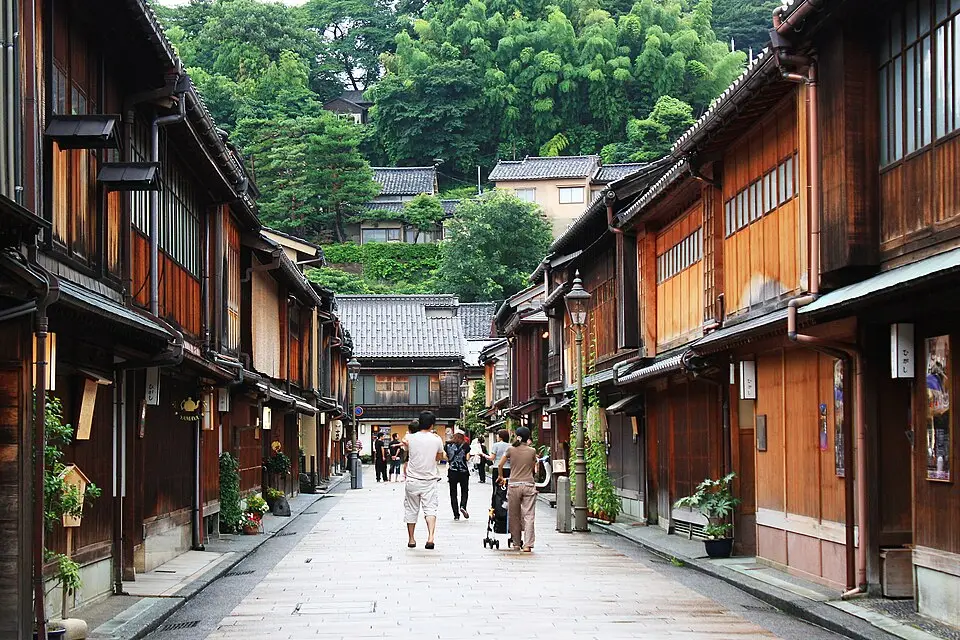 See · ~4h
Lattice-fronted geisha houses from the 1820s, now cafes and gold-leaf ateliers.
See the detail →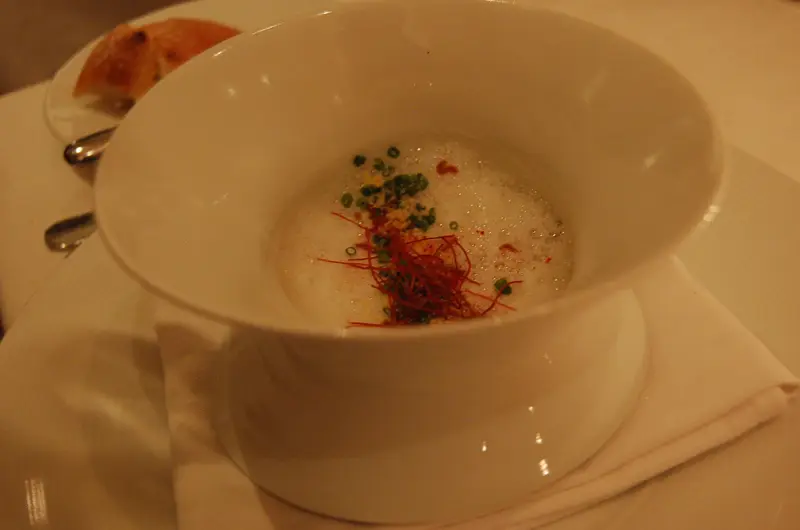 Eat · ~3.5h
The 300-year-old market’s morning glory: snow crab in season, sweet shrimp and uni year-round, stacked over rice while the stallholders shout.
See the detail →No typing needed — jump straight in:
Just docked? — the gangway toolStart from your shipThe ride from every berthAsk the editorGlossary