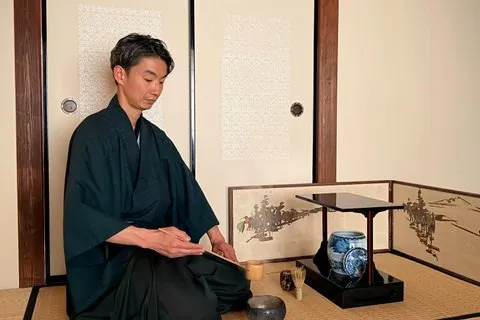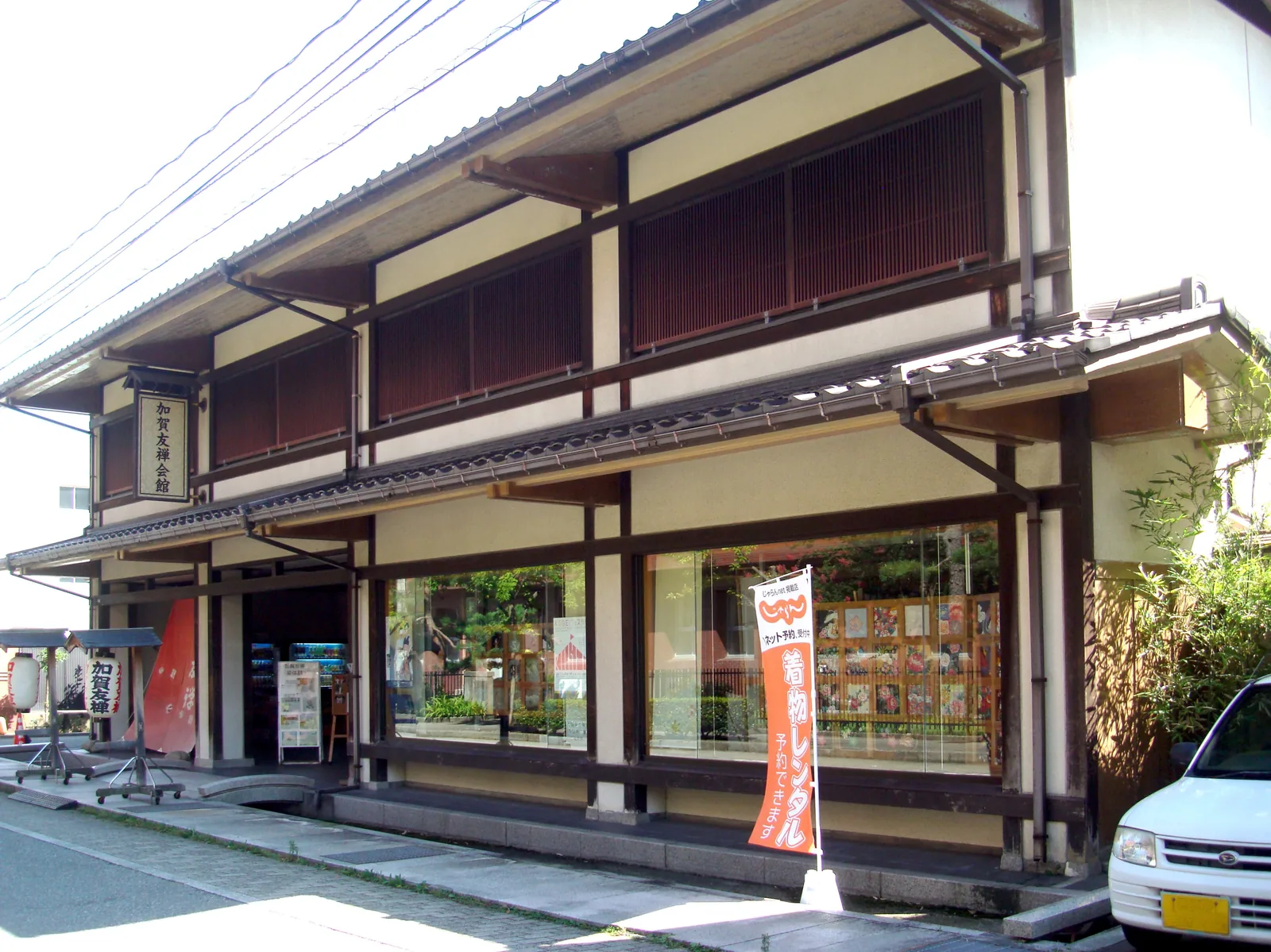
Dyeing with five colours and a deliberate insect bite
Kyoto's yuzen dyeing is bright, gold-touched and stylised. Kanazawa's is dark, realistic, and deliberately includes a hole eaten in a leaf. That difference is a two-hundred-year argument about what beauty means, and it is still going.
Yuzen is a resist-dyeing technique for silk, drawn freehand with rice paste before dyeing. It began in Kyoto in the late seventeenth century, and a Kyoto dyer named Miyazaki Yuzensai is said to have brought it to Kanazawa in his later years.
Here it changed. Kyoto yuzen favours bright grounds, embroidery and gold. Kaga yuzen uses five colours — indigo, crimson, ochre, deep green and royal purple — with no gold and no embroidery, and it shades from the outside in, dark at the edge of a petal and pale at the centre. Kyoto shades the other way.
And it paints mushikui: the small dark holes an insect eats in a leaf. Deliberately. A Kyoto dyer paints an idealised flower; a Kaga dyer paints one that has been outdoors.
A single formal kimono can take months and pass through the hands of a dozen specialists. The insect damage is the last thing added, and it is the signature.
Kutani ware began in the 1650s in the Kaga domain, stopped abruptly after about fifty years for reasons still argued about, and was revived in the early nineteenth century. Both periods are collected; the early work is called ko-Kutani, old Kutani.
The style is overglaze enamel in gosai — five colours: green, yellow, red, purple and navy — laid on thickly enough that you can feel the design with a fingertip. Where much Japanese porcelain is restrained, Kutani covers the surface and fills the ground. It looks nothing like Arita and it is not trying to.
A Kaga yuzen kimono is a serious purchase; a dyed silk scarf or a small framed panel is not, and carries the same technique. For Kutani, buy a single sake cup or a small dish rather than a set — the enamel work reads better on one good piece than on six ordinary ones.
Then stop after about fifty years
The Kyoto technique arrives and diverges
The old work becomes ko-Kutani, and collectable
Kutani becomes what the West called "Japan ware"
And still not doing it the Kyoto way
Look for the mushikui — the painted insect holes. Once you see them you cannot mistake Kaga yuzen for Kyoto again.
Kaga yuzen uses five colours with no gold and no embroidery, shades from dark at the outer edge of a petal to pale at the centre — the reverse of Kyoto — and deliberately paints mushikui, the holes an insect eats in a leaf. Kyoto yuzen is brighter, gold-touched and idealised; Kaga paints a flower that has been outdoors.
A single good piece rather than a set — one sake cup or a small dish. Kutani's overglaze enamel in five colours is laid on thickly enough to feel with a fingertip, and that quality reads far better on one well-made object than on six ordinary ones.
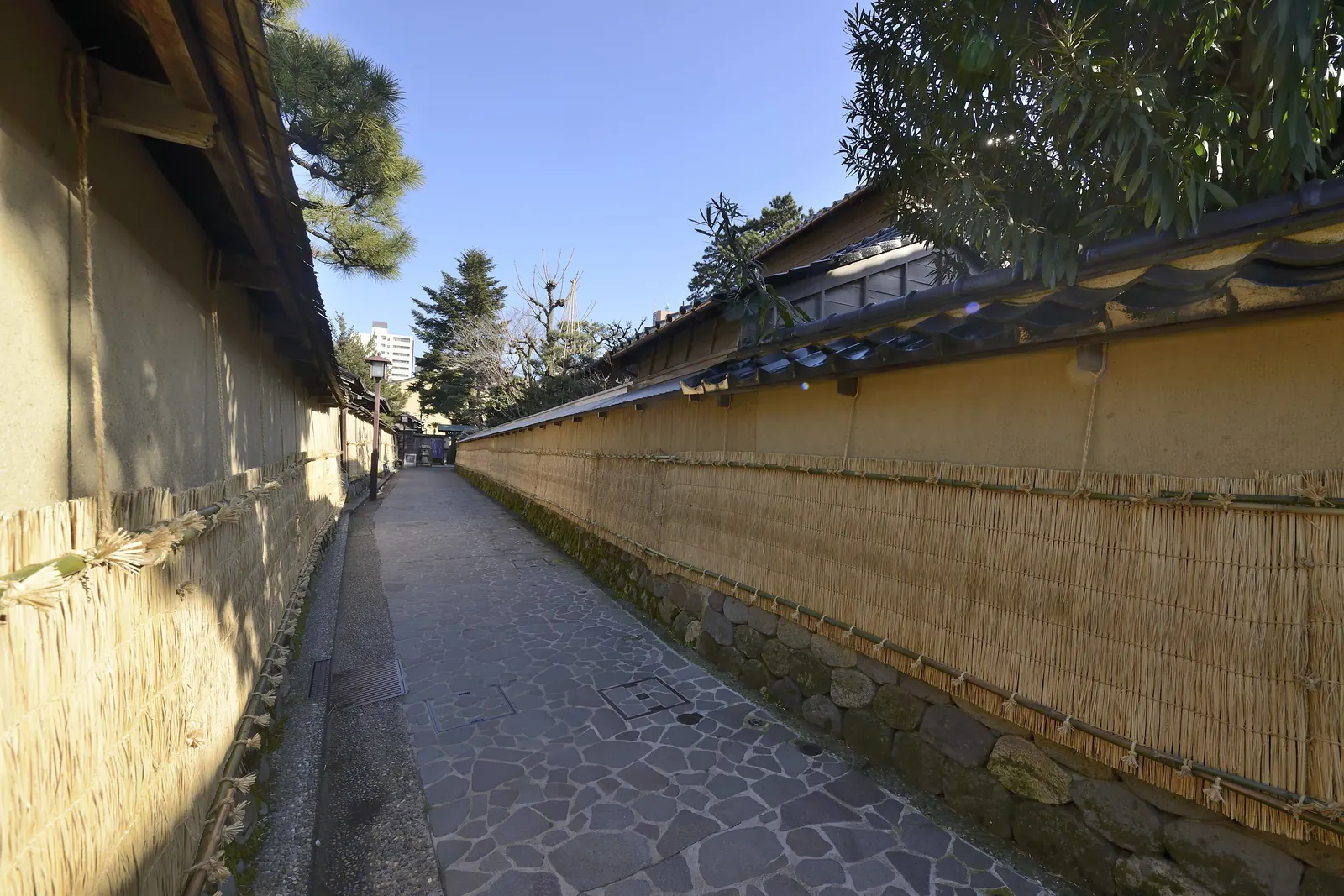
The richest domain in Japan spent three centuries proving it was not a threat
Read →
Ninety-nine percent of Japan's gold leaf is beaten in this one city
Read →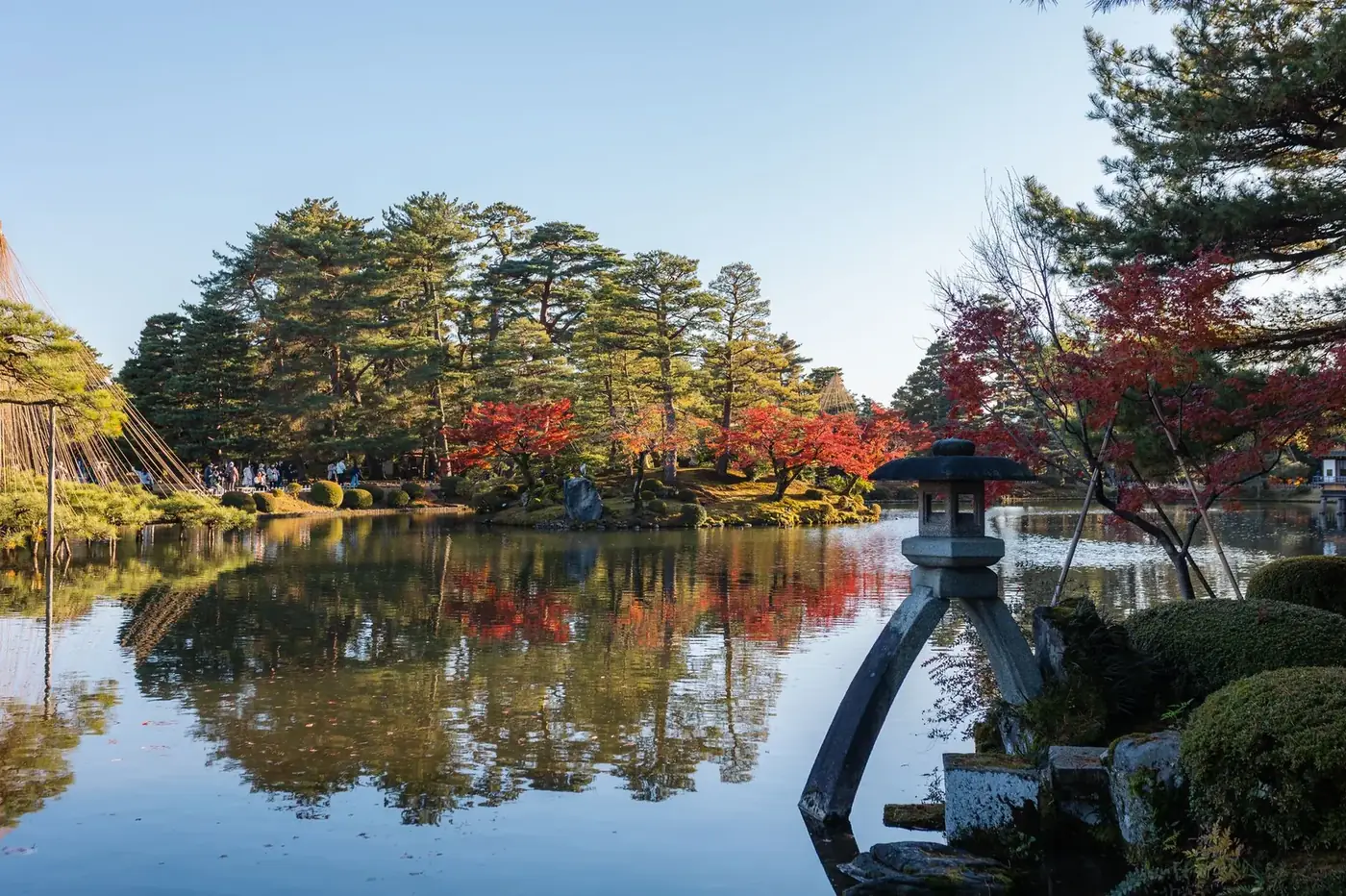
Six qualities that should not coexist, in one garden, over two centuries
Read →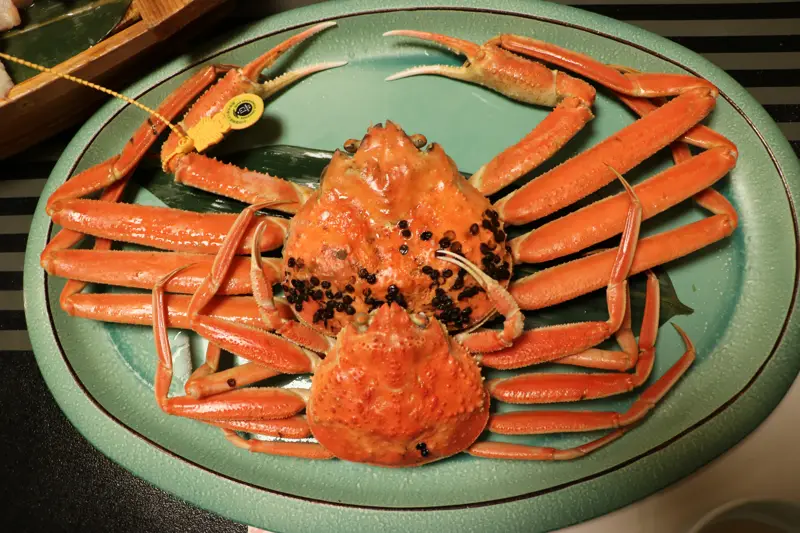
Winter crab, cold-water fish, and a soy sauce district beside the port
Read →No typing needed — jump straight in:
Just docked? — the gangway toolStart from your shipThe ride from every berthAsk the editorGlossary