~4h by tram — the round trip from the gangway, with the 60-minute margin kept aside.
Tap a photo to see it large. 2 photographs, each credited.
The second city asks quieter questions than Hiroshima, and its museum answers with unbearable specifics. The fountain, the statue, the one-legged torii — allow real time.
The city that was not the target
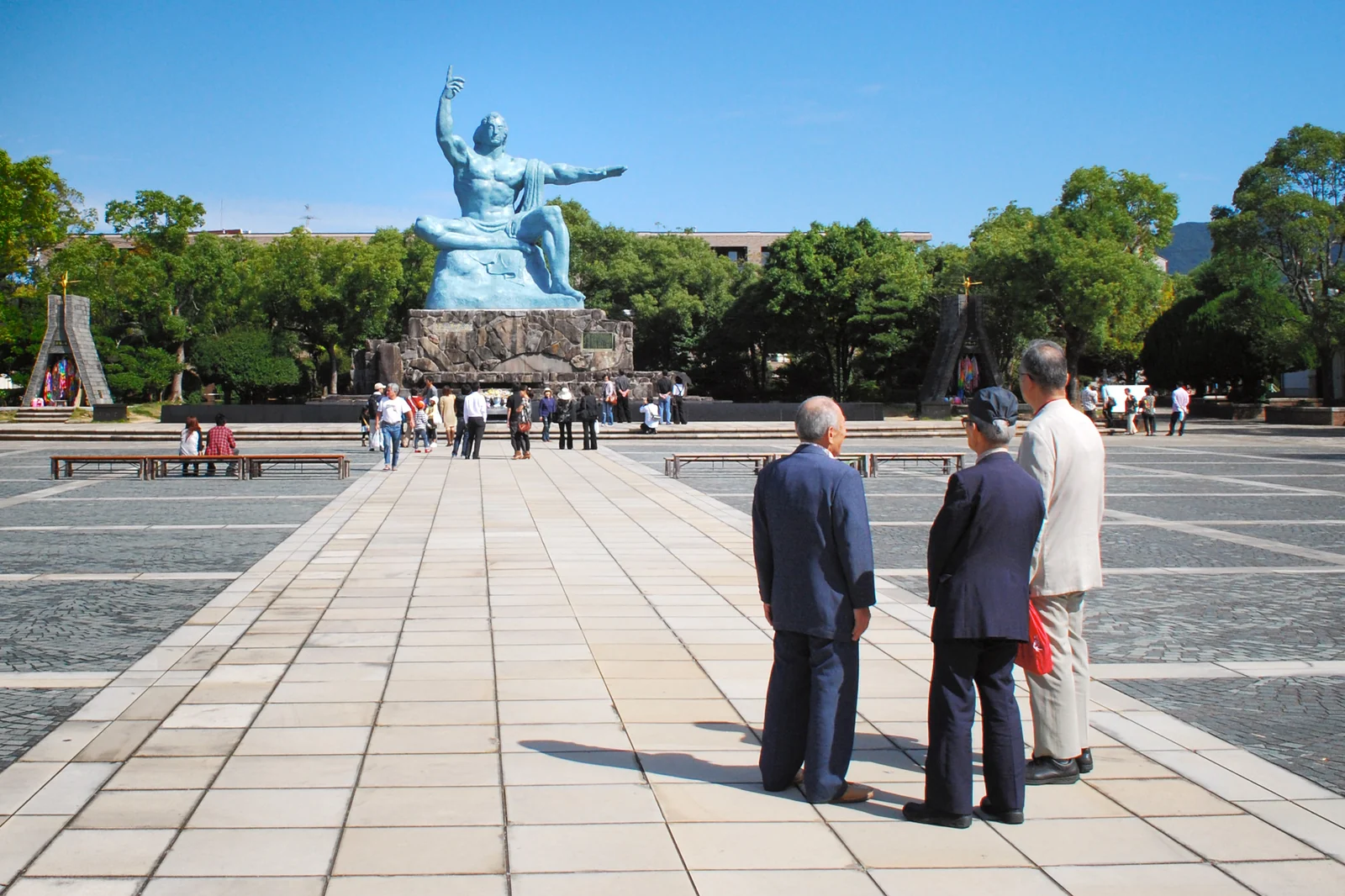
The second atomic bomb was dropped here on 9 August 1945, over Urakami, a district that happened to hold the largest Catholic community in Japan. The Peace Statue of 1955 points one hand at the sky and extends the other in peace. The museum below it is unsparing and largely wordless.
The bomb was meant for Kokura. Cloud saved that city and condemned this one — and it detonated over the district where Japan's Christians had finally been allowed to live.
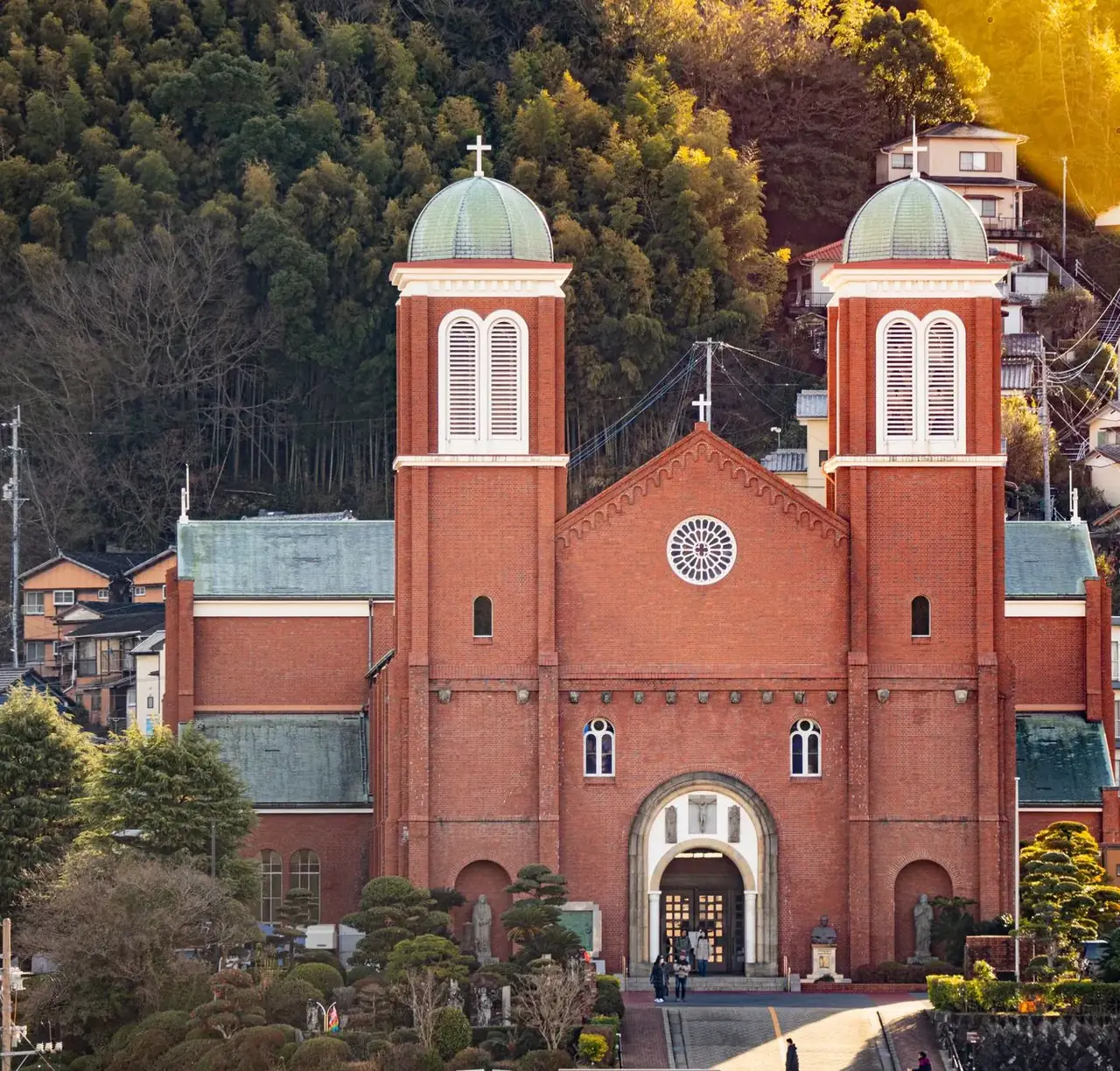
Nagasaki was not the target on 9 August 1945 — Kokura was, and cloud saved it. The bomb detonated instead over the Urakami valley, the district where Japan's hidden Christians had finally been allowed to worship openly seventy years earlier. About 74,000 people were dead by the end of the year.
The memorial here is quieter than Hiroshima's and asks a narrower, harder question. Hiroshima addresses the world. Nagasaki, chosen almost at random and having lost its most persecuted community in a second, tends to address chance and endurance instead.
About 500 m above the valley; Kokura, the primary target, was under cloud
With a similar number injured
Written from a two-metre hut while dying of leukaemia
One hand to the sky for the threat, one to the horizon for peace
The museum and Peace Park are a twenty-minute tram ride from the wharf. Go early, allow more time than you planned, and eat afterwards rather than before.
Both pins on one map, so the distance is a fact rather than a feeling.
Each of these still lands you back aboard with the hour to spare on a 6-hour stop ashore.
By tram, about twenty minutes with one change — ¥150 flat, and the change costs nothing if you tap an IC card or contactless credit (cash riders pay twice). The museum, the hypocentre marker and the Peace Park sit within a few minutes of each other at the northern end of the line.
It is quieter and less monumental. Hiroshima's park is a designed civic argument addressed to the world; Nagasaki's is smaller and more personal, shaped by the fact that this city was the secondary target and that the bomb fell on its Christian quarter.
Each one is a finished day we have walked and timed, with this stop in it. Read the route rather than assembling it yourself.
Each of these still lands you back aboard with the hour to spare.
No typing needed — jump straight in:
Just docked? — the gangway toolStart from your shipThe ride from every berthAsk the editorGlossary