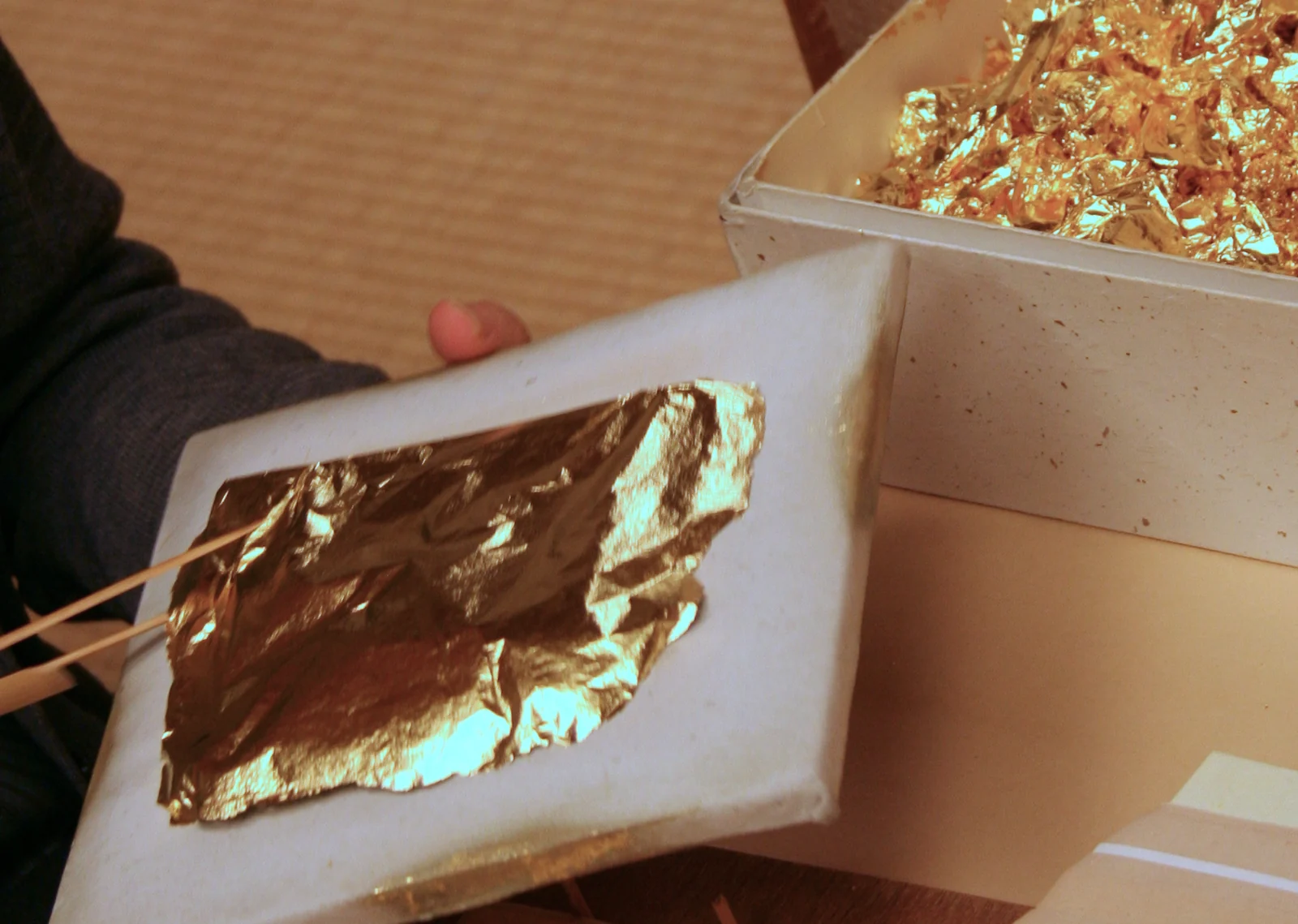
 Photo: Eckhard Pecher / CC BY 2.5
Kanazawa beats 99% of Japan’s gold leaf — cosmetics, chopsticks, even wall panels. Hakuichi’s Higashiyama store gift-wraps the affordable end of opulence.
Ninety-nine percent of Japan's gold leaf is beaten in this one city
Gold leaf here is not decoration added to Kanazawa, it is Kanazawa's industry: lacquerware, Buddhist altars, screens and now cosmetics and food all depend on the same beaten sheets. Workshops will let you lay leaf yourself, which is the only way to appreciate how easily it tears.
A sheet of Kanazawa gold leaf is around one ten-thousandth of a millimetre thick — thin enough that light passes through it green. Essentially all of Japan's production happens here, and the reason is the weather.
The craft is established under domain patronage
Kanazawa keeps the skill and eventually the industry
Temples, altars, lacquer, ceramics
Made possible by humid Sea of Japan weather
Do a one-hour gold-leaf application workshop. You will ruin the first sheet, and that is when you understand it.
Each of these still lands you back aboard with the hour to spare.
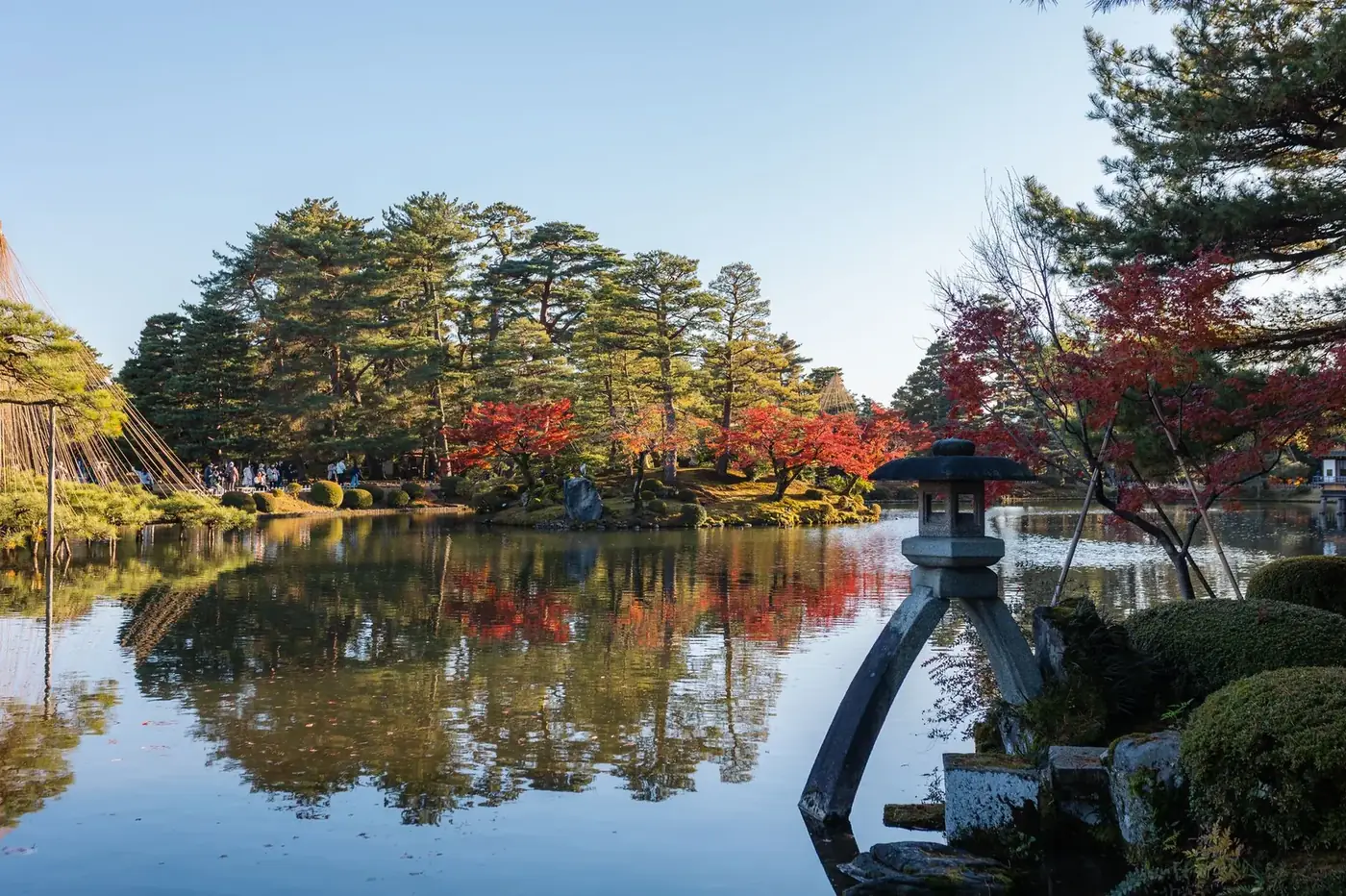 See · ~4.5h with transfers
One of Japan’s three perfect gardens — two-legged lanterns, ancient pines under snow ropes, water borrowed from a river ten kilometers away.
See the detail →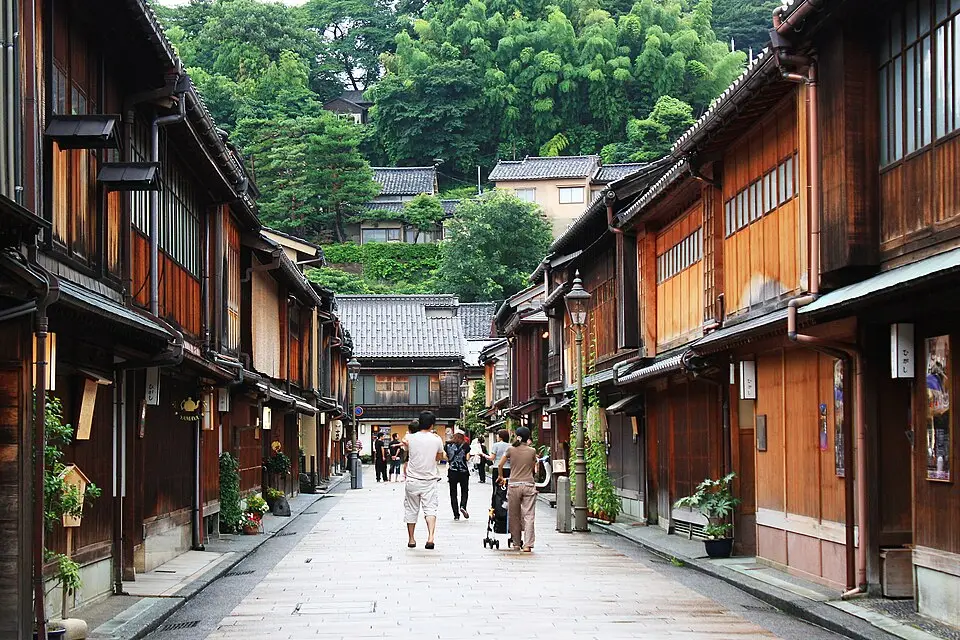 See · ~4h
Lattice-fronted geisha houses from the 1820s, now cafes and gold-leaf ateliers.
See the detail →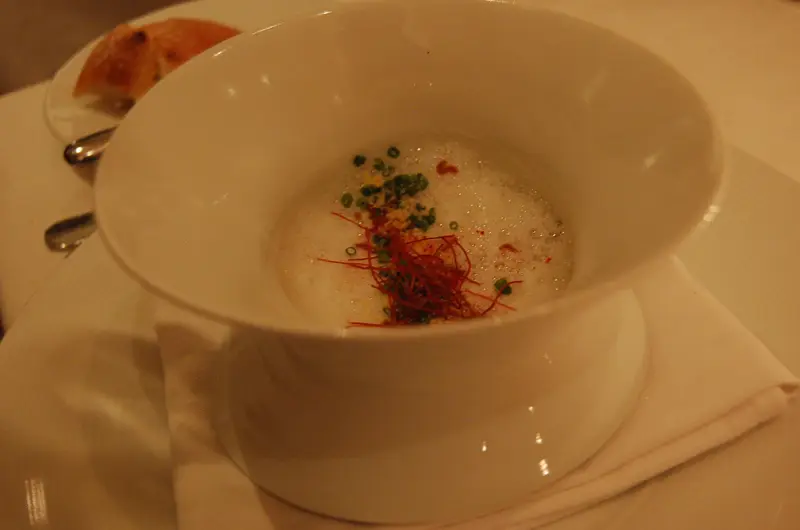 Eat · ~3.5h
The 300-year-old market’s morning glory: snow crab in season, sweet shrimp and uni year-round, stacked over rice while the stallholders shout.
See the detail →No typing needed — jump straight in:
Just docked? — the gangway toolStart from your shipThe ride from every berthAsk the editorGlossary