
 1 / 2
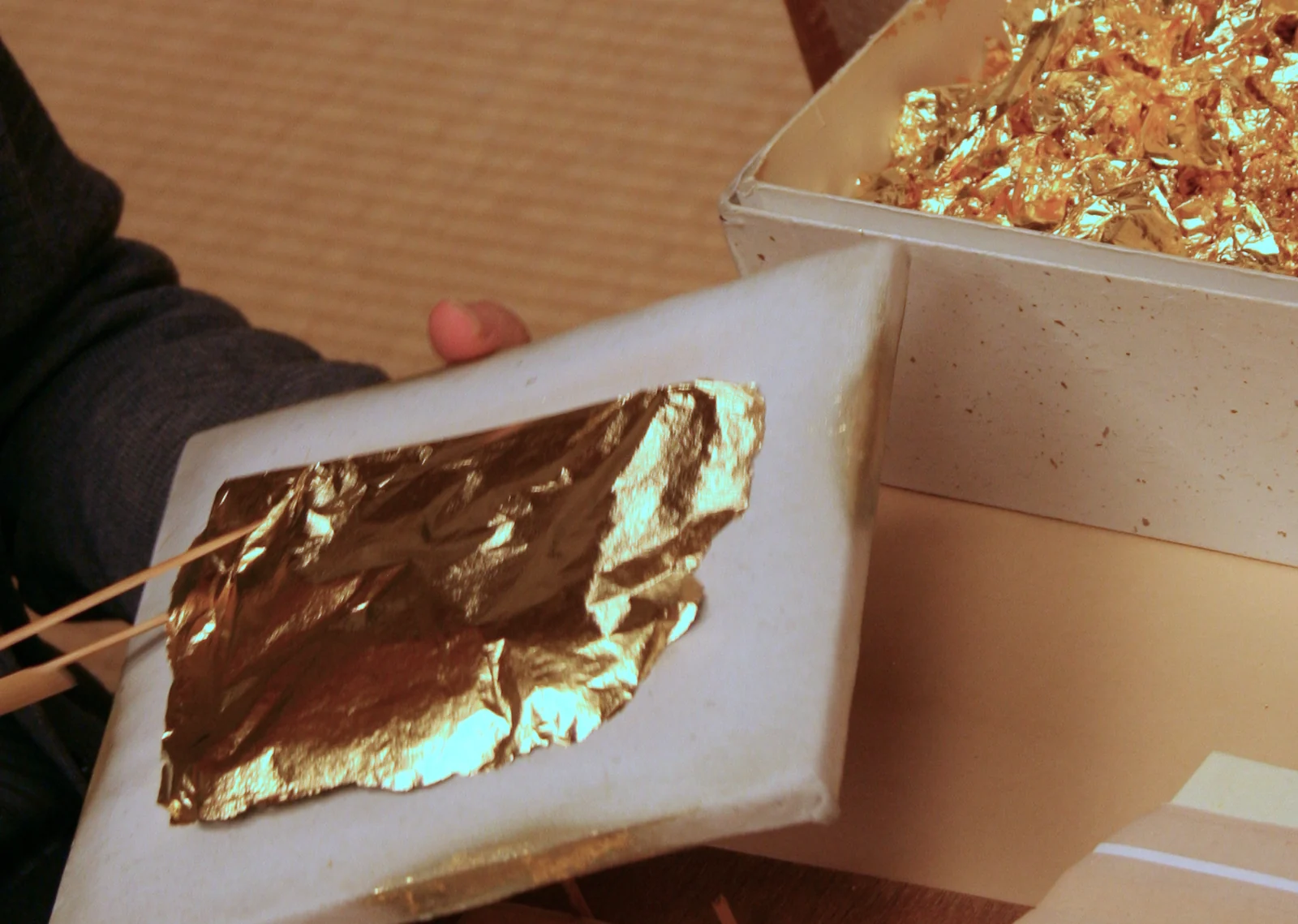
Gold-leaf soft servePhoto: jam_232 / CC BY 2.0
Tap a photo to see it large. 2 photographs, every one credited.
Checked against official sources · updated · Takumi Yamada
A whole sheet of edible gold laid over ice cream — Hakuichi started the craze and still does it with the most ceremony. Absurd, delicious, obligatory.
- Free to walk; Shima ¥500, Kaikaro ¥750; gold-leaf soft serve ¥1,189 to visit — tea service costs extra at both houses. soft serve price is the maker's page listing; higashiyama store not confirmed as the one that sells it..
- On a 4–6h ashore call our verdict is "Tight" — go straight to hashiba-cho, spend about an hour, and ride the loop bus back. check the last route-bus departure to the terminal in your ship's programme before you leave the port.
- It is not only a photo stop: ninety-nine percent of japan's gold leaf is beaten in this one city.
- Street always open; teahouses roughly 9:30–17:30 — ochaya shima 9:30–17:30 (mar–nov), 9:30–17:00 (dec–feb), open 365 days. kaikaro 10:00–17:00, irregular closing days. hakuichi higashiyama shop 9:00–18:00, cafe 9:00–17:00..
- 4 hr door to door needs a 6-hour call: a 2–3 hour stop cannot hold it. Pick something closer instead.
- No single published ride covers this one. Budget for a taxi both ways, or fold it into a guided day.
Why Gold-leaf soft serve is famous
Ninety-nine percent of Japan's gold leaf is beaten in this one city
Kanazawa makes about 99 percent of Japan's gold leaf, a craft that goes back to a 1593 order from the Maeda lord. The leaf is beaten to roughly one ten-thousandth of a millimetre. Putting a whole sheet on an ice cream is unapologetically silly and also the clearest demonstration of how thin that is.
A sheet of Kanazawa gold leaf is around one ten-thousandth of a millimetre thick — thin enough that light passes through it green. Essentially all of Japan's production happens here, and the reason is the weather.
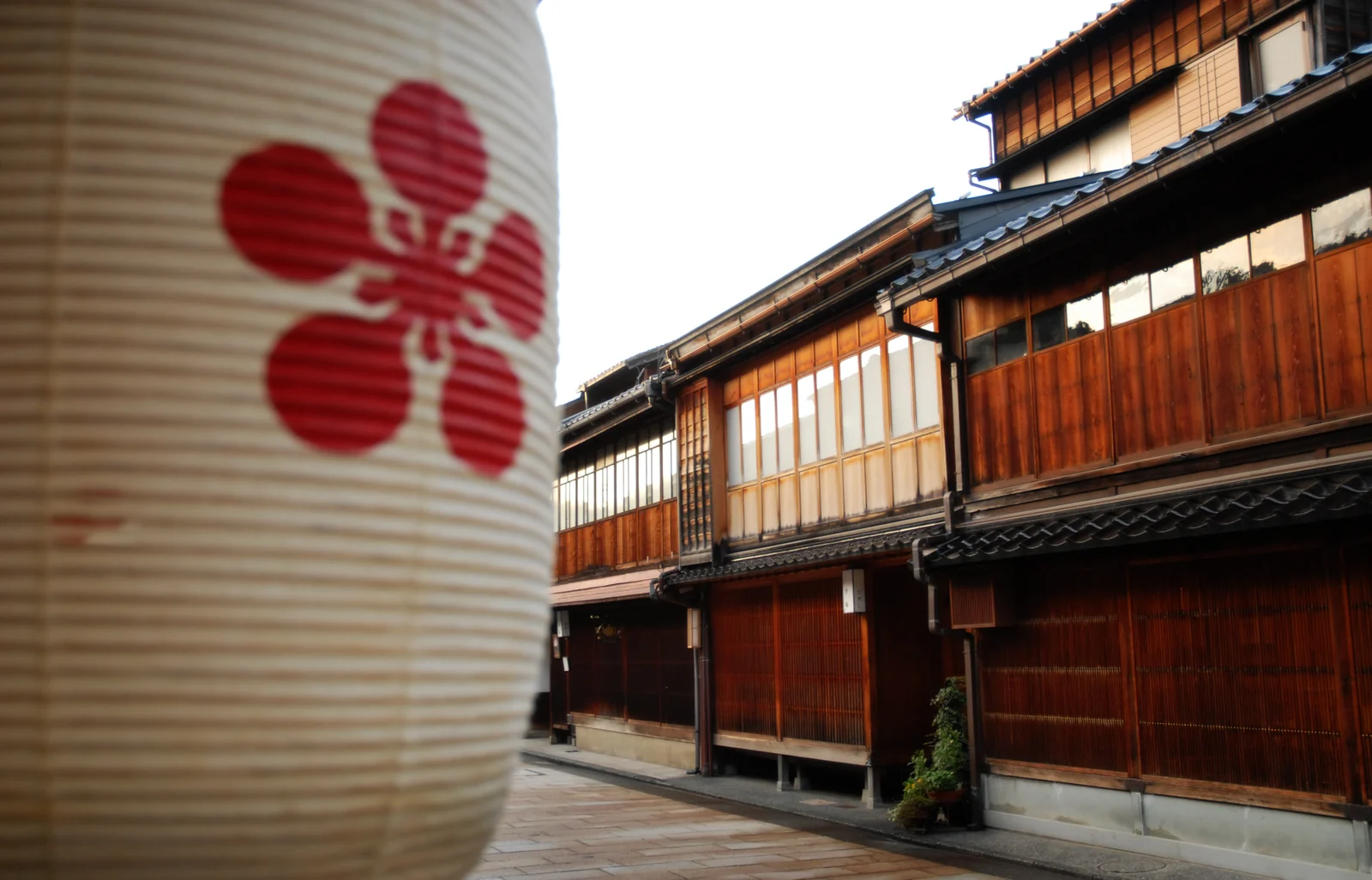
Higashi Chaya is the largest and best known of Kanazawa's three old geisha districts. The city's tourism site says the chaya houses were moved to three specific districts in 1820, which is why the street keeps the look of the 1820s: wooden houses with a latticed ground floor (called kimusuko) and guest rooms on the upper floor.
You can see inside two of the houses. Ochaya Shima was built when the district was, in 1820, and charges adults ¥500; Kaikaro is a refurbished chaya more than 200 years old with a sunken-hearth tea service, and charges adults ¥750. Many other houses now serve as cafes, restaurants and shops. The Hakuichi Higashiyama store sells gold-leaf goods and a soft serve covered in gold leaf, priced by the maker at ¥1,189.
The catch is distance and crowds. It is more than an hour from the ship, the lanes are short, and the teahouses close by early evening. Go as early as the bus allows, since the best light is before the tour buses arrive. If you only have a half-day, Kenroku-en and the castle are the better value; this suits ships that stay eight hours or more.
Silver leaf in Kanazawa, gold leaf in Nanao
Beating outside its Edo guild is banned
The start of the modern industry
Temples, altars, lacquer, ceramics
Do a one-hour gold-leaf application workshop. You will ruin the first sheet, and that is when you understand it.
Three places, three different answers
The one the queue agrees on, the one people who live here use instead, and the one nearest your ship. Opening days change; check before you build a day around one.
A whole sheet of gold leaf laid on a soft serve. Unapologetically silly, and the clearest demonstration of how thin the leaf is.
Open in Google MapsClosest to the berthHigashi Chaya streetひがし茶屋街Several gold-leaf shops on one short street, all doing a version of it.
Open in Google MapsThings worth knowing
- Take the Loop Bus from Kanazawa Station East Gate stop 7 and get off at Hashiba-cho; Kaikaro's own page gives a 5-minute walk from there.
- Buy the ¥800 one-day pass before boarding if you plan three or more loop rides; a single ride is ¥220.
- Ochaya Shima is open all year; Kaikaro closes on irregular days, so check its calendar page before you set your heart on it.
- Hakuichi's Higashiyama shop is open 9:00–18:00; its cafe closes at 17:00.
- Kinpaku金箔 — Gold leaf. Around one ten-thousandth of a millimetre thick.
- Haku-uchi箔打ち — Gold beating. The paper matters as much as the gold.
Where the 4 hr goes
Counted from the moment you step off the gangway, about 30 minutes after the ship arrives. The hour before all-aboard is not in this bar; it is already set aside.
65 minutes each way is the measured figure for bus 04 + loop bus ~65 min, or taxi 15–20 min, not the optimistic one. If your ship is late, cut the 1 hr 50 min in the middle. Never cut the hour at the end.
Questions people send us
How do I get from Kanazawa cruise port to Higashi Chaya?
Take bus 04 from the Kanazawa Port Cruise Terminal stop to Kanazawa Station (28 to 35 minutes), cross to the East Gate, take the Loop Bus from stop 7 to Hashiba-cho (¥220) and walk about 5 minutes. A taxi from Kanazawa Station is about 10 minutes by the city's tourism site. Allow around 75 minutes in all.
Can I go inside a geisha teahouse in Higashi Chaya?
Yes, at two of them. Ochaya Shima (¥500 for adults, open daily 9:30 to 17:30 from March to November) and Kaikaro (¥750 for adults, 10:00 to 17:00, irregular closing days). Tea service costs extra at both.
How long do you need in Higashi Chaya?
Visit Kanazawa's city guide puts it at about 60 minutes. With a teahouse tour and a gold-leaf ice cream, 90 minutes is comfortable.
Routes that already include it
Each one is a finished day timed from the official timetables, with this stop in it. Read the route rather than assembling it yourself.
What to put beside it
Each of these still lands you back aboard with the hour to spare.
 See · ~4.5h with transfers
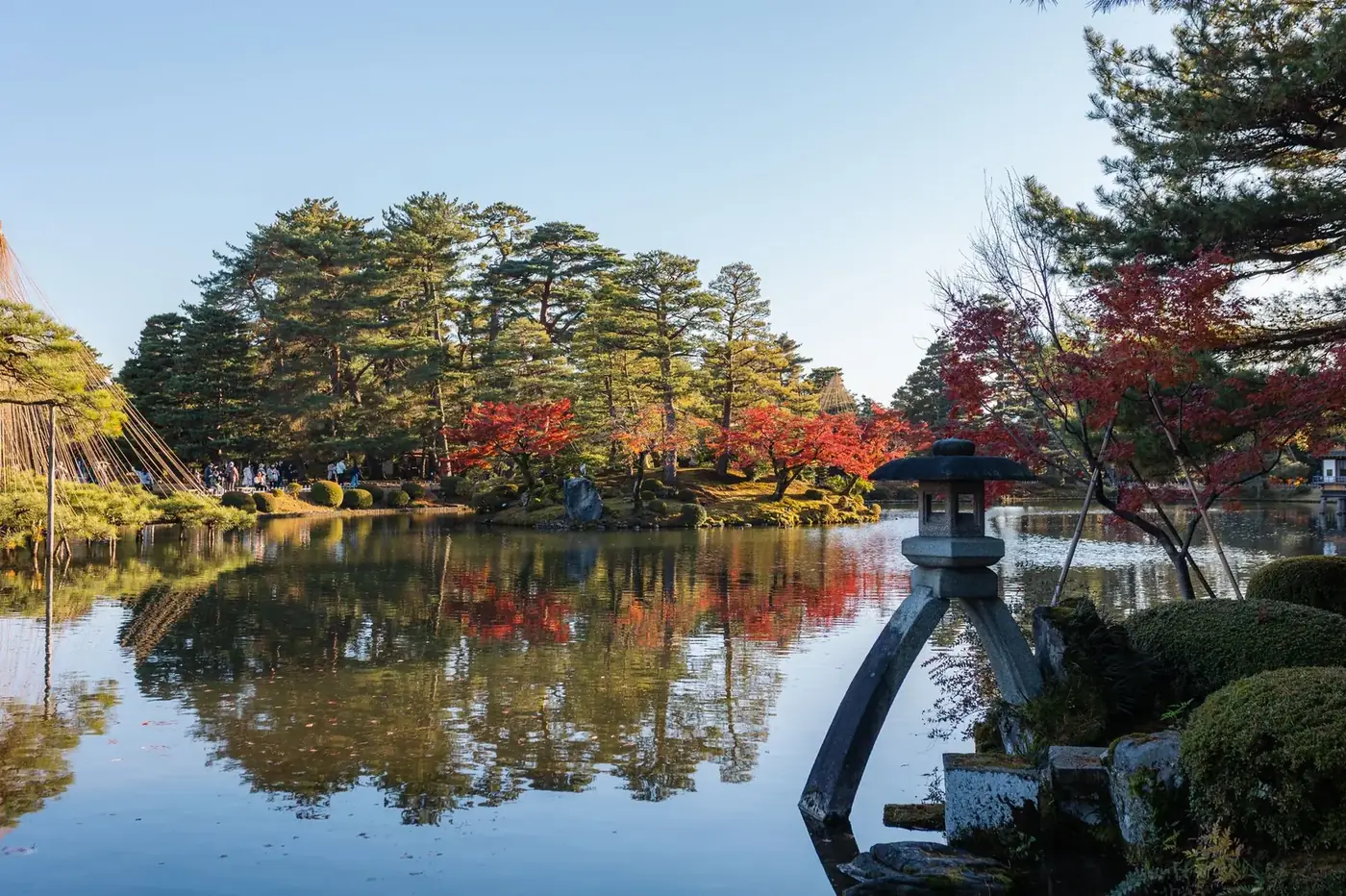
Kenroku-en garden
One of Japan’s three perfect gardens — two-legged lanterns, ancient pines under snow ropes, water borrowed from a river ten kilometers away.
See the detail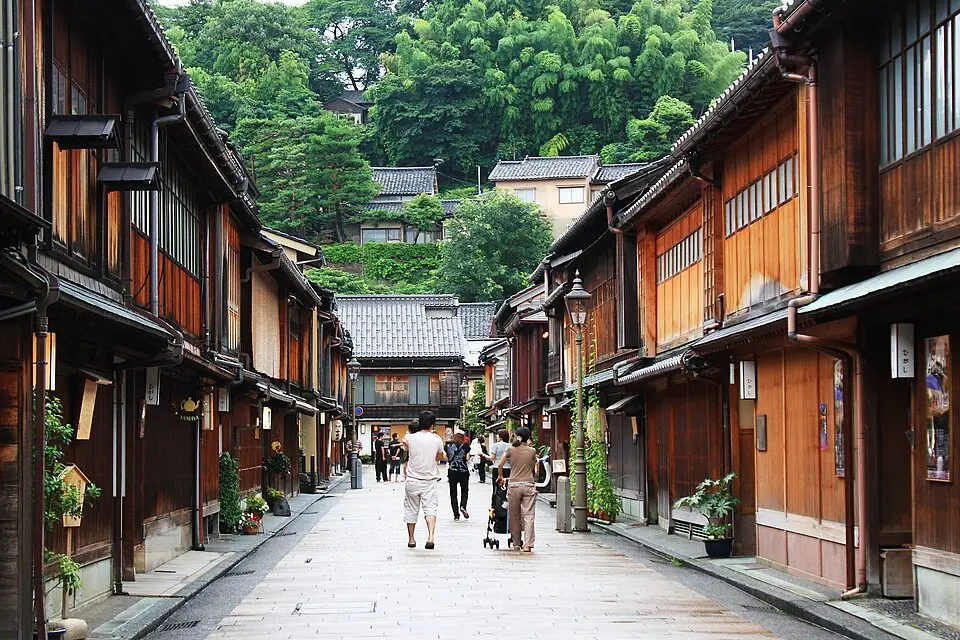 See · ~4h
Higashi Chaya teahouse district
Lattice-fronted geisha houses from the 1820s, now cafes and gold-leaf ateliers.
See the detail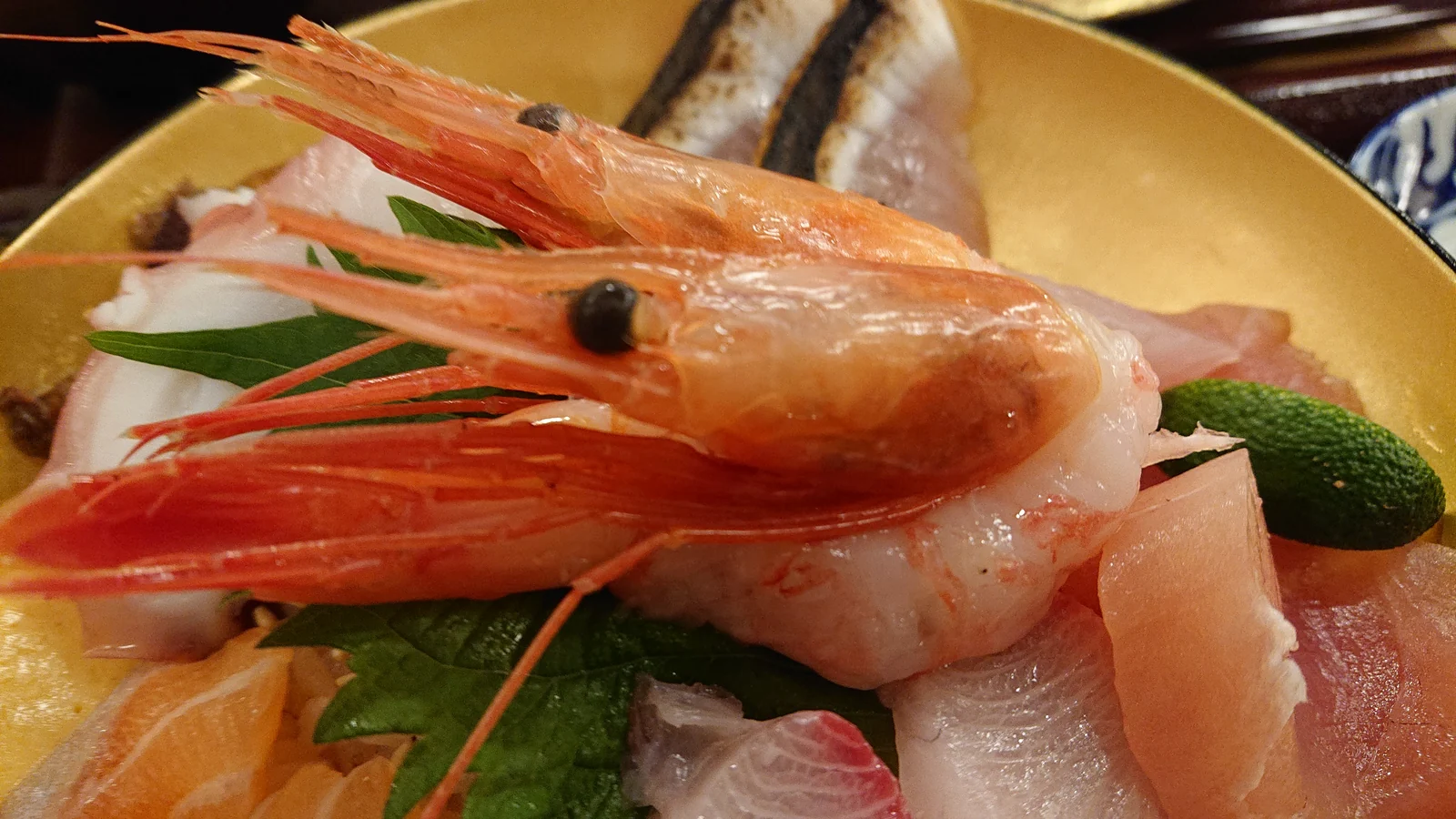 Eat · ~3.5h
Seafood bowl at Omicho
The 300-year-old market’s morning glory: snow crab in season, sweet shrimp and uni year-round, stacked over rice while the stallholders shout.
See the detail