What happens when a port cooks for three countries at once
A Chinese restaurateur invented a cheap bowl for homesick students in 1899 and accidentally created the most Nagasaki thing there is: a dish that is not from anywhere, made of everything.
Most Japanese regional food is about restraint and origin. Nagasaki's is the opposite: it is a record of who docked here.
Around 1899, a Chinese immigrant named Chin Heijun, running a restaurant called Shikairo, wanted to feed the poor Chinese students of the city cheaply and well. He threw pork, seafood offcuts, cabbage and bean sprouts into a pan, added thick noodles and a pork-and-chicken broth, and served it in a mountain.
The name probably comes from a Fujianese greeting, shan pon — "have you eaten?" — though as with all good food origins there are rival theories. Shikairo still operates, under a chandeliered dome near the harbour, and still serves it.
Its sibling, sara-udon, is the same idea over crisp fried noodles with a thick starch sauce, invented for delivery — the broth would have spilled.
A dish invented so that poor students could eat properly is now the thing an entire prefecture is known for.
Older and grander is shippoku, which is less a dish than a format. A round red-lacquered table, everyone seated together rather than at individual trays, and courses that alternate between Japanese, Chinese and Western technique — clear soup, then braised pork belly, then something Portuguese-descended. It emerged from the merchant houses of the 1600s, when Dutch, Chinese and Japanese traders had to eat together and nobody's etiquette could be allowed to win.
The signature dish is kakuni, pork belly braised until it collapses — which arrived with Chinese cooks and became so local that the modern street version, kakuni-manju, is what you will actually eat standing up in Chinatown.
The Portuguese brought a sponge cake in the sixteenth century — pão de Castela, bread of Castile — and Nagasaki has been refining it ever since. Fukusaya, founded in 1624, still hand-mixes its batter; the loaf has a fine, dense, honey-scented crumb with sugar crystals at the base that a European sponge does not have, because four centuries of Japanese bakers changed it.
Sugar itself came through this port, and the road inland is still called the Sugar Road. It is why western Kyushu has a sweeter palate than the rest of Japan.
Toruko rice — "Turkish rice" — is a single plate holding pork cutlet, spaghetti napolitan and curried pilaf. Nobody agrees why it is Turkish. It appeared in post-war kissaten and Nagasaki adopted it without embarrassment, which tells you everything about this city's relationship with foreign food: it does not ask where things came from, only whether they are good on the same plate.
Sugar, sponge cake and the technique for both arrive
Still hand-mixing castella batter four centuries later
One round table for Japanese, Chinese and Western courses
At Shikairo, to feed poor Chinese students cheaply
Cutlet, spaghetti and pilaf on one plate; nobody knows why "Turkish"
Shikairo sits near Glover Garden, minutes from the wharf. Chinatown and Fukusaya are both walkable — this is a port where the food is the sightseeing.
A Nagasaki noodle dish — thick noodles in a pork-and-chicken broth loaded with pork, seafood and vegetables — invented around 1899 at the restaurant Shikairo by a Chinese immigrant who wanted to feed poor Chinese students cheaply. Shikairo still serves it near the harbour.
Same flavours, different construction. Champon is noodles in broth; sara-udon puts the same toppings over crisp fried noodles with a thick starch sauce, and was created for delivery because broth spills.
Champon at Shikairo if you have two hours, kakuni-manju from a Chinatown counter if you have twenty minutes, and a box of castella from Fukusaya — founded 1624 — for the ship. Toruko rice, a single plate of cutlet, spaghetti and pilaf, is the local oddity worth trying if you have a proper lunch slot.
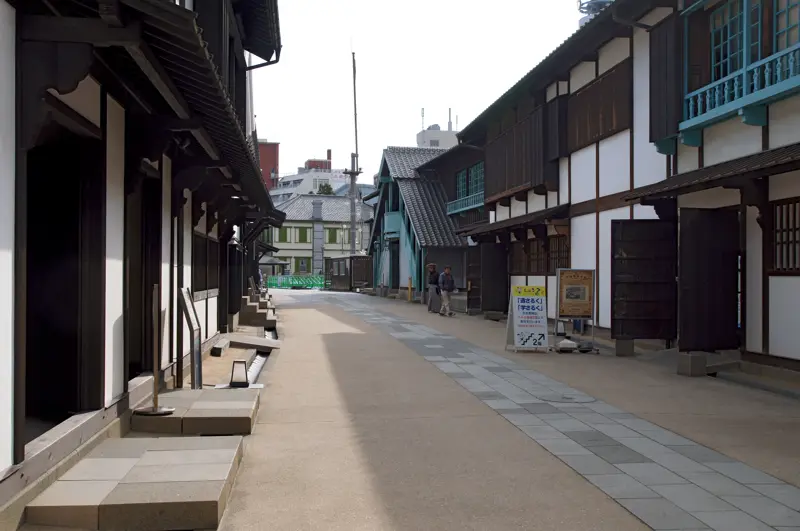
For two centuries, this fan of land was all Japan could see of the West
Read →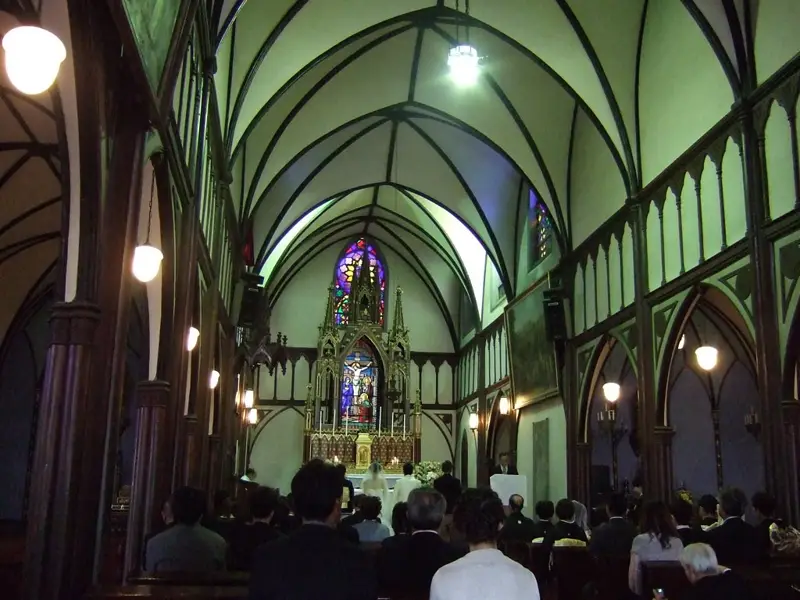
Seven generations in secret, and the day they walked into a church and said so
Read →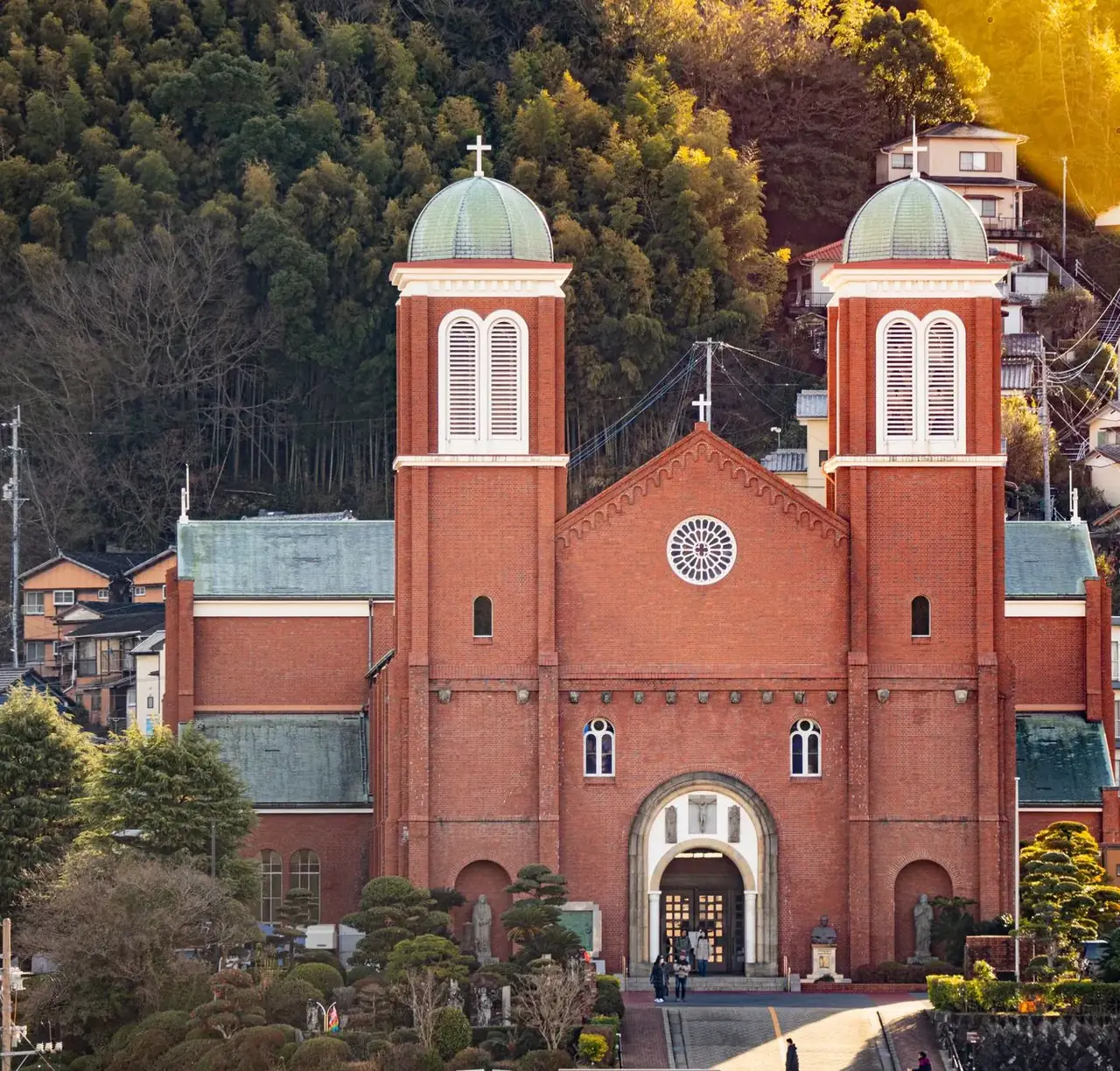
The city that was not the target
Read →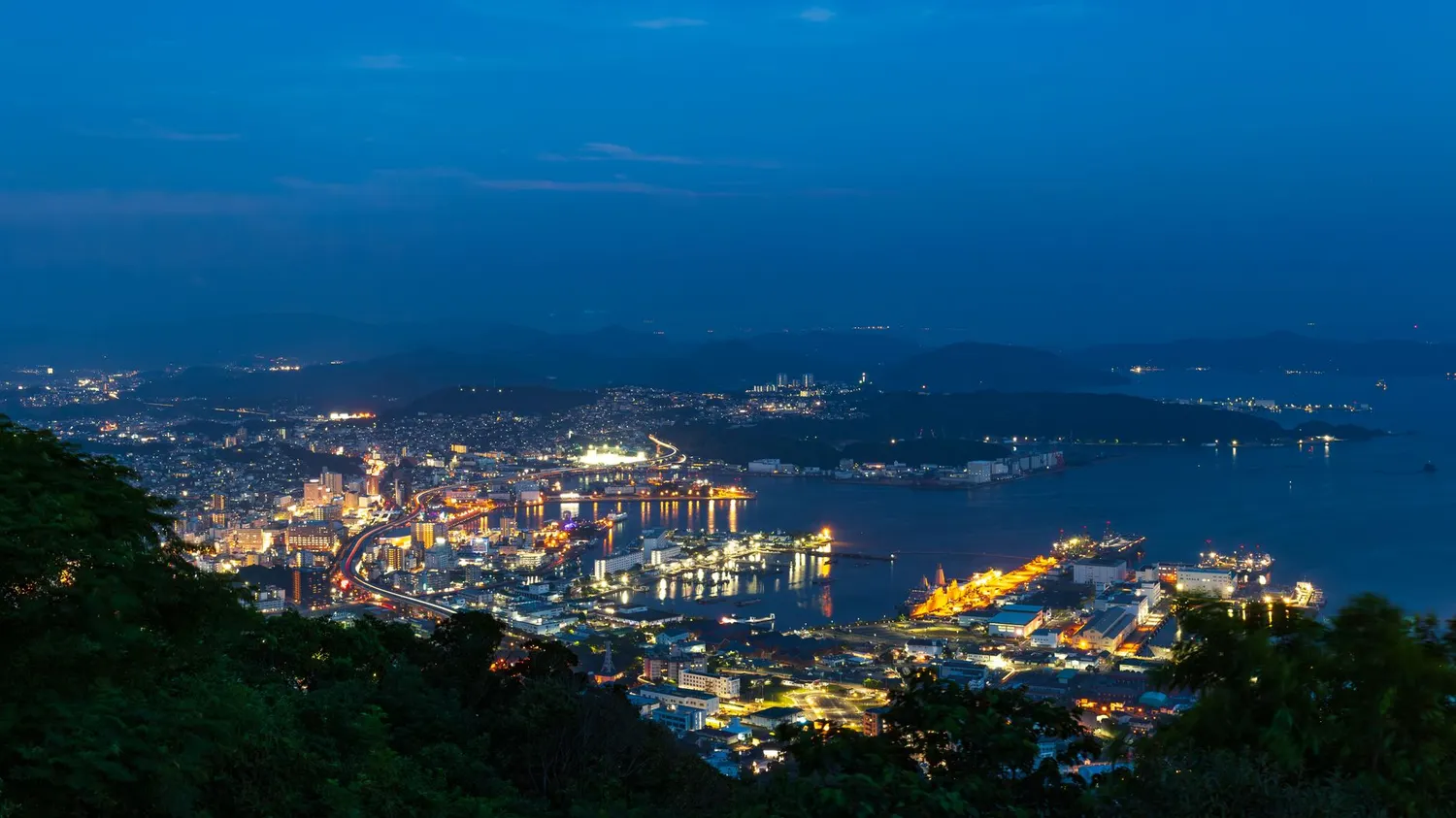
The most crowded place on earth, abandoned in a single season
Read →No typing needed — jump straight in:
Just docked? — the gangway toolStart from your shipThe ride from every berthAsk the editorGlossary