For two centuries, this fan of land was all Japan could see of the West
An artificial island the size of a few tennis courts, built to quarantine foreigners — and through it came anatomy, astronomy, gunnery and the word for beer. Japan's entire knowledge of Europe passed across one small bridge.
In 1636 the shogunate finished building an artificial island in Nagasaki harbour, fan-shaped, about 120 metres across, connected to the city by a single guarded bridge. It was built to contain Portuguese traders. Two years later the Portuguese were expelled entirely, and in 1641 the Dutch East India Company was moved onto the empty island from Hirado.
For the next 218 years, that fan of reclaimed mud was the only place in Japan where Westerners could legally live, and the only channel through which European goods and ideas entered the country.
Not much silk, in the end. The lasting cargo was information. Japanese scholars developed an entire discipline around it — rangaku, "Dutch learning" — and it reshaped the country from inside a closed border.
In 1774 a group of physicians published the Kaitai Shinsho, a translation of a Dutch anatomical atlas, after attending a dissection and discovering that the Chinese medical texts they had trusted were wrong about human bodies. Astronomy, cartography, gunnery, chemistry, and eventually the vocabulary of modern Japanese science all came through here. So did badminton, billiards, coffee, beer and chocolate.
A country that had sealed itself shut kept exactly one window open, and spent two centuries staring through it.
Perhaps fifteen to twenty Dutchmen lived here at a time, plus Japanese servants, interpreters and officials. They could not leave without permission. The opperhoofd, the chief factor, made a ceremonial journey to Edo to pay respects to the shogun — a round trip of some three months, and one of the very few times any European saw the interior of Japan.
Two doctors who served here became the West's eyes on Japan: Engelbert Kaempfer in the 1690s, whose posthumous history shaped European ideas of the country for a century, and Philipp Franz von Siebold in the 1820s, who was eventually expelled for possessing maps of Japan — a capital offence for the Japanese who gave them to him.
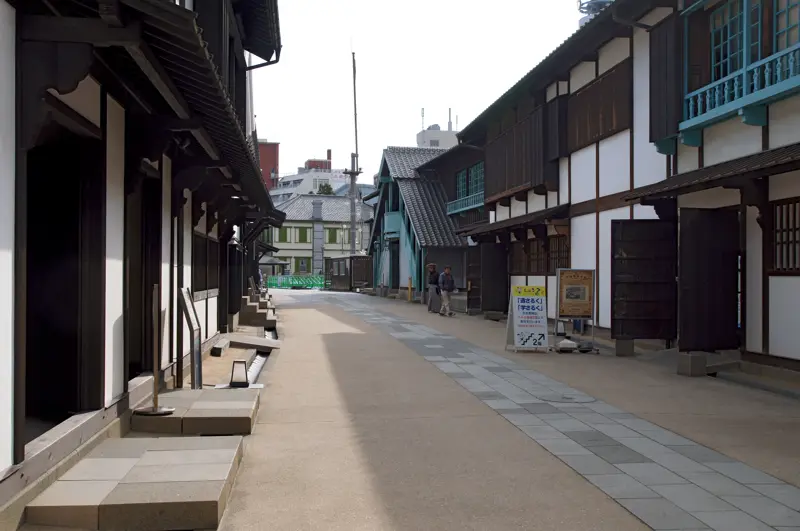
Dejima stopped being an island. Land reclamation in the Meiji era swallowed the water around it, and the fan shape vanished into the city grid. Since the 1990s Nagasaki has been excavating and rebuilding it — nineteen buildings restored so far, room by room, from Dutch and Japanese records: the chief factor's residence with its imported furniture, the warehouses, the kitchen, the sea gate.
It is a small site and an unglamorous one, and I would still put it first. Everything else in this city — the churches, the Chinese temples, the cake made with Portuguese technique, the fact that Japan's modernisation had a specific address — starts here.
Fan-shaped, artificial, one guarded bridge — to contain Portuguese traders
Relocated from Hirado; the only Westerners permitted in Japan
A Dutch anatomy atlas translated — the birth of Japanese Western medicine
Teaches Japanese physicians; expelled for possessing maps of Japan
After 218 years, the treaty ports open and Dejima loses its purpose
Nineteen buildings restored so far, room by room
Dejima sits a few minutes from the wharf on the tram line. Ninety minutes covers it properly; the tram-based guided half-day includes it with the Peace Park.
An artificial fan-shaped island in Nagasaki harbour, built in 1636 and occupied by the Dutch East India Company from 1641 to 1859. For 218 years it was the only place in Japan where Westerners could live, and the sole channel through which European goods and knowledge entered the country.
Yes, and it is compact — about ninety minutes, a few minutes from the wharf by tram. Nineteen buildings have been rebuilt from Dutch and Japanese records, furnished as they were. It is the piece of context that makes the rest of Nagasaki legible.
Meiji-era land reclamation filled in the water around it, absorbing the fan shape into the city grid. Nagasaki has been excavating and rebuilding the site since the 1990s, and is gradually restoring the surrounding water on the sides where that is possible.
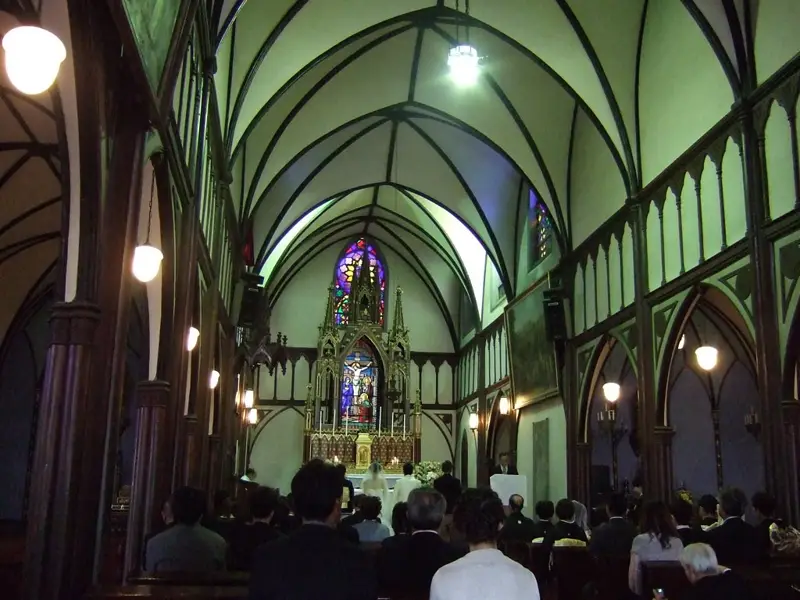
Seven generations in secret, and the day they walked into a church and said so
Read →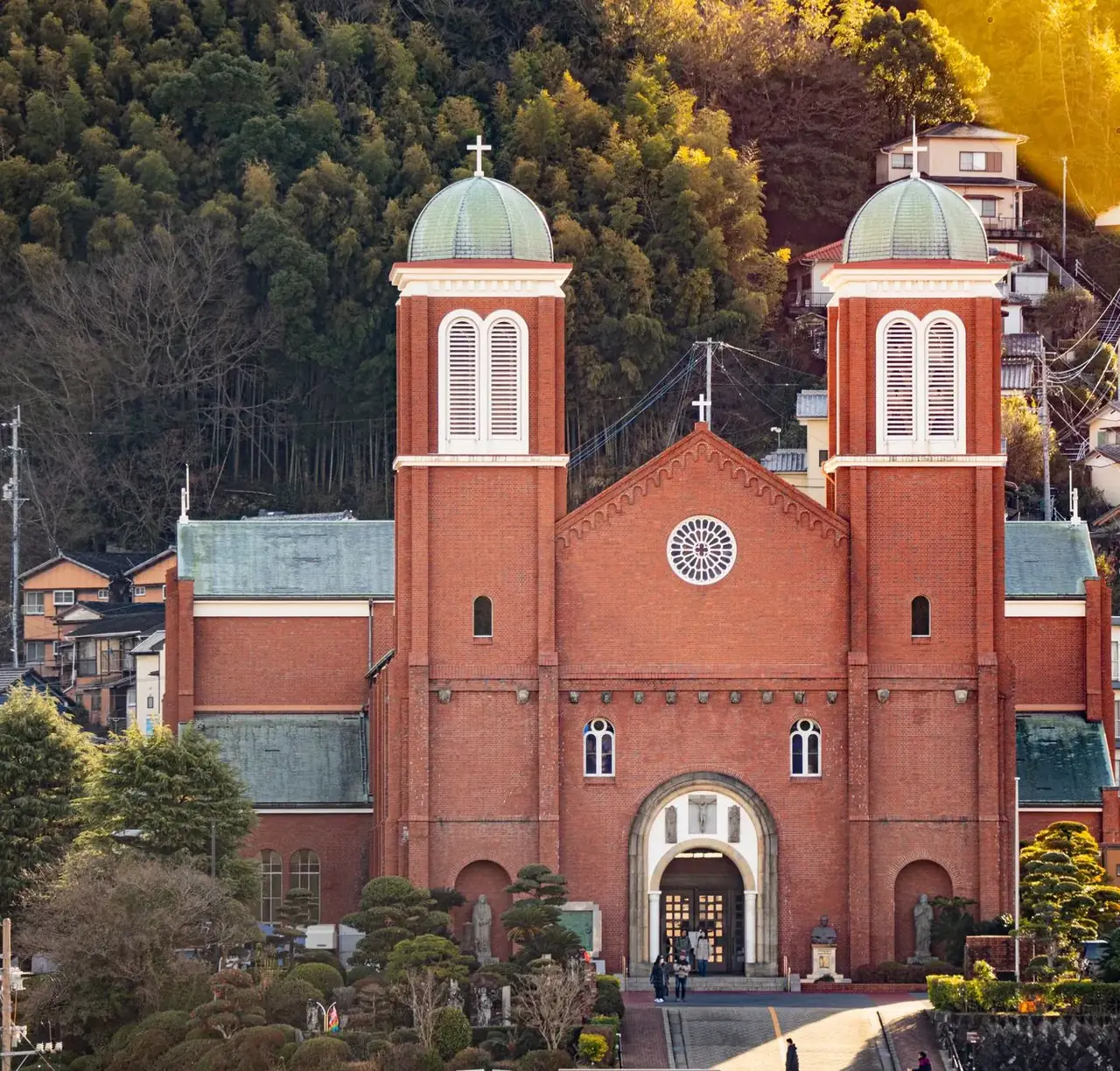
The city that was not the target
Read →
What happens when a port cooks for three countries at once
Read →
The most crowded place on earth, abandoned in a single season
Read →No typing needed — jump straight in:
Just docked? — the gangway toolStart from your shipThe ride from every berthAsk the editorGlossary