Seven generations in secret, and the day they walked into a church and said so
Banned in 1614, hunted for 250 years, and still there in 1865 — when a group of farmers walked into a newly built church in Nagasaki and quietly told a French priest that their hearts were the same as his.
Christianity arrived in Japan in 1549 with Francis Xavier and spread fastest here. By the early 1600s there may have been 300,000 Japanese Christians, concentrated around Nagasaki, with a Christian daimyo and churches in the town.
Then the shogunate banned it. In 1614 the faith was outlawed outright, and what followed was systematic: missionaries expelled or executed, converts ordered to recant, and the fumi-e introduced — bronze plaques of Christ and the Virgin that suspects were made to step on to prove they were not believers.
In 1637–38 the Shimabara Rebellion, largely Christian peasants, ended with tens of thousands dead at Hara Castle. After that the country closed almost completely, and the religion was assumed to be extinct.
It was not extinct. It went underground, without priests, without a church, without a Bible in the language — and it lasted seven generations.
The Kakure Kirishitan — hidden Christians — survived by disguising everything. Statues of the Buddhist Kannon holding a child stood in for the Madonna, and are known now as Maria Kannon. Prayers were memorised and passed down orally, drifting over centuries into a Latin-Portuguese-Japanese sound that no outsider could parse. Baptism was administered by lay elders. Villages held roles — a water official, a calendar keeper who tracked the feast days.
They went to Buddhist funerals and Shinto shrines in public. In private, on remote islands and coastal hamlets around Nagasaki, they kept going.
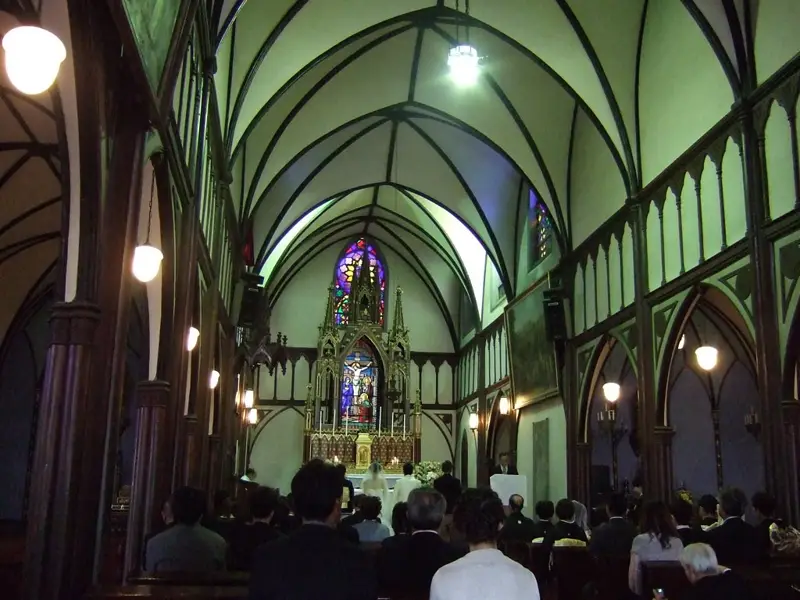
When the treaty ports opened, French missionaries built Oura Cathedral in Nagasaki — officially for foreigners only. It was dedicated in February 1865.
A month later a group of villagers from Urakami came in to look. One woman approached Father Bernard Petitjean and said, in words the Church has never forgotten: "The heart of all of us here is the same as yours." Then she asked where the statue of Santa Maria was.
The news went to Rome as a miracle: a Christian community that had survived two and a half centuries without a single priest. Perhaps tens of thousands revealed themselves in the years that followed.
The ban was still law. The final persecution, the Urakami Yoban Kuzure, deported some 3,400 Christians from Urakami to other domains between 1868 and 1873; roughly six hundred died. The Meiji government lifted the prohibition in 1873, largely under foreign pressure, and the survivors came home and built a cathedral at Urakami.
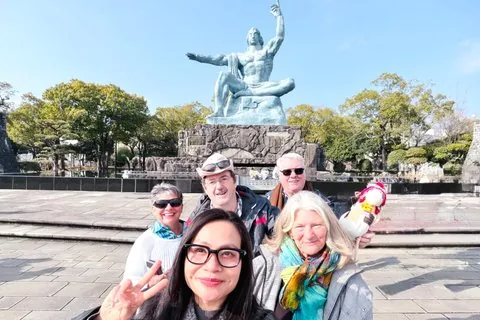
That cathedral was 500 metres from the hypocentre on 9 August 1945. The community that survived 250 years of persecution lost most of its congregation in a single second.
Oura Cathedral, dedicated 1865, is Japan's oldest surviving church and a National Treasure — and it is a fifteen-minute walk from the cruise wharf, next to Glover Garden. In 2018 UNESCO inscribed the Hidden Christian Sites in the Nagasaki Region, twelve components including Oura, Hara Castle and a string of remote island villages.
Christianity arrives; it spreads fastest around Nagasaki
Missionaries expelled; the fumi-e tests begin
Largely Christian peasants; tens of thousands die at Hara Castle
Urakami villagers reveal themselves at the new Oura Cathedral
Some 3,400 deported from Urakami; around six hundred die
Survivors return and eventually build Urakami Cathedral
Hidden Christian Sites in the Nagasaki Region — twelve components
Oura Cathedral is a short walk uphill from the wharf, beside Glover Garden — the two are one visit. The guided tram half-day adds the Urakami side of the story.
Japanese Catholics who kept their faith in secret after Christianity was banned in 1614 — for roughly 250 years, with no priests, no churches and no Bible in their language. They disguised Marian images as the Buddhist Kannon, passed prayers down orally, and outwardly practised Buddhism and Shinto.
A month after the church was dedicated, villagers from Urakami came in and one woman told the French priest, Bernard Petitjean, that "the heart of all of us here is the same as yours," then asked to see the statue of the Virgin. It revealed a Christian community that had survived two and a half centuries underground — news that reached Rome as a miracle.
Oura Cathedral — Japan's oldest church, a National Treasure and part of the 2018 UNESCO listing — is a fifteen-minute walk uphill from the Nagasaki cruise wharf, next to Glover Garden. The island villages in the same listing are far more remote and need a dedicated trip.
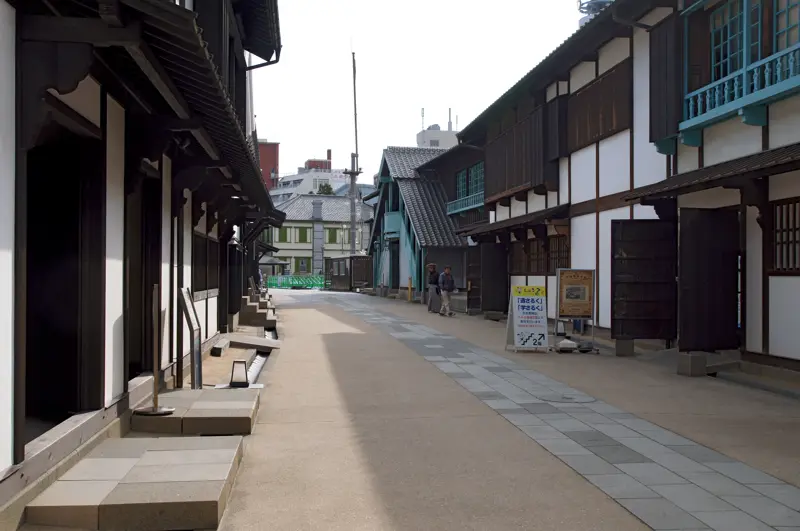
For two centuries, this fan of land was all Japan could see of the West
Read →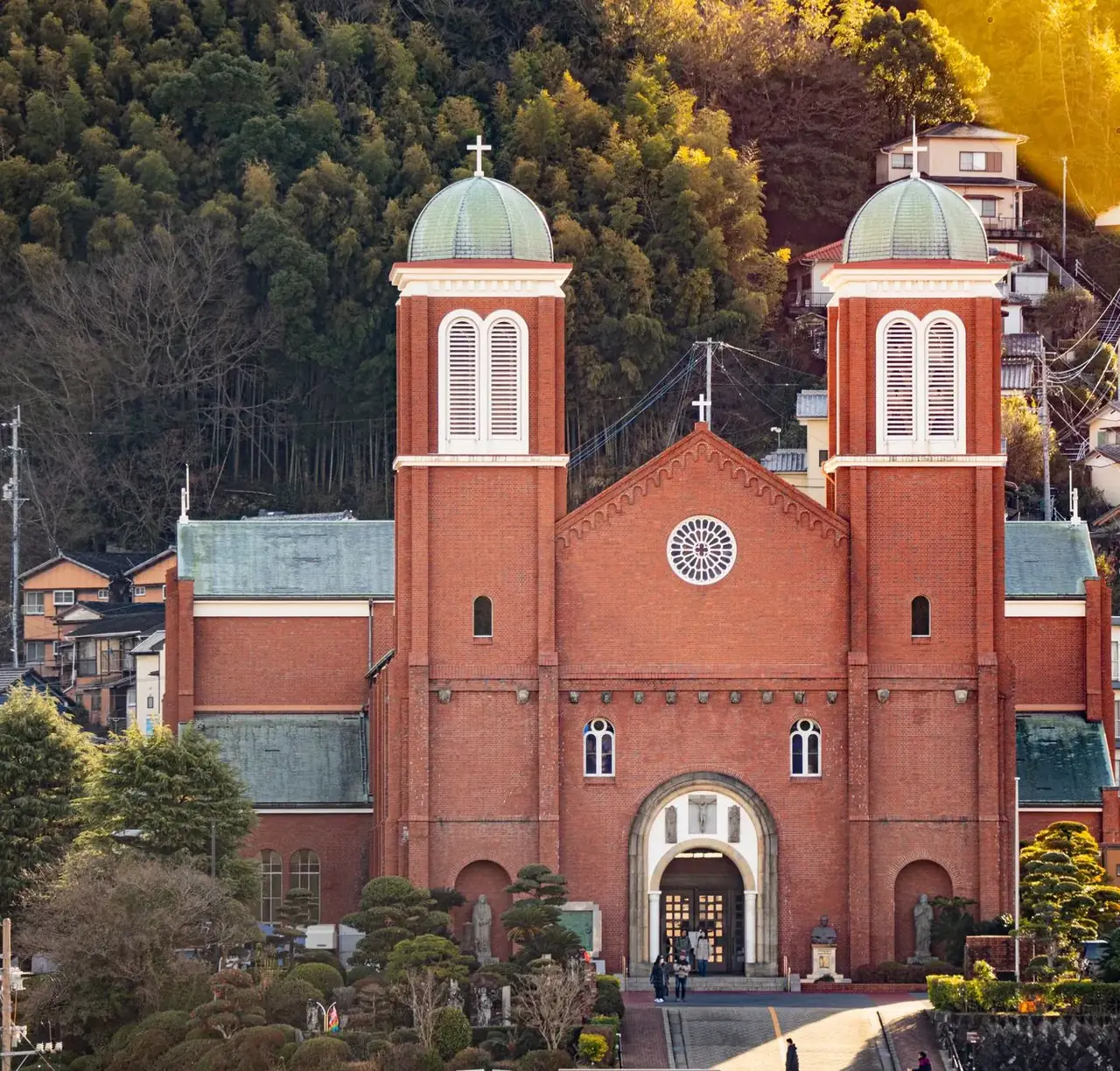
The city that was not the target
Read →
What happens when a port cooks for three countries at once
Read →
The most crowded place on earth, abandoned in a single season
Read →No typing needed — jump straight in:
Just docked? — the gangway toolStart from your shipThe ride from every berthAsk the editorGlossary