The most crowded place on earth, abandoned in a single season
A concrete island 15 kilometres offshore once held 5,000 people on six hectares — the densest population ever recorded anywhere. In 1974 the mine closed and everyone left within months. Everything they owned is still there.
Coal was found under the seabed off Nagasaki in the 1800s, and Hashima — a bare rock — was built up with sea walls and concrete into a mining island. Mitsubishi bought it in 1890 and went down: the shafts eventually reached over a kilometre below the sea floor.
To house the miners, Japan built its first large reinforced-concrete apartment block here in 1916, nine storeys, because there was no land to spread across. More followed, wall to wall, until the island looked from the water like a battleship — hence Gunkanjima, battleship island.
At its peak in 1959 the island held about 5,259 people on roughly 6.3 hectares — the highest population density ever recorded on earth.
It had schools, a hospital, shops, a cinema, a swimming pool, a rooftop garden because there was no ground for one, and a mahjong parlour. Children played on concrete walkways above the sea. Typhoons broke over the sea walls into the corridors.
Japan switched from coal to oil. The mine closed in January 1974 and the entire population left within about three months. The last resident stepped off in April. The island was locked and left.
It has been decaying in the East China Sea ever since — concrete crumbling, staircases collapsing, televisions still in the rooms. For decades it was the most photographed place in Japan that almost nobody had legally seen.
Hashima was inscribed on the World Heritage list in 2015 as one of the Sites of Japan's Meiji Industrial Revolution — and the inscription was contested, because during the Second World War Korean and Chinese labourers were brought to this island and made to work in the mine under conditions many did not survive.
Japan acknowledged at inscription that there had been forced labour and committed to telling that history at an information centre. South Korea has since said repeatedly that the commitment has not been met, and UNESCO has issued follow-up resolutions on it. This remains an open diplomatic dispute.
I think you should visit, and I think you should know that. A ruin that beautiful makes it very easy to feel only awe.
Tours run from Nagasaki harbour, minutes from the cruise wharf, and take about three hours round trip. Landing is permitted only on a short fixed walkway near the southern tip; you do not enter the buildings, and the interiors you have seen in films were shot with special permission or built as sets. Skyfall's villain island was modelled on it.
Undersea coal shafts eventually reach over a kilometre deep
Nine storeys, because there was no room to build outward
Korean and Chinese workers brought to the mine; many did not survive
The highest population density ever recorded
The island empties within about three months
On a fixed walkway near the southern tip only
Inscribed with a commitment to tell the forced-labour history — still contested
Cruises leave from the harbour beside the wharf and take about three hours. Weather cancels roughly a third of them, so treat it as a bonus rather than a plan.
Hashima Island, a concrete mining island 15 km off Nagasaki that housed coal miners and their families until the mine closed in January 1974. At its 1959 peak it held about 5,259 people on 6.3 hectares — the densest population ever recorded — and it has stood abandoned ever since.
Yes — tours leave from Nagasaki harbour beside the cruise wharf and run about three hours. But landing depends on sea conditions and roughly one trip in three is cancelled by swell, so treat it as a bonus rather than the centrepiece of your day.
Because Korean and Chinese labourers were brought to the island during the Second World War and made to work in the mine, many under conditions they did not survive. Japan acknowledged forced labour at the 2015 inscription and committed to presenting that history; South Korea maintains the commitment has not been met, and UNESCO has issued follow-up resolutions. The dispute is unresolved.
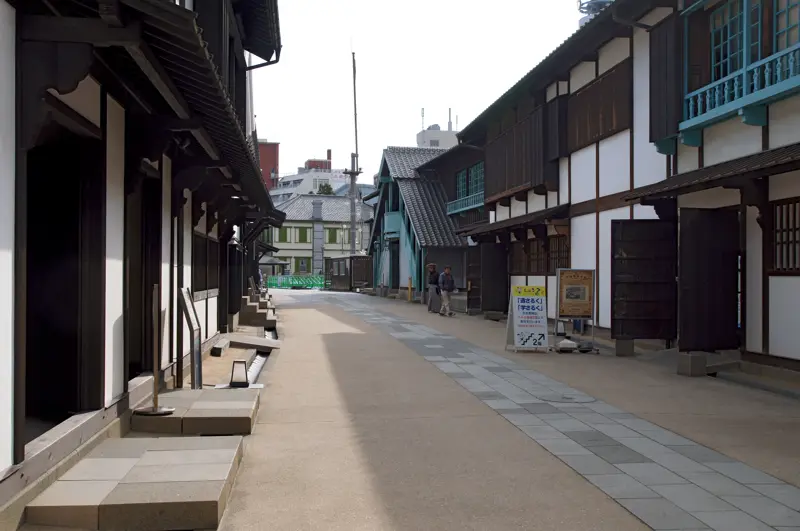
For two centuries, this fan of land was all Japan could see of the West
Read →
Seven generations in secret, and the day they walked into a church and said so
Read →
The city that was not the target
Read →
What happens when a port cooks for three countries at once
Read →No typing needed — jump straight in:
Just docked? — the gangway toolStart from your shipThe ride from every berthAsk the editorGlossary