Fuji is not a viewpoint. It is a deity, and a shrine owns the summit
UNESCO listed Mount Fuji in 2013 — not as a natural site, but as a <em>cultural</em> one. The land above roughly the eighth station is the property of a Shinto shrine, and the mountain has been climbed as an act of worship, by organised congregations, for around five hundred years.
Fuji erupted repeatedly through recorded history, most recently in 1707, and the earliest shrines to it were built to appease it. Sengen shrines — about 1,300 of them across Japan — are dedicated to the mountain's deity, and the head shrine is Fujisan Hongu Sengen Taisha at Fujinomiya, on this side of the mountain.
The land above around the eighth station is held by that shrine, confirmed by a Japanese court ruling in the twentieth century after a long dispute with the state. There is an inner shrine at the summit, staffed in season, which stamps pilgrim books.
This is not symbolic. Fuji's summit is legally shrine property, and the crater rim is treated as sacred ground.
For most of its history, women were forbidden to climb Fuji. The ban was formally lifted in 1872; before that, a woman named Takayama Tatsu had climbed it disguised as a man in 1832.
From the sixteenth century, lay confraternities called Fujiko spread through Edo and the surrounding provinces. Members pooled money so that a few could make the pilgrimage each year on behalf of everyone, wearing white, chanting, and climbing at night to reach the summit for sunrise.
For those who could not go, hundreds of miniature Fuji — fujizuka, artificial mounds built from Fuji lava — were constructed in Edo. Climbing your local one was held to confer the same blessing. Dozens still exist in Tokyo, in ordinary shrine grounds, and almost no visitor knows what they are.
The sunrise from the summit has a name — goraiko, "the honourable coming of light" — and the point of climbing at night is to receive it. Around 200,000 people still climb each year in the July-to-early-September season.
You are not doing that on a port day, and no honest guide will suggest it. What you can do is treat the mountain as the object of worship it is: the Sengen shrine at Fujinomiya, the Oshino and Shiraito spring sites fed by Fuji's snowmelt, and the fifth station on the mountain itself.
After repeated eruptions
Pooling money to send pilgrims on behalf of all
The last one; the scar is visible on the south-east flank
Forty years before the ban on women is lifted
Not a natural one — the distinction is the point
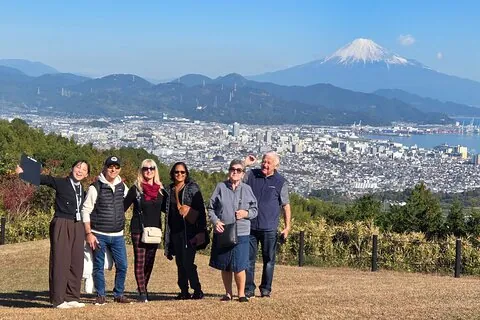
Watch it from the deck at dawn before you leave the ship. From the sea is the angle that made it sacred.
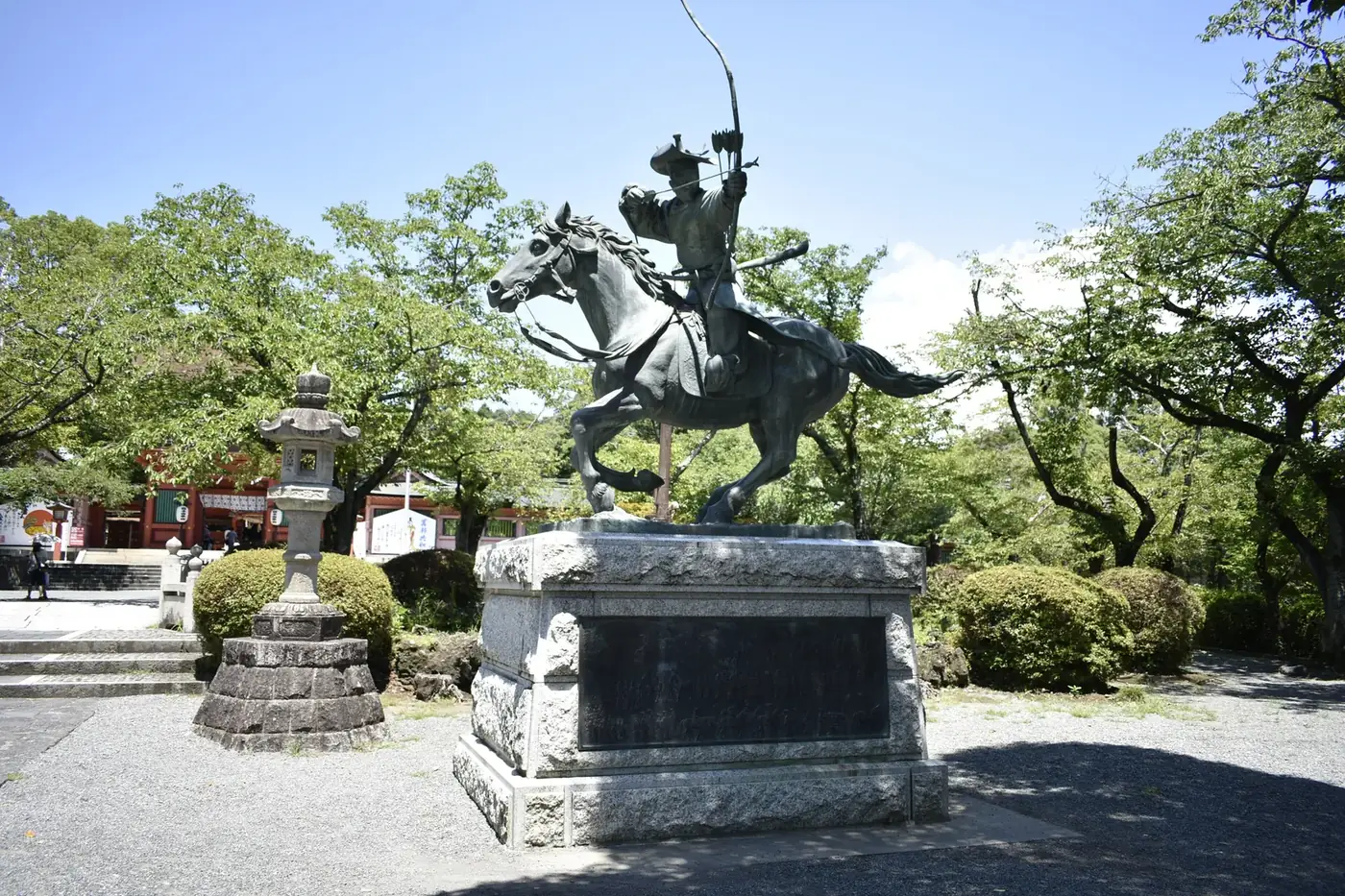
Fujisan Hongu Sengen Taisha, the head shrine of the roughly 1,300 Sengen shrines dedicated to the mountain's deity. The land above around the eighth station is shrine property, confirmed by a court ruling, and there is an inner shrine at the summit that is staffed during the climbing season.
Because it was listed in 2013 for its role as an object of worship and a source of artistic inspiration, not for its geology. It has been climbed as an act of pilgrimage for around five hundred years, by lay confraternities called Fujiko, and hundreds of miniature Fuji built from its lava were constructed so that those who could not climb could receive the same blessing.
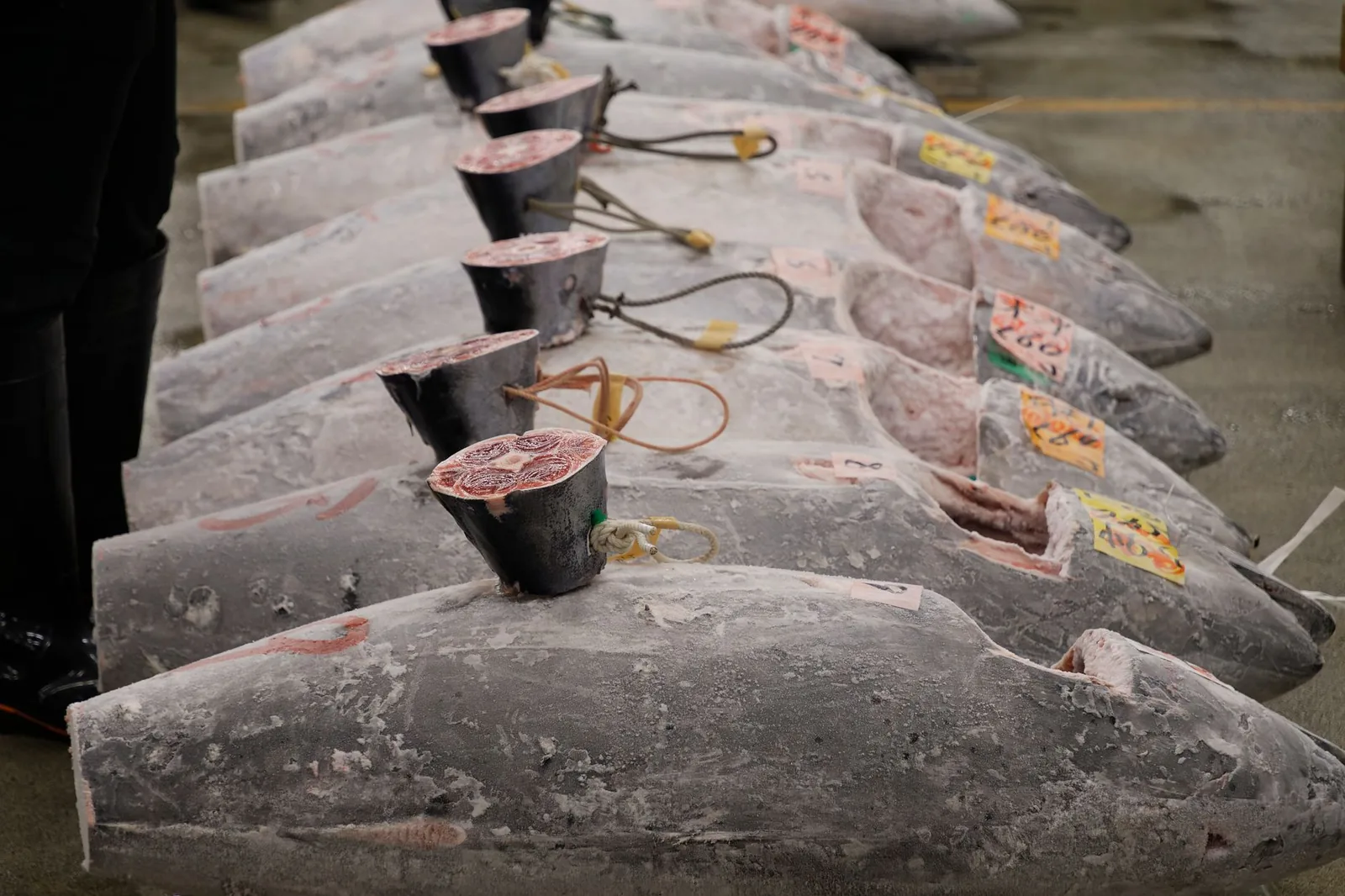
Japan's number one tuna port, and almost none of it was caught nearby
Read →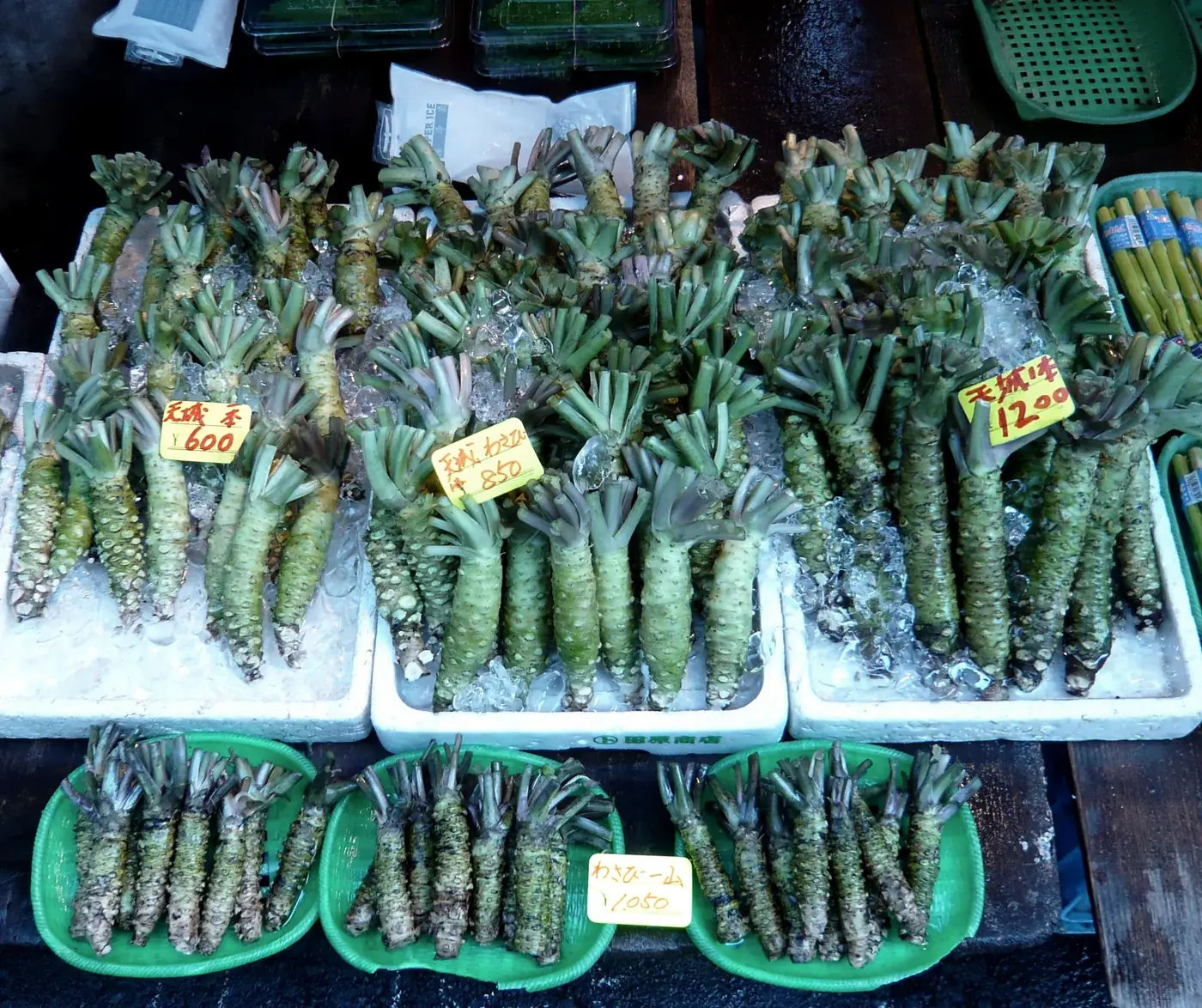
Invented as a crop in a Shizuoka valley around 1600, and almost everything sold as it is not
Read →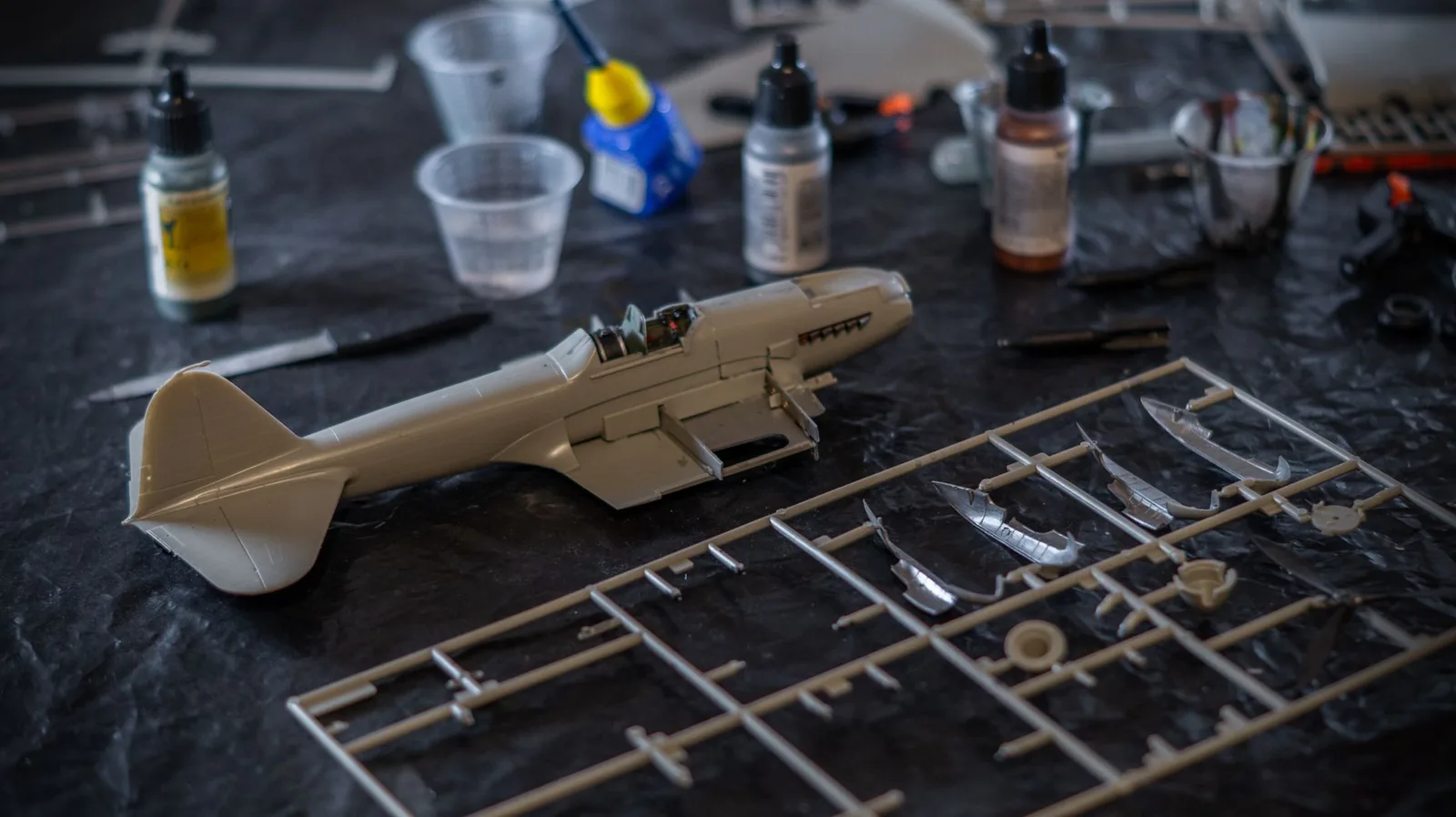
Around 90% of Japan's plastic models are made within a few kilometres of your ship
Read →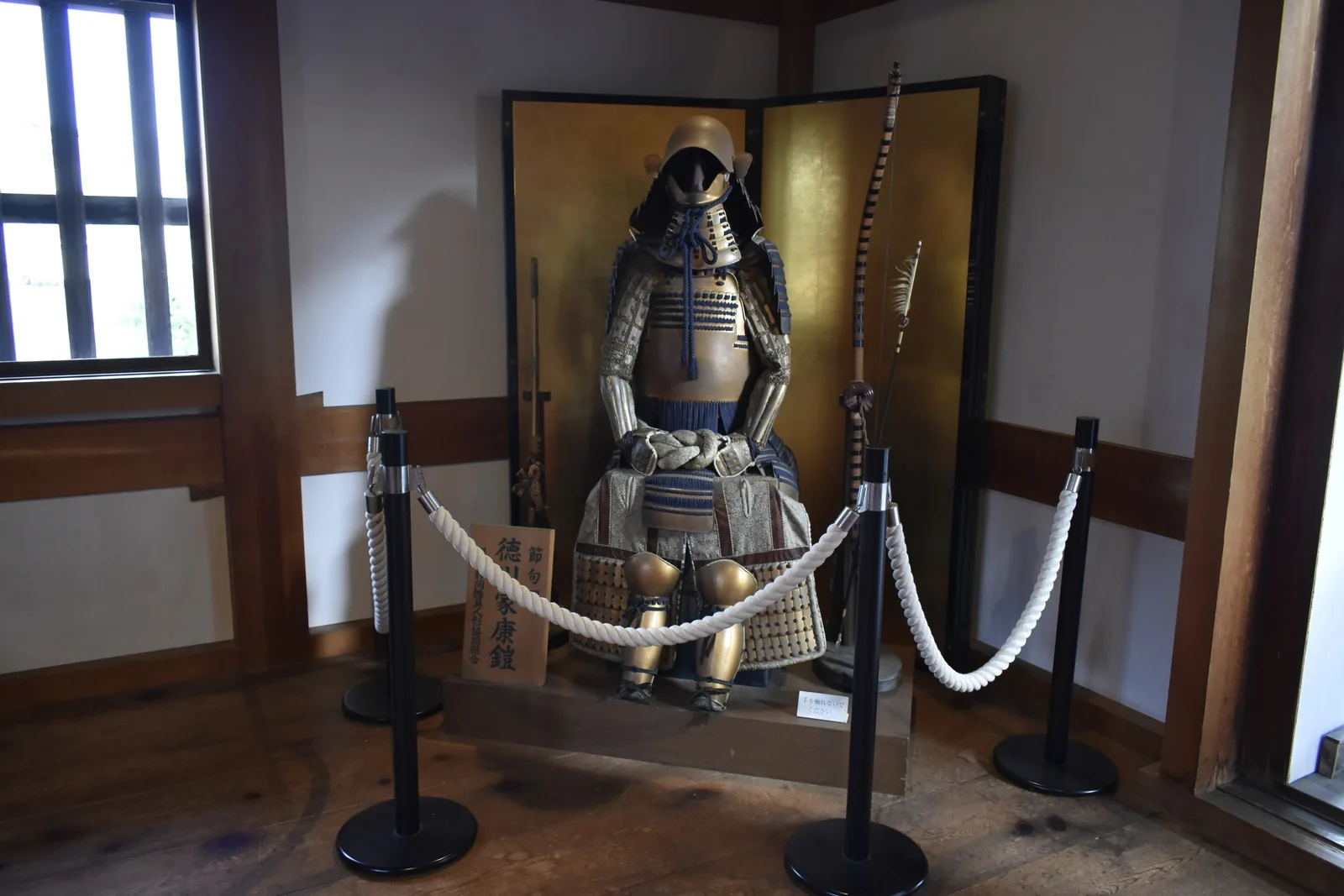
He gave up the title after two years, moved here, and ran the country for another decade
Read →No typing needed — jump straight in:
Just docked? — the gangway toolStart from your shipThe ride from every berthAsk the editorGlossary