~4h via ropeway — the round trip from the gangway, with the 60-minute margin kept aside.
Tap a photo to see it large. 8 photographs, each credited.
The first shogun's original mausoleum, gilded and half-hidden on a seaside mountain — Nikko's famous shrine is this one's copy. The ropeway ride over the strawberry coast is a bonus.
He gave up the title after two years, moved here, and ran the country for another decade
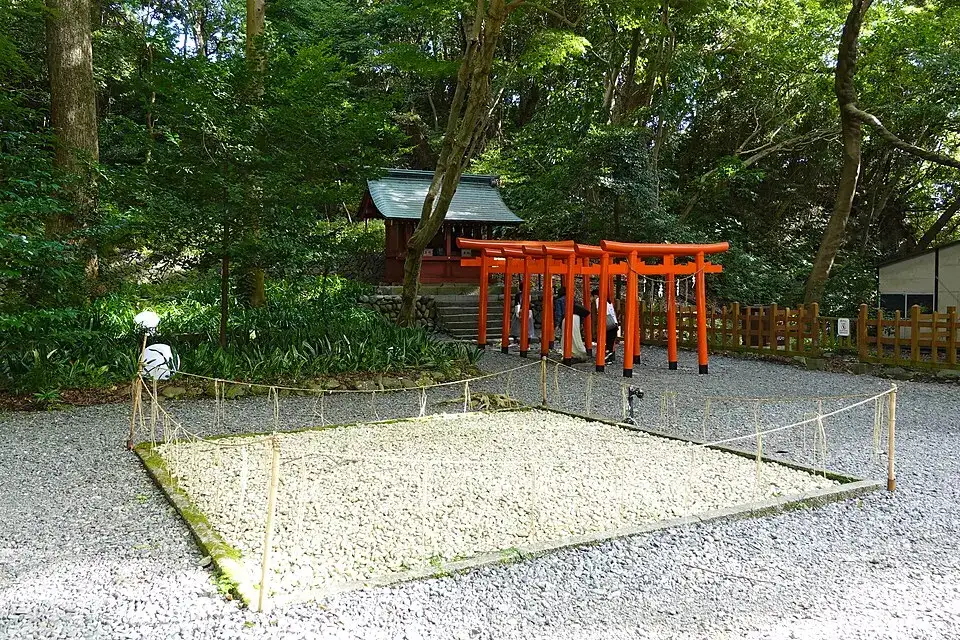
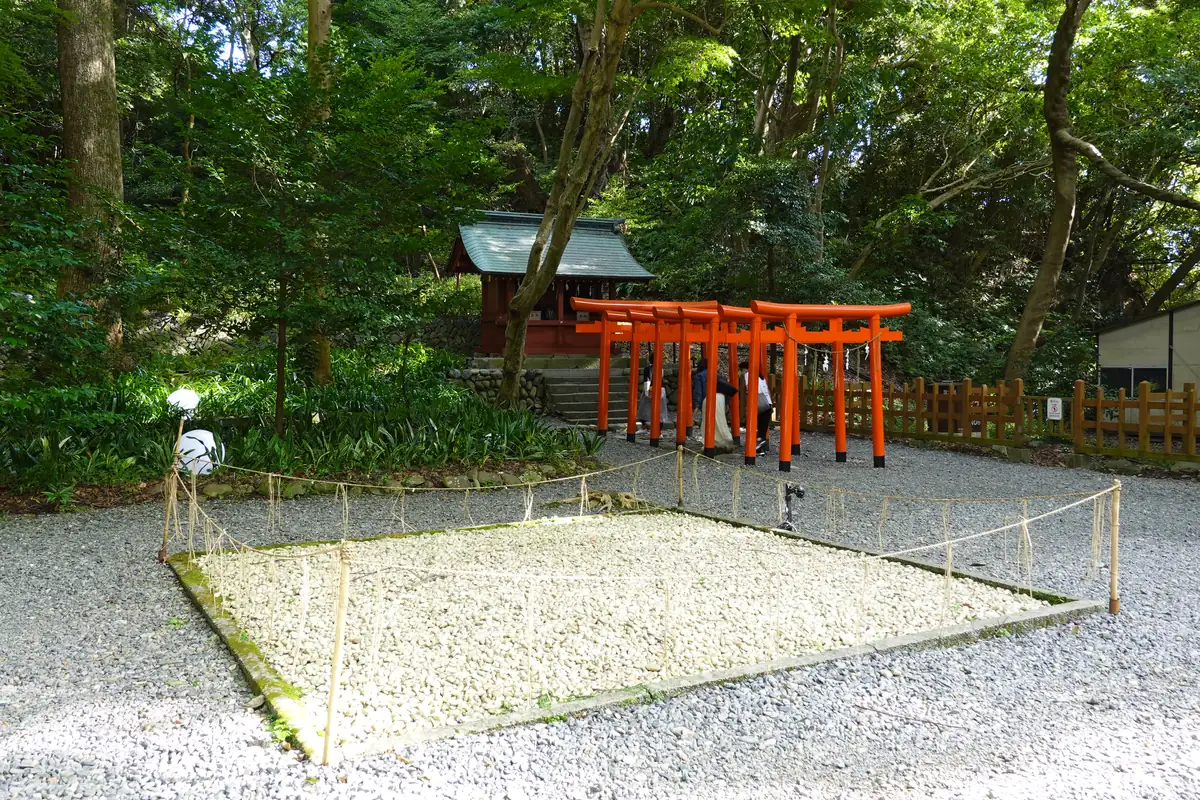
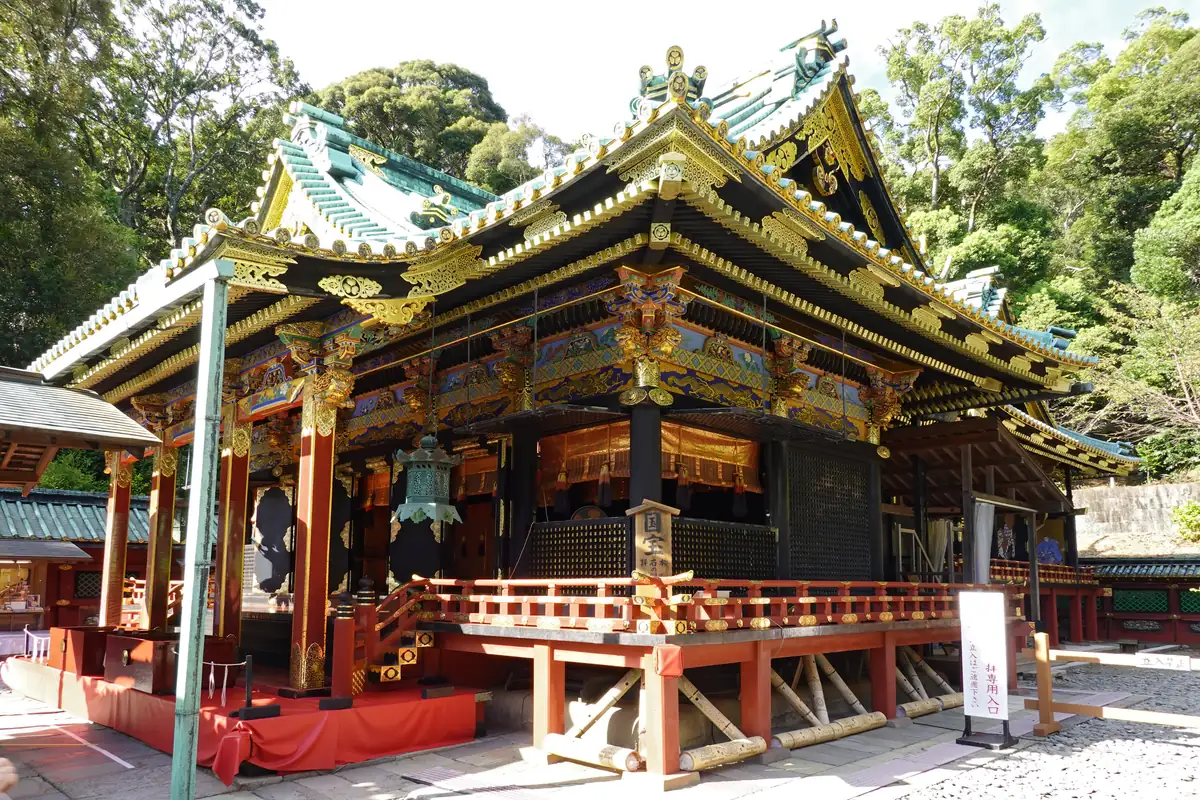
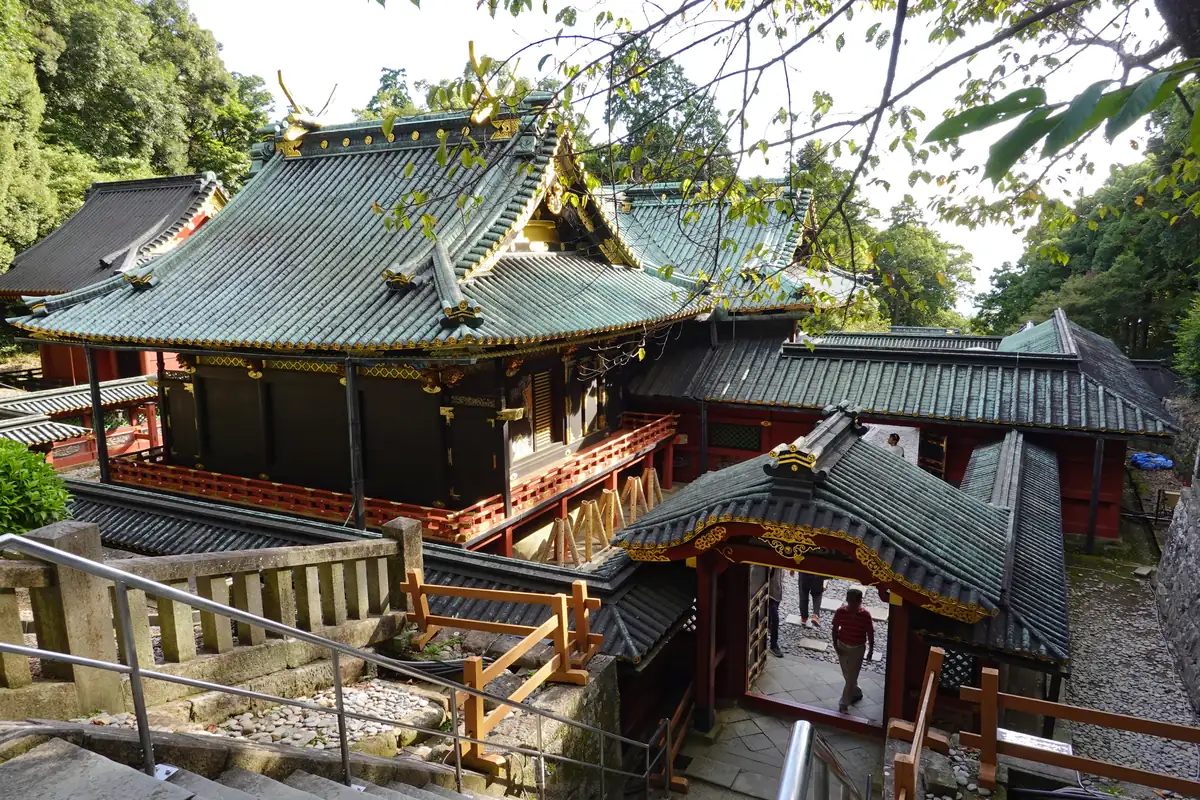
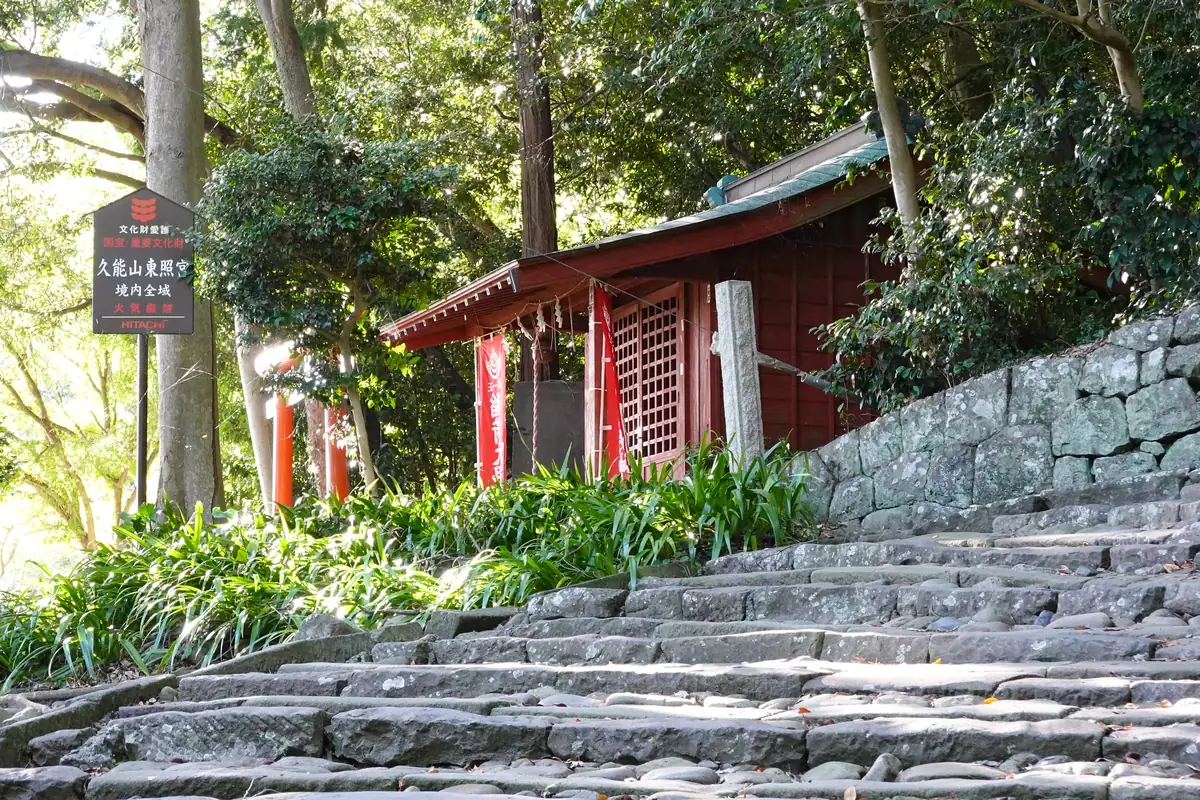
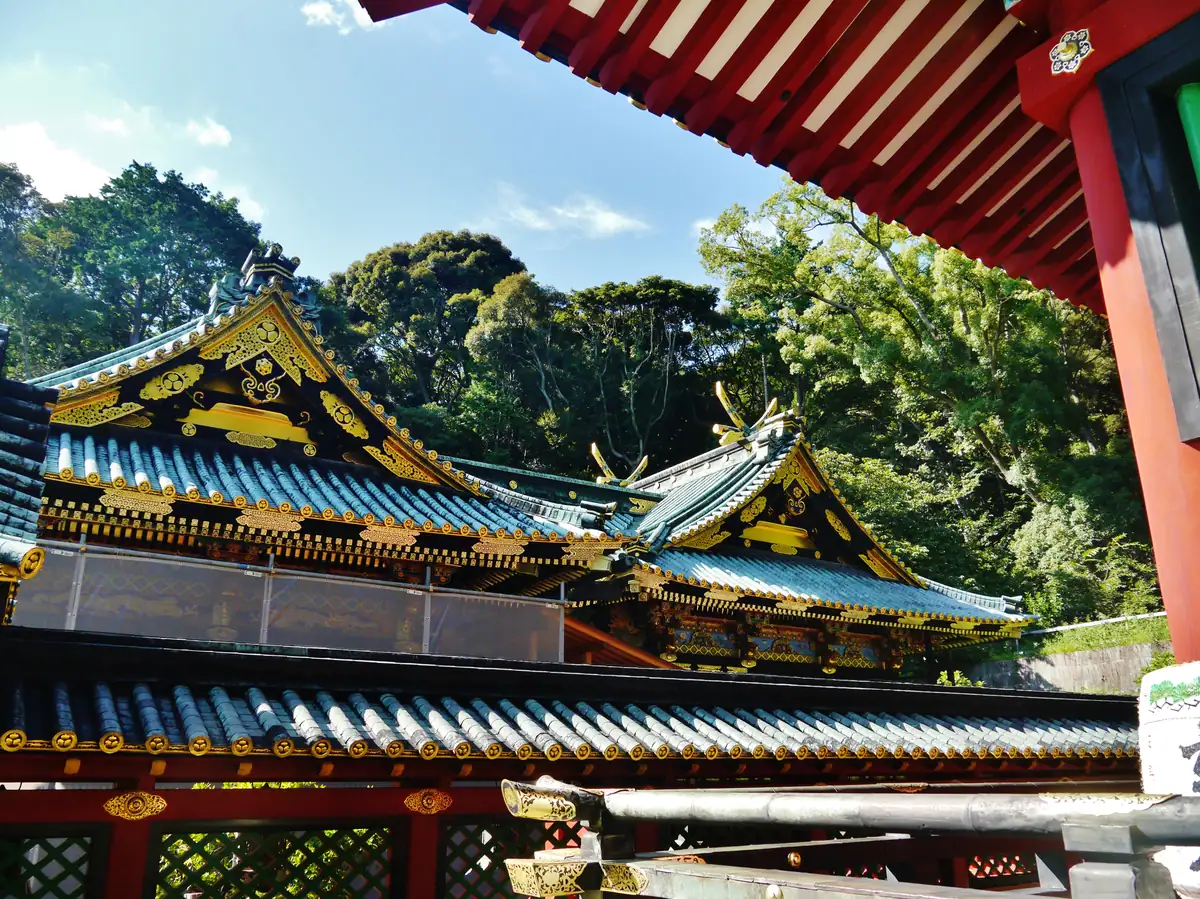
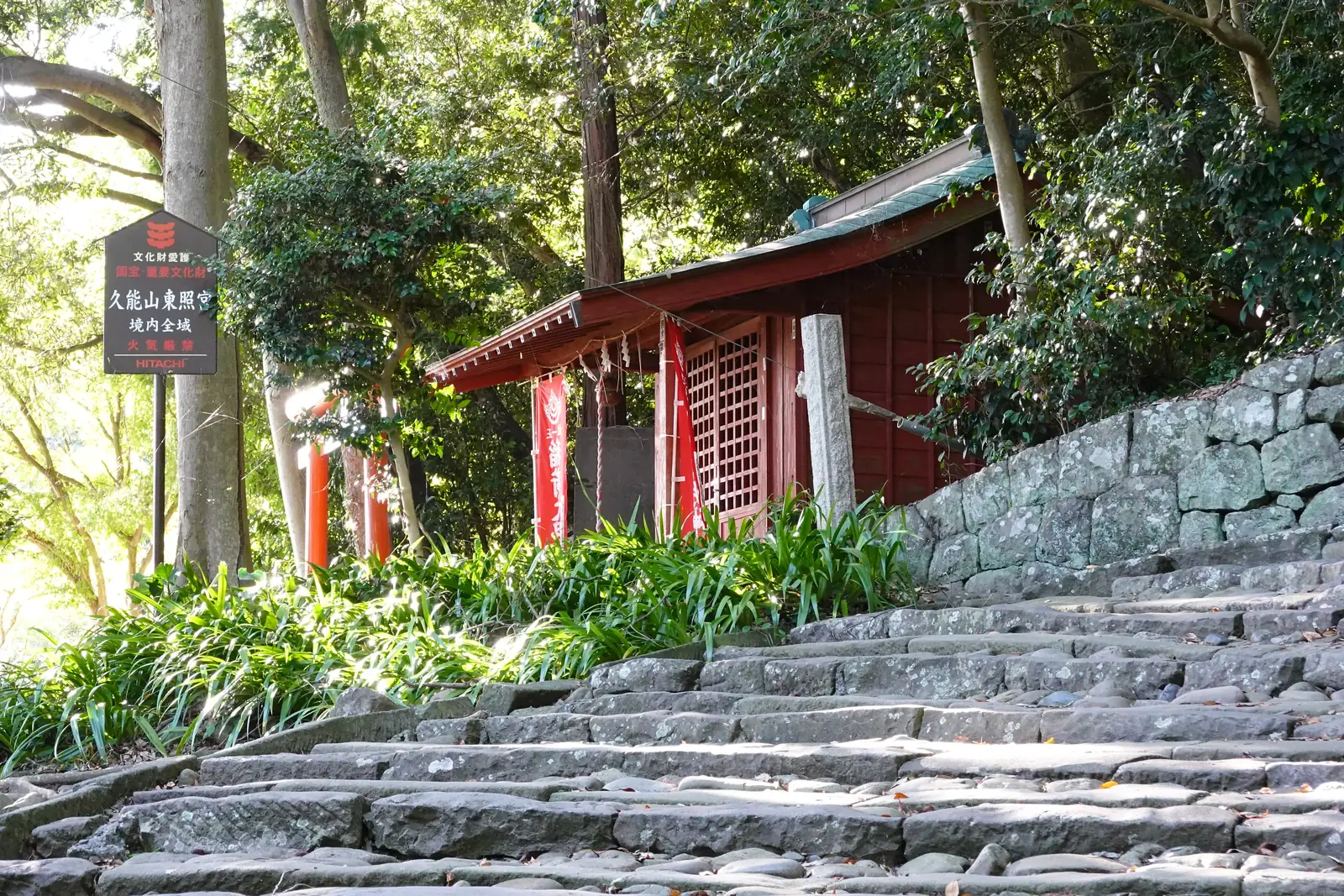
Tokugawa Ieyasu, the shogun who ended a century of civil war, retired to Sunpu and was buried on this seaside mountain in 1616. The shrine built for him the following year is the original; Nikko's far more famous Toshogu was modelled on it. Its lacquered, gilded main hall is a National Treasure, and the 1,159 stone steps from the coast are the old way up.
Tokugawa Ieyasu became shogun in 1603 and resigned in 1605 — after two years — handing the title to his son. It was not a retirement. He moved to Sunpu, the town he had been a hostage in as a boy, and governed from there until he died, which is why the most important castle of the early Tokugawa period is not in Tokyo.
Tokugawa Ieyasu died in 1616 and was first buried here, on a mountain above the sea. The far more famous shrine at Nikko was built afterwards. Kunozan is the original, is smaller, is more densely decorated per square metre, and receives a small fraction of the visitors.
The main hall is a National Treasure in the gongen-zukuri style — lacquered, gilded and carved to a degree that is hard to photograph and easy to underestimate from pictures. The ropeway from Nihondaira crosses a valley of strawberry greenhouses with the bay behind.
The town he returns to at the end
And resigns two years later
Proving the shogunate is hereditary
The effective capital of Japan is here
Take the ropeway to Kunozan Toshogu. It is the original burial site, and Nikko is the copy.
Both pins on one map, so the distance is a fact rather than a feeling.
Each of these still lands you back aboard with the hour to spare on a 6-hour stop ashore.
It is the original. Ieyasu was first buried here in 1616 and the Nikko shrine was built afterwards. Kunozan is smaller and more densely decorated, its main hall is a National Treasure, and it receives a small fraction of Nikko's visitors — which on a port day is decisive.
Taxi to Nihondaira, about twenty-five minutes, then the ropeway across the valley. The alternative is a 1,159-step stone stairway from the coast, which is real and is not a port-day activity. Check the last ropeway down — it closes earlier than the shrine.
Each one is a finished day we have walked and timed, with this stop in it. Read the route rather than assembling it yourself.
Each of these still lands you back aboard with the hour to spare.
No typing needed — jump straight in:
Just docked? — the gangway toolStart from your shipThe ride from every berthAsk the editorGlossary