Updated 1 October 2026 · 29 official and operator sources · Researched from official timetables, operators and the port authority · Takumi Yamada
Toba is a tender port: ships anchor off Toba Marine Terminal and, on nine of the ten calls from October 2026 to March 2027, land you at its Sadahama pier, a 5–10-minute walk from the station and 10–15 minutes from Mikimoto Pearl Island and the aquarium. The day holds two very different things — the pearl island and its ama divers on foot, or Ise Jingu, Japan's most important Shinto shrine, 40–50 minutes away by Kintetsu local and bus for ¥660. Ise fits the typical 9-hour call with a timed plan, and on 12-hour calls you can do both. The one decision is which comes first; the one risk is wind, which cancelled at least 6 of the 23 Toba calls scheduled for January–September 2026.
Your call, your day
What fits the time your ship gives you?
Pick your ship from the official Toba schedule — or just the hours you have — and this page picks the plan and the tours that fit, with the hour before all-aboard already set aside.
Japan's most important Shinto shrine, with more than 7 million worshippers a year across its two sanctuaries, and in the middle of the Shikinen Sengu — the 20-yearly rebuilding whose rites began in 2025. Admission is free; the Edo-style Okage Yokocho streets at its gate are where you eat.
From the shipWalk 5–10 minutes to Toba Station, Kintetsu local 11 minutes to Isuzugawa (¥360), bus about 9 minutes (¥300): about 40–50 minutes each way. Or the direct CAN bus from Toba Bus Center, 41 minutes, ¥1,050.
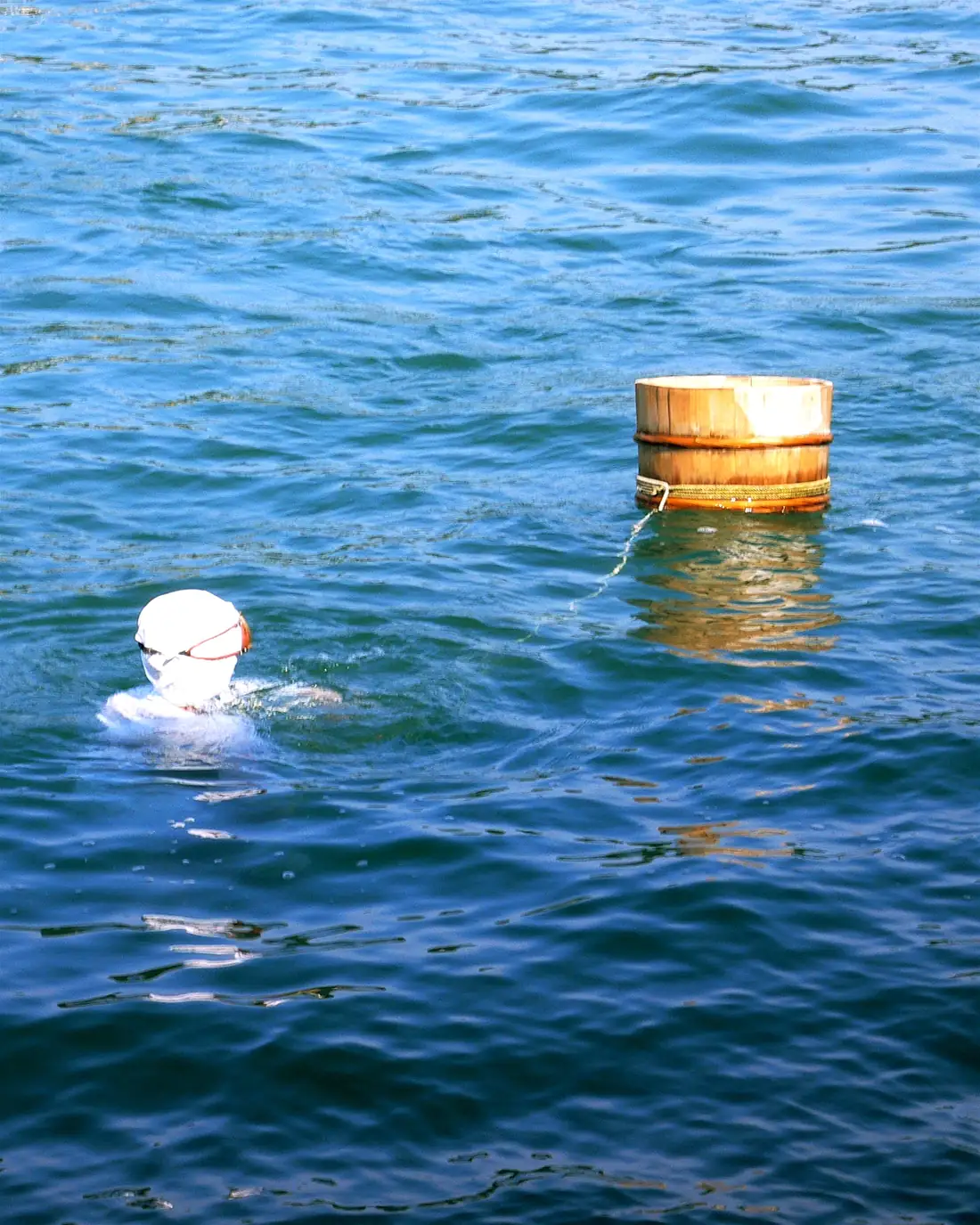
The island where Kokichi Mikimoto produced the first cultured pearl, with a pearl museum and ama — the women free-divers of Ise-Shima — demonstrating in the sea at fixed times. It is the one thing in Toba you can only see here, and it takes about an hour and a half.
From the shipWalk 10–12 minutes along the waterfront from the Sadahama tender pier. Mitsui Ocean Sakura passengers land at the island's own pier. Entry ¥1,650, ama show included.
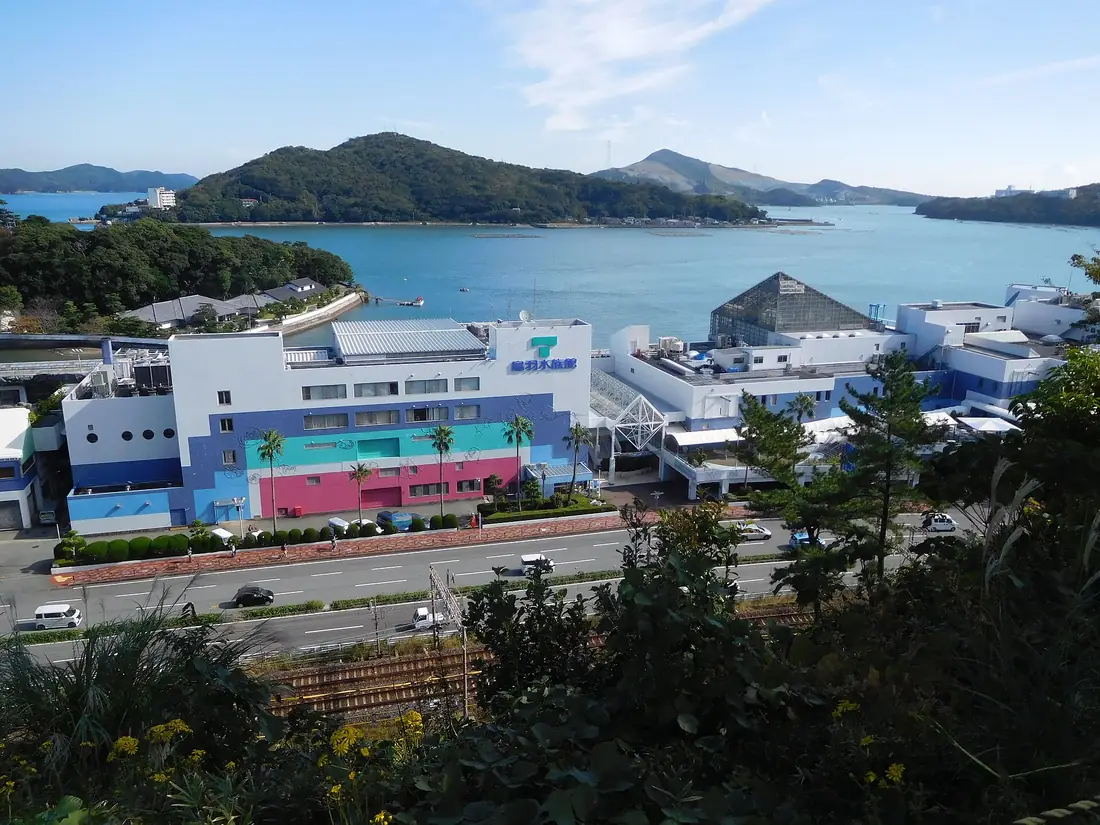
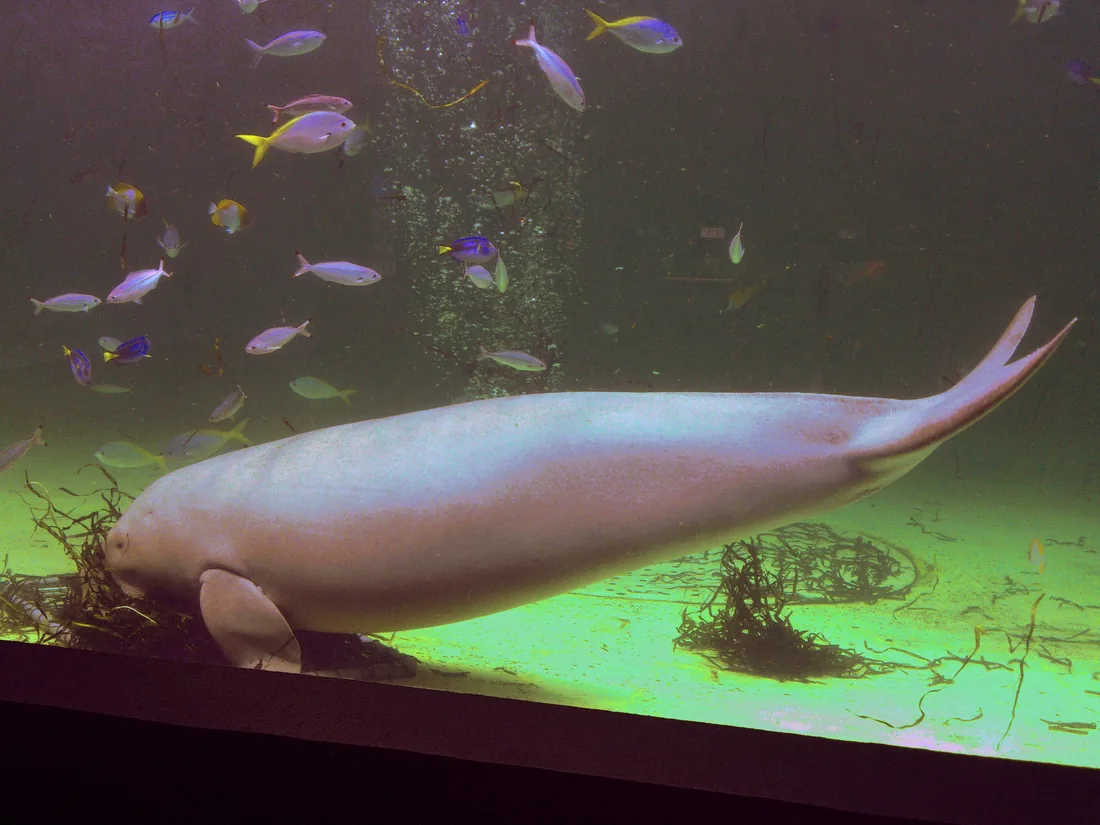
Home since 1987 to Serena, the only dugong kept in Japan, plus sea otters and a very long list of species. Indoors and open every day of the year, it is also Toba's rain plan.
From the shipWalk about 15 minutes from the Sadahama tender pier, or 4–5 minutes from Mikimoto. ¥2,800, or ¥4,000 with Mikimoto on the online combination ticket.
Toba is where cultured pearls began. In the bay your ship anchors in, Kokichi Mikimoto produced the first one, and on the small island that bears his name the ama — women who dive without air tanks for shellfish, as they have along this coast for centuries — still go into the sea in white at set times each day. Ten minutes along the waterfront is Toba Aquarium, home to the only dugong kept in Japan. And 40–50 minutes inland by train and bus is the reason many passengers chose this cruise: Ise Jingu, Japan's most important Shinto shrine, with more than 7 million visitors a year.
The good news is that Toba is small and easy. The tender lands you in the middle of town, the station is a 5–10-minute walk, and the sights on the waterfront need no transport at all. The honest caution is the sea: this is an anchorage, and wind cancels calls. In the first nine months of 2026, at least 6 of the 23 scheduled calls did not happen.
Everything below comes from the Toba cruise council's call list and access page, the ship agent's call notices, the Kintetsu and Mie Kotsu timetables, the shrine's, Mikimoto's and the aquarium's published hours, the official taxi tariff and the Japan Meteorological Agency, checked on 30 September 2026. Walking and driving times without an official figure are our estimates from map routing, and we say so.
What Toba is not: a port for a big day out on a coach. The best things here are either a walk away or one train and one bus away, and the tender, not the traffic, is what decides your day.
First: which berth are you at?
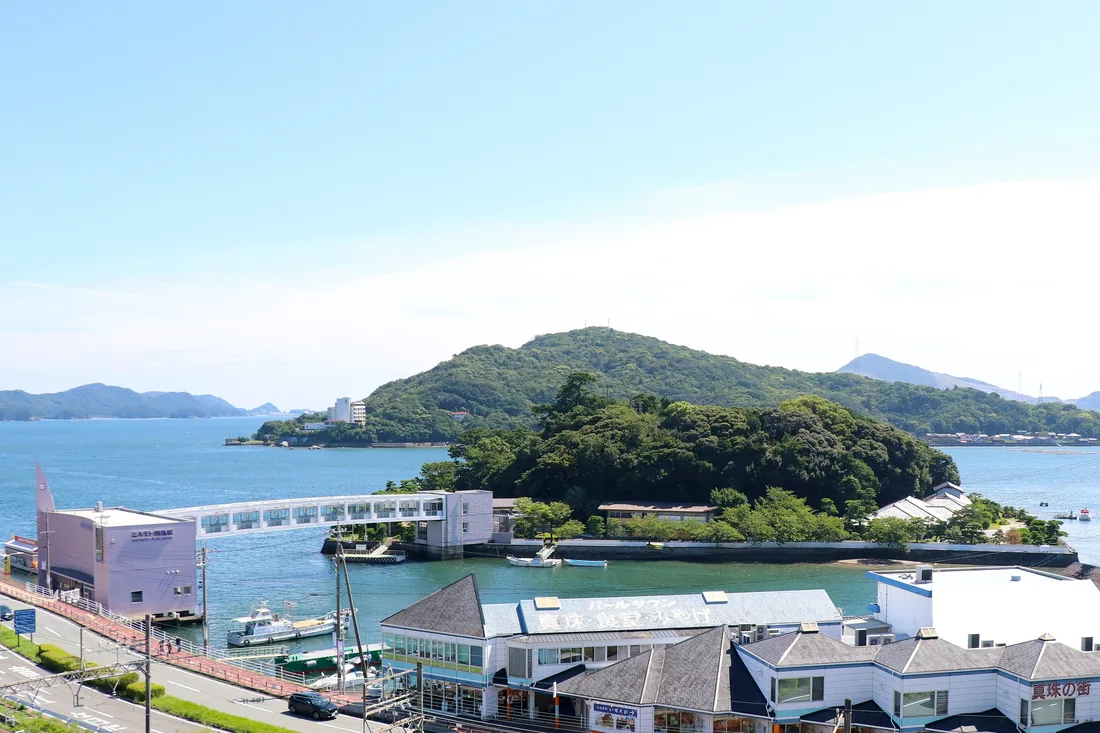
There is no cruise berth. Every Toba call anchors off Toba Marine Terminal, and the ship's own tenders and local launches carry you in. The question that matters is where the tender lands, and here the official call list is clear — it names a pier for every call.
Sadahama (Toba Marine Terminal)
Mikimoto Pearl Island pier
Who lands here
Every ship except Mitsui Ocean Sakura: Diamond and Sapphire Princess, Asuka III, Seabourn Encore, Le Soléal, Le Jacques Cartier, and all the listed 2027–28 calls
Mitsui Ocean Sakura only
Calls, Oct 2026 – Mar 2027
9 of 10
1 (12 November 2026)
What is there
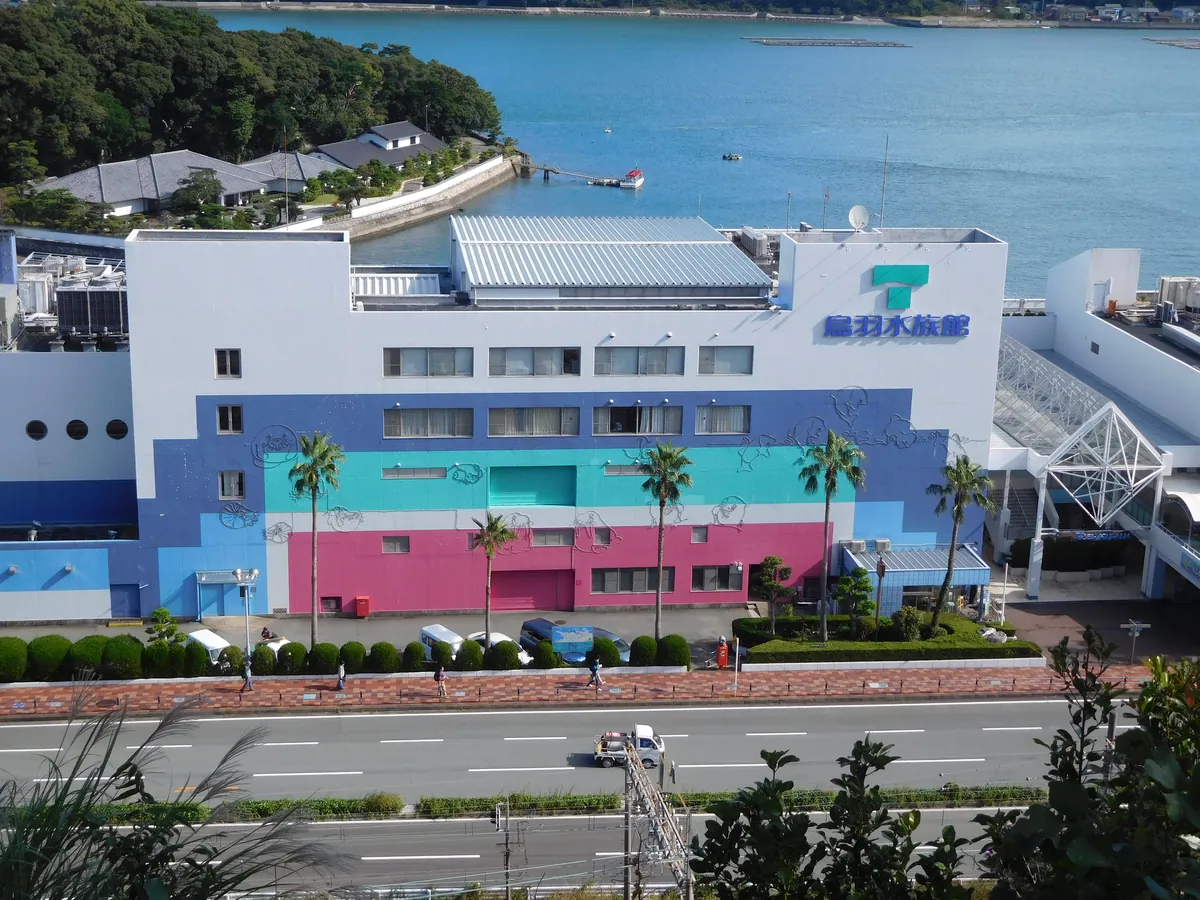
The island-ferry terminal: toilets by the entrance, Toba Visitor Center with free maps on the ground floor, a café on the second floor, the bay-cruise boarding point
The pearl island itself
On foot
Toba Station 5–10 min, Mikimoto 10–12 min, aquarium about 15 min
Aquarium 4–5 min, Toba Station 7–8 min
You may read that the landing "varies by ship and day", or that Mikimoto and the aquarium are "at the landing". For most ships neither is true: you land at Sadahama, about 800 m from Mikimoto and 940 m from the aquarium in a straight line.
The tender itself. No one publishes the crossing time or the queue. The anchorage is just off the terminal, so the ride is short; the queue at the start of the day, when many ships hand out tender tickets, is what takes time. This guide allows 30 minutes at each end on top of the usual margins. In wind or swell the ship can stop the tenders altogether — which is why the calls get cancelled.
The council says it sets up a tourist-information booth and volunteer interpreters on ship days; whether it is staffed for every call is not published. The Toba Visitor Center in the terminal is there either way.
Getting from the Sadahama tender pier into Toba and beyond
Everything in Toba itself is a flat walk along the waterfront (National Route 42). No shuttle is needed, and no official one runs.
To
How
Time
Cost
Toba Station (Kintetsu and JR) and Toba Bus Center
Walk
5–10 min
Free
Toba 1-bancho, the shopping block by the station
Walk
about 5 min
Free
Mikimoto Pearl Island
Walk along the waterfront
10–12 min
Entry ¥1,650
Toba Aquarium
Walk
about 15 min
Entry ¥2,800
Shiroyama Park (castle site)
Walk, uphill at the end
about 15 min
Free
Toba Bay cruise
From the terminal's second floor
50-min loop
¥2,400
Ise Jingu, Inner Shrine
Kintetsu local to Isuzugawa + bus
40–50 min
¥660
Ise Jingu, Inner Shrine
CAN bus from Toba Bus Center
41 min + walk
¥1,050
Ise Jingu, Outer Shrine
JR or Kintetsu to Iseshi, walk 5 min
about 20 min
¥240 JR / ¥390 Kintetsu
Meoto-iwa (Futami)
CAN bus 13 min, or JR to Futaminoura (about 10 min) + 15 min walk
25–30 min
JR ¥210; bus fare paid on board, IC cards work
Osatsu (ama huts)
Taxi, or the hut's own shuttle if booked
about 25 min
about ¥7,500+ by taxi
Taxis. The taxi ranks are at Toba Station, about 400–500 m from the terminal; whether cars wait at the terminal on ship days is not published. Mie's fares went up on 16 March 2026: ¥700 for the first 1.18 km, then ¥100 per 231 m, plus time charges in slow traffic. Our distance-only estimates are about ¥6,400 to the Inner Shrine (about 20 minutes) and about ¥7,500 to Osatsu, so treat them as a floor. Hourly hire is ¥4,000 per 30 minutes for a regular car and ¥5,150 for a large one — a 4-hour Ise round trip that way costs about ¥32,000, far more than two metered rides.
Trains. Two lines leave Toba Station. Kintetsu takes Suica-type IC cards; its limited expresses stop here but need a surcharge, and the locals are all you need. JR's Sangu Line is cheaper to Iseshi (¥240) but takes no IC cards until spring 2027 — buy a paper ticket.
Buses. Mie Kotsu buses, including the CAN bus, take all the national IC cards. The Ise-Toba Michikusa day pass (¥1,300) covers them; it only saves money if you ride the CAN bus both ways (¥2,100).
Ise Jingu has two main sanctuaries: Naiku, the Inner Shrine, which most people mean when they say "Ise", and Geku, the Outer Shrine, in the town of Ise-shi. From the tender pier, the honest options for Naiku are:
Route
How
One way, door to door
Fare
Kintetsu + bus (best)
Walk to Toba Station, local to Isuzugawa (11 min), bus to Naiku-mae (about 9 min)
about 40–50 min with waits
¥360 + ¥300 = ¥660
CAN bus direct
Walk 5 min to Toba Bus Center, bus to Naiku-mae (41 min)
about 50 min + the wait (hourly)
¥1,050
Kintetsu + walk
As above, then 2.4 km on foot from Isuzugawa
about 60 min
¥360
Via Iseshi
Train to Iseshi, bus 51 or 55 to Naiku
about 55–65 min
¥910 (Kintetsu) or ¥760 (JR)
Taxi
Direct
about 20 min
about ¥6,400+
The first is the route the Toba cruise council itself recommends. Kintetsu locals leave Toba at :25 and :55 past the hour through the middle of the day, and buses from Isuzugawa to Naiku-mae run 4–5 times an hour. Coming back, locals leave Isuzugawa at about :17 and :45.
The CAN bus is the no-change option. It leaves Toba Bus Center at 10 past each hour from 9:10 (5 minutes earlier from the Toba Aquarium / Mikimoto Pearl Island stop) and returns from Naiku-mae at 34 past most hours — 8:44, 9:34, 10:34, 11:34, 12:34, 13:34, then 14:14, 15:34 and 16:34. It is hourly, so a missed bus costs an hour.
How long it takes. About 1 hour 40 minutes of travel for the round trip, 90 minutes at Naiku, an hour or so in Okage Yokocho, and some slack: about 4 hours ashore, plus the tender at each end. On the usual 9-hour call that leaves room to spare; on a 6-hour call it is possible only if you skip lunch at the shrine. You may read that Ise is only for calls of 8 hours ashore or more. The timetables do not bear that out.
Adding Geku. The Outer Shrine is a 5-minute walk from Iseshi station, about 20 minutes from Toba by train. On a cruise call it is realistic only on the 12-hour days.
Afternoon calls. Le Soléal on 15 March 2027 arrives at 12:00 and leaves at 21:00. Go to Ise first, from about 13:00: Naiku is open until 18:00 in March. Mikimoto (ticket sales end at 16:00) and Ise do not both fit that afternoon.
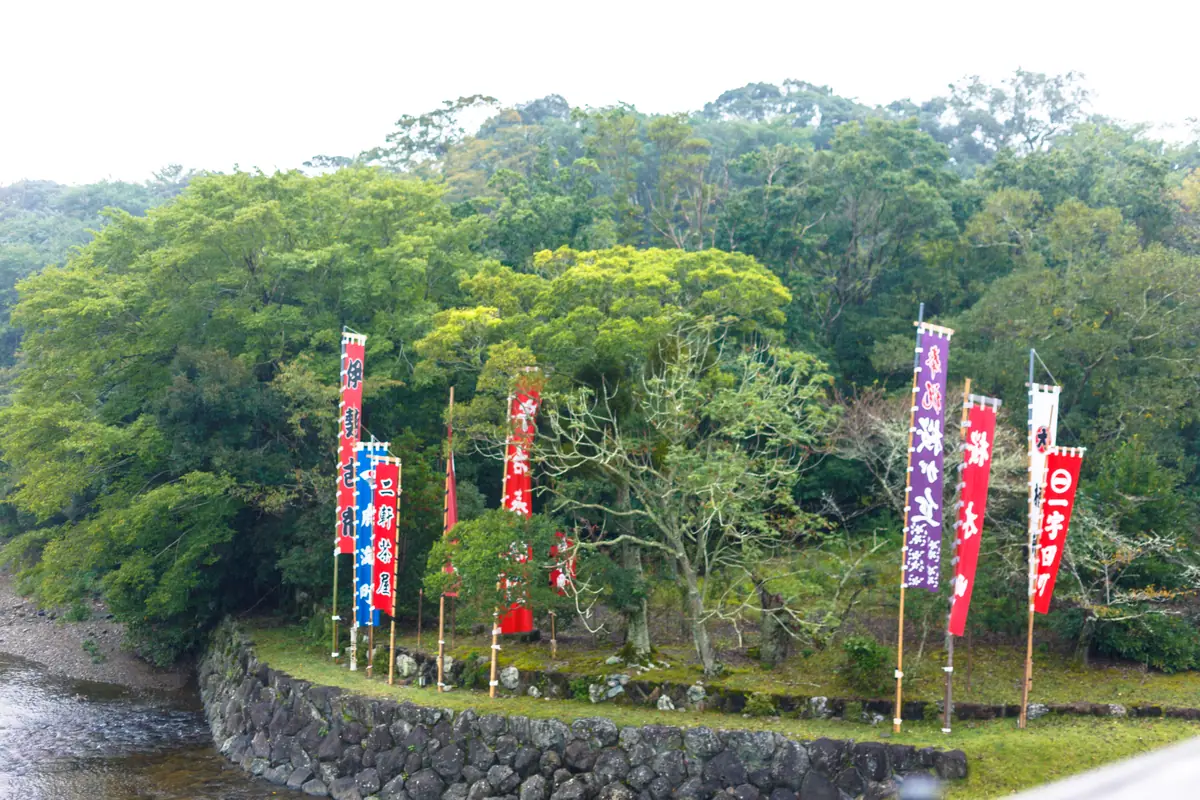
Ise Jingu's Inner Shrine and Okage Yokocho
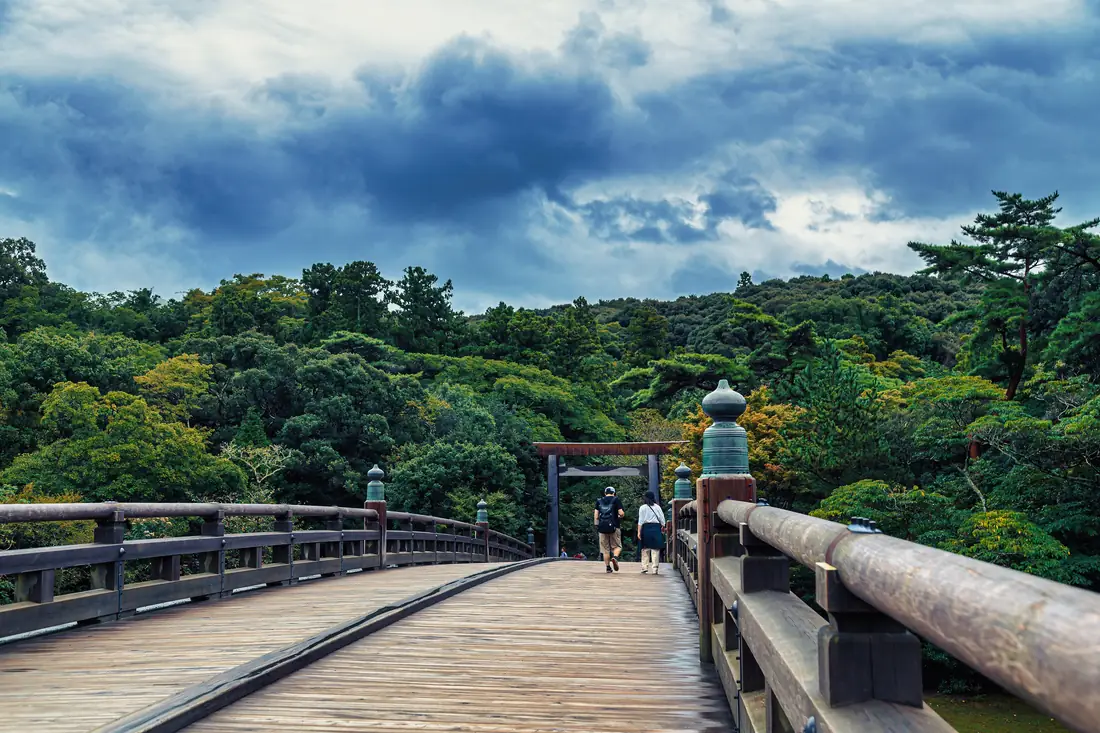
Naiku is open every day from 5:00 and closes at 17:00 in October to December, 18:00 in January to April and September, and 19:00 in summer. There is no admission charge. From the bus stop you cross the Uji Bridge and walk the long approach to the main sanctuary. Allow 60–90 minutes for the shrine itself — our estimate, since the shrine gives none.
The shrine is in the middle of its Shikinen Sengu, the rebuilding of the sanctuaries every 20 years; the rites began in 2025 and run for eight years or more, so you may see preparations under way.
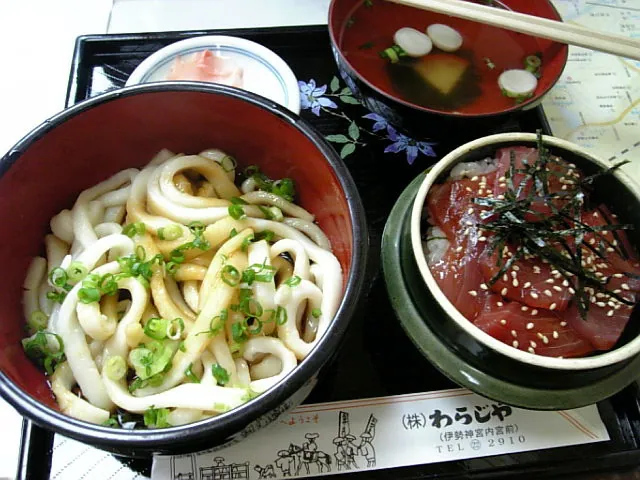
Okage Yokocho, a 5-minute walk from the Naiku-mae stop, is a street of Edo-style buildings with food stalls and shops, running along the older Oharai-machi. It opens at 9:30 and closes at 17:30 in October and March and 17:00 from November to February, later on some holidays. Eat Ise udon — very soft, thick noodles in a dark, sweet sauce — and the red-bean akafuku mochi at Akafuku Honten, open daily from 5:00.
Crowds. Official monthly figures are not published, but autumn weekends are busy: Okage Yokocho stays open until 18:30 on 10, 11 and 24 October. Asuka III's call on Sunday 11 October 2026 falls in the middle of a three-day holiday weekend, so start early.
The island opens at 9:00. It closes at 17:30 until 12 October, 17:00 from 13 October to 26 November, 16:30 from 27 November to 22 December, and 17:00 from 6 January to 18 March 2027; later hours are not yet published. Ticket sales stop an hour before closing.
Admission is ¥1,650 (children ¥820), and it includes the ama demonstration. There is no senior discount. The shows are at 9:30, 10:30, 11:30, 13:30, 14:30, 15:30 and 16:30 — no 12:30 show — and the last is 15:30 when the island closes at 16:30. Plan around them: arrive 15 minutes before a show, watch it, and then do the Pearl Museum at your own pace. About an hour and a half is enough for most visitors (our estimate).
Combination tickets are sold online only and are valid for a month:
Ticket
What it covers
Price
Saving
Toba W coupon
Mikimoto + Toba Aquarium
¥4,000
¥450
Pearl Cruise
Mikimoto + Toba Bay cruise and Dolphin Island
¥3,600
¥450
Toba Marumie Passport
Mikimoto + aquarium + bay cruise
¥5,700
¥1,150
Whether the gates take cards is not published; the online tickets are paid by card, which is one more reason to buy before you land.
Toba Aquarium and the bay
Toba Aquarium is open every day of the year, 9:30–17:00, last entry 16:00. Admission is ¥2,800 (children ¥1,600); there is no senior rate. Its star is Serena, the only dugong kept in Japan, in residence since 15 April 1987; the sea otters are the other queue. It is indoors, 4–5 minutes on foot from Mikimoto, and the natural rain plan. Allow about two hours (our estimate).
The Toba Bay cruise (Shima Marine Leisure) boards from the Marine Terminal's second floor — the building you tender into — and from a pier by Mikimoto and the aquarium. Adults pay ¥2,400, and the stop at Dolphin Island is free with the ticket. Boats leave the Marine Terminal once or twice an hour from about 9:00, on one of three timetables that change by date, so check the operator's timetable for your day; the loop without the island stop is about 50 minutes (our estimate). The last sailing of the day does not stop at Dolphin Island. Boats can be cancelled in bad weather without notice. Arrive 15 minutes early.
Shiroyama Park, the site of Toba Castle, is a free 15-minute walk from the terminal and ends in a climb; the view from the old keep site takes in the harbour and the islands.
The best things to do in Toba on a port day
The full list, with the time each takes from the tender pier, is on the Toba top 10. In brief:
Want the choices laid out by hours rather than by rank? The Toba plans page does that.
One day in Toba: model days
Ise Jingu and back for the pearls: a 9-hour call
Fits the 07:00–16:00 calls of Diamond Princess and Sapphire Princess (2 October, 7 and 30 March), and any 9–10-hour call landing at Sadahama if you shift the times by your arrival.
The shrine in the cool of the morning, lunch in Okage Yokocho, and back in Toba with time for the town. Times assume a weekday 07:00–16:00 call: all-aboard about 15:30, back aboard by 14:30, so at the Sadahama tender pier by 14:00 — we allow 30 minutes for the tender queue and crossing, which nobody publishes. Transport for the day is ¥1,320 each.
08:00Ashore at Sadahama on an early tender (our estimate for a 07:00 arrival). Walk 5–10 minutes to Kintetsu Toba station.
08:40Kintetsu local towards Ujiyamada (the 08:51 is the next one), ¥360, tap your IC card. Stay off the limited expresses — they need a surcharge ticket.
08:53At Isuzugawa, the bus to Naiku-mae (¥300, IC cards work), about 9 minutes; the 09:08 is the back-up. Or walk 2.4 km, about 31 minutes.
09:05Ise Jingu, Naiku. Cross the Uji Bridge and walk the approach to the main sanctuary. Free; open from 5:00. Allow about 90 minutes.
10:35Okage Yokocho (opens 9:30) and the Oharai-machi street beside it: Ise udon for an early lunch and akafuku mochi at Akafuku Honten, open every day from 5:00.
12:10Bus from Naiku-mae back to Isuzugawa (¥300); the 12:22 is the back-up. The 12:34 leaves only a few minutes for the 12:45 train.
12:45Kintetsu local from Isuzugawa to Toba, arriving 12:56 (the 12:17 if you are early).
13:00Toba 1-bancho by the station for souvenirs, or walk 7–8 minutes to Mikimoto for the 13:30 ama show — only if you leave the island by 13:45, since it is 12 minutes back to the pier.
13:55At the Sadahama tender pier, 5 minutes ahead of the target and 95 minutes before all-aboard.
Pearls, the dugong and the bay: a 9-hour call on foot
Fits any 9–10-hour call; timed for 07:00–16:00 at Sadahama. On Mitsui Ocean Sakura (12 November, 08:00–17:00) you land at Mikimoto itself — see the note.
Toba's own sights, all on the flat waterfront, with no trains to miss. Same targets as the Ise day: at the Sadahama pier by 14:00 on a 07:00–16:00 call. Admissions come to ¥4,450, or ¥4,000 with the online Mikimoto + aquarium ticket.
08:00Ashore at Sadahama. Nothing opens before 9:00, so start with the view: the Toba Visitor Center on the terminal's ground floor has free maps.
08:10Walk about 15 minutes up to Shiroyama Park, the Toba Castle site, for the look across the bay and its islands. It is free, and it is a climb.
09:00Down to Mikimoto Pearl Island as it opens (¥1,650).
09:30The first ama demonstration of the day, then the Pearl Museum.
10:45Walk 4–5 minutes to Toba Aquarium (¥2,800; open 9:30–17:00). Find Serena the dugong and the sea otters first.
12:20Walk back towards the station for lunch: Tenbinya Honten serves tekone-zushi, bonito marinated in soy over vinegared rice, 11:30 to 14:00 last order, and takes cards. Closed Mondays.
13:25Ten minutes in Toba 1-bancho or Toba Marché, the farmers' and fish market 5 minutes from the terminal.
13:45At the Sadahama tender pier, 15 minutes ahead of the target.
Ise Jingu, Mikimoto and the aquarium: a 12-hour call
Fits Le Jacques Cartier on 22 March (07:00–19:00, Monday) and 28 March 2027 (07:00–19:30, Sunday), and any call of 12 hours or more.
The only calls on the schedule long enough to do the shrine and all of Toba's own sights without rushing. Times assume 07:00–19:00: all-aboard 18:30, back aboard by 17:30, at the Sadahama pier by 17:00.
08:00Ashore at Sadahama (our estimate) and walk 5–10 minutes to Kintetsu Toba.
08:40Kintetsu local to Isuzugawa, 11 minutes, ¥360. On the Sunday call there is no 08:40: take the 08:49 local and the 09:07 bus, reaching Naiku about 10 minutes later than this plan; the return trains are the same.
08:53Bus to Naiku-mae, about 9 minutes, ¥300.
09:05Naiku, unhurried: 90 minutes from the Uji Bridge to the main sanctuary and back. In March the shrine is open until 18:00.
10:35Okage Yokocho and Oharai-machi: Ise udon, akafuku at Akafuku Honten, and the shops, which open 9:30–17:30 in March.
12:10Bus to Isuzugawa, then the 12:45 Kintetsu local, in Toba at 12:56.
13:05Walk 7–8 minutes to Mikimoto Pearl Island (¥1,650) for the 13:30 ama show, then the museum.
14:50Walk 4–5 minutes to Toba Aquarium (¥2,800, last entry 16:00): the dugong, the sea otters, and the rest at your own pace.
16:25Walk about 15 minutes back along the waterfront to Sadahama.
16:45At the Sadahama tender pier, 15 minutes ahead of the target.
How to think about your hours
Work backwards from the ship. All-aboard is usually 30 minutes before departure (check the daily programme), you want to be back aboard an hour before that, and the first half hour after arrival goes on getting off. So the time you can use is the call length minus about two hours — and at Toba, take off another half hour at each end for the tender queue and crossing.
Call
Usable
Landing at Sadahama
Landing at the Mikimoto pier
4 hours
about 2, 1½ in town
Mikimoto or the aquarium, not both; no Ise
Mikimoto, and the aquarium next door if you are quick
6 hours
about 4, 3½ in town
Mikimoto, the aquarium and lunch; or Naiku alone with no lunch — tight
Mikimoto, the aquarium and the bay cruise
8 hours
about 6, 5½ in town
Naiku and Okage Yokocho comfortably; or Mikimoto, aquarium, bay cruise and lunch
Naiku by the CAN bus from the Mikimoto stop, then the island
9–10 hours
about 7–8
Ise first, Mikimoto after; or the waterfront day with an Osatsu hut lunch
Ise first, then the island and aquarium
12 hours+
about 10
Naiku, Mikimoto and the aquarium; or Ise and an Osatsu hut lunch
Everything above
Every Toba call on the schedule from October 2026 to March 2027 is at least 9 hours: the median is 9, Seabourn Encore gives 10 on 5 November, and Le Jacques Cartier gives 12 and 12½ hours on 22 and 28 March 2027. None stays overnight. The ship agent's page also lists an Asuka II call on 16 October 2026 (07:00–17:00) that is not on the council's list; check with your line. The commonest pattern is 07:00–16:00 (Diamond Princess and Sapphire Princess). The full list is on cruises to Toba.
Doing Toba without a tour
There is no bookable tour for Toba in our catalogue, and we will not pad this page with weak ones from elsewhere. Toba does not need them: the waterfront sights are walks from the tender pier, and Ise Jingu is one train and one bus away for ¥660. How it works out for different travellers:
A couple on a 9-hour call: Kintetsu and bus to Naiku, Mikimoto on the way back — the first model day above, ¥1,320 each in transport.
A group of four to six: a metered taxi to the Inner Shrine is about ¥6,400 each way per car, about 20 minutes, about ¥1,600 each for four against ¥660 by train, but door to door and with no connections to miss; a large taxi or two regular ones for six. Hourly hire (¥4,000 per 30 minutes) costs far more for the same trip.
The shortest calls: Mikimoto Pearl Island, then the aquarium if time allows.
Limited mobility: the waterfront between the terminal, Mikimoto and the aquarium is flat, and Hachiman Kamado describes its ama hut as fully barrier-free. Whether you can board a tender in a wheelchair depends on your ship — ask before the call.
The ama hut lunch: Hachiman Kamado in Osatsu serves a standard seafood set grilled by ama for ¥4,700 (about 1 hour 15 minutes), with a tea-time set at ¥3,000 and lobster or abalone menus from ¥9,000. It is open 10:00–17:00, reservation-only (2 days ahead on the Japanese page, a week on the English page — use the week), takes cards and IC, and runs a free "Ama Bus" from Toba Station for guests who book it. Osatsu Kamado charges ¥4,500 for lunch, also by reservation. Weather can cancel either.
About the return to the ship. Nobody at Toba — not the taxi companies, not the ama huts, not the bus operators — makes any promise about getting you back to a tender. Three habits protect you: plan to be at the Sadahama pier an hour and a half before all-aboard (the usual hour plus the tender), keep the CAN bus times from Naiku-mae in your phone as the fallback (12:34, reaching Toba Bus Center at 13:16; the 13:34 arrives 14:16 and the 14:14 arrives 14:56, too late on a 07:00–16:00 call), and if you take a taxi to the shrine, ask the driver to write down the number to call for the return.
Money, cards and the practical stuff
Toba is easier without cash than many small Japanese ports, because the trains and buses take IC cards. Where you will need what:
Place
Pay with
Kintetsu trains
IC card (Suica, ICOCA and others) or ticket
JR Sangu Line (Toba–Iseshi)
Paper ticket only, until spring 2027
Mie Kotsu buses, including the CAN bus
All national IC cards, emica, or cash
Ise Jingu
Free
Mikimoto, aquarium, bay cruise
Online combination tickets by card; gate payment not published — carry yen
Tenbinya Honten
JCB, Diners, Visa, Mastercard
Hachiman Kamado (ama hut)
Cards (Visa, Mastercard, JCB, Amex, Diners) and IC
Taxis
Carry cash; card acceptance not published
Cash machines. There is no bank machine mapped next to the terminal. The nearest are at Toba Nishiki-cho Post Office, about 765 m in a straight line (counter Monday–Friday 9:00–17:00), and a Lawson and a FamilyMart about 900 m away. Japan Post and convenience-store machines generally take foreign cards. Easiest is to arrive with some yen and load an IC card for the trains and buses.
Coin lockers at the terminal are not listed anywhere current; plan to carry a small bag.
Closed days against the call dates. Tenbinya Honten, the tekone-zushi restaurant 5 minutes from the station (lunch 11:30–14:00 last order), closes on Mondays: that is Le Soléal on 15 March and Le Jacques Cartier on 22 March 2027. The terminal's second-floor café and the station quarter are the fallback. Mikimoto closes for three days from the second Tuesday of December, when no ships call. The aquarium, Akafuku Honten and Okage Yokocho open every day.
For splitting fares and admissions with friends, our note on splitting costs in Japan covers IC cards and cash.
Toba's ten calls from October 2026 to March 2027 are two in October, two in November, one in February and five in March.
October is mild (average highs of 21.9 °C) but wet — 330 mm of rain, the second-wettest month after September's 399 mm. Ise Jingu closes at 17:00 from October. The 11 October call lands on a holiday weekend.
November averages 16.5 °C, with less rain (142 mm). The maples at Tsu, the nearest official station, turn around 25 November — after both November calls.
February and March are cool: highs of 9.5 °C and 13.2 °C. January to March are also Toba's windiest months (mean wind 2.8 m/s), and wind is what stops tenders. All five wind cancellations of 2026 fell between March and May. The cherry blossom at Tsu opens around 29 March in a normal year and is full around 3 April, so the late-March calls are likely to see buds and the first flowers (our estimate).
Typhoons approach the Tokai region about 3.5 times a year, most often in September (1.2), then August (0.8) and October (0.7). One cancelled Asuka II's Toba call on 22 September 2026. Our typhoon guide explains what happens to an itinerary.
Rain plan: Toba Aquarium is indoors and open every day; the Mikimoto museum halls are indoors too. Rain and wind matter more for the tender than for the sights.
Looking further ahead, the council's list already runs into 2028, with Diamond Princess and Sapphire Princess calling most months from April 2027, and other lines such as Silver Muse, Silver Moon and Explora III — all landing at Sadahama.
What other guides get wrong about Toba
Things you will read about Toba elsewhere — in older port guides, forum posts and some cruise-line pages — set against what the official source says today.
You may read
What the official source says
Source
The ship docks within walking distance of town.
There is no cruise berth. The ship agent's 2026 notice says cruise ships anchor off Toba Marine Terminal and passengers come ashore by the ship's tenders and local launches, landing at the Marine Terminal pier or the Mikimoto Pearl Island pier. Town is a short walk from the landing, but the tender queue — and wind that can stop the tenders — comes first.
A one-day CAN bus pass costs ¥1,000, or ¥1,600 for two days.
The passes Mie Kotsu now lists for the CAN bus are the Ise-Toba Michikusa tickets: ¥1,300 for one day and ¥1,900 for two (children ¥650 and ¥950), valid on Mie Kotsu buses across the Ise–Toba area (a few routes excluded), CAN bus included.
Thinking the ship docks.It anchors off Toba Marine Terminal and tenders you in. Some third-party port pages still describe a dock within walking distance of town; there is none for cruise ships.
Having no plan B for a cancelled call.Strong wind cancelled Toba calls on 5 March, 4 April, 21 April, 9 May and 29 May 2026, and a typhoon cancelled Asuka II on 22 September; the ship agent also lists Asuka III's 6 August call as cancelled for a typhoon. Diamond Princess alone has lost five Toba calls since May 2025. If Ise Jingu is why you booked, know that it can be taken away on the morning.
Waiting for a 12:30 ama show.Mikimoto's demonstrations are at 9:30, 10:30, 11:30, 13:30, 14:30, 15:30 and 16:30. There is a lunchtime gap, and on days the island closes at 16:30 the last show is 15:30.
Taking the slow route to Ise.The obvious route is the train to Iseshi and then bus 51 or 55 — ¥910 and slower. Kintetsu to Isuzugawa and the bus costs ¥660 and takes about 40–50 minutes door to door; it is the route the Toba cruise council itself gives.
Tapping an IC card on JR.The JR Sangu Line through Toba gets IC cards only in spring 2027. Kintetsu and the Mie Kotsu buses take Suica-type cards now.
Boarding a Kintetsu limited express on a basic ticket.Limited expresses stop at Toba but need a surcharge. The locals at :25 and :55 past the hour are all you need for an 11-minute ride.
Turning up at an ama hut without a booking.Both Osatsu huts are reservation-only, with deadlines from 2 days to a week ahead. There are no walk-ins.
Planning a Tenbinya lunch on a Monday.The tekone-zushi restaurant by the station is closed on Mondays, which catches Le Soléal on 15 March and Le Jacques Cartier on 22 March 2027.
Researched from official timetables, operators and the port authority. Every time and fare in this guide was checked against the sources listed above on 1 October 2026; where we had to estimate (a walk, a taxi in traffic), the text says so. Timetables change — if you find one that has, tell us and we will fix it.
Quick answers
Toba cruise port questions
Where do cruise ships dock in Toba?
They do not dock: Toba is a tender port. Ships anchor off Toba Marine Terminal and run their own tenders, with local launches, to the Sadahama pier at the terminal. The Toba cruise council's call list gives the landing for every call: of the 10 calls from October 2026 to March 2027, 9 land at Sadahama and 1 — Mitsui Ocean Sakura on 12 November — at the Mikimoto Pearl Island pier.
Is there a shuttle from the Toba tender pier, or can you walk to Mikimoto and the station?
You walk. From Sadahama, Toba Station and the bus center are a 5–10-minute walk, Mikimoto Pearl Island 10–12 minutes and Toba Aquarium about 15 minutes, all on the flat waterfront along National Route 42. No shuttle is needed and none is officially run. The Toba Visitor Center on the terminal's ground floor hands out free maps.
Can you visit Ise Jingu from Toba on a cruise?
Yes. The Inner Shrine is 40–50 minutes each way by Kintetsu local and bus, and a comfortable visit with lunch in Okage Yokocho needs about 4 hours ashore plus the tenders. That fits the usual 9-hour Toba call: on a 07:00–16:00 call you can be at Naiku by about 9:05 and back at the tender pier by about 13:55.
How do I get from the Toba cruise port to Ise Jingu, and what does it cost?
About 40–50 minutes and ¥660 each way. Walk 5–10 minutes from the Sadahama tender pier to Toba Station, take a Kintetsu local to Isuzugawa (11 minutes, ¥360, at :25 and :55 past the hour midday), then a Mie Kotsu bus to Naiku-mae (about 9 minutes, ¥300, 4–5 an hour); IC cards work on both. The hourly CAN bus runs direct from Toba Bus Center to Naiku-mae in 41 minutes for ¥1,050, and the ¥1,300 Ise-Toba Michikusa day pass only pays off if you ride it both ways. A metered taxi takes about 20 minutes and costs about ¥6,400 or more.
Should I visit the Inner Shrine (Naiku) or the Outer Shrine (Geku) at Ise?
On a 9-hour Toba call, choose Naiku, the Inner Shrine: it is the one most people mean by Ise, it has the Uji Bridge and Okage Yokocho at its gate, and it is 40–50 minutes away by Kintetsu and bus for ¥660. Geku, the Outer Shrine, is a 5-minute walk from Iseshi station, about 20 minutes from Toba by train (¥240 JR, ¥390 Kintetsu). Doing both is realistic only on the 12-hour calls. Both are free and open from 5:00.
What time are the ama diver shows at Mikimoto Pearl Island?
9:30, 10:30, 11:30, 13:30, 14:30, 15:30 and 16:30 — there is no 12:30 show — and the last is 15:30 on days the island closes at 16:30. The show is included in the ¥1,650 admission. The island opens at 9:00 and closes at 17:00 or 17:30 depending on the season, with ticket sales ending an hour before closing. Allow about 1½ hours for a show and the Pearl Museum (our estimate).
Is there a combination ticket for Mikimoto and Toba Aquarium?
Yes, online only and valid for a month: Mikimoto + aquarium ¥4,000 (instead of ¥4,450), Mikimoto + the Toba Bay cruise ¥3,600, and all three ¥5,700. At the gates, Mikimoto is ¥1,650 and the aquarium ¥2,800. Buy before you land: whether the gates take cards is not published, and the online tickets are paid by card.
Can I see Ise Jingu and Mikimoto Pearl Island in one day?
On a 9-hour call, only just: after the shrine you are back in Toba around 13:00, in time for the 13:30 ama show if you leave the island by 13:45. On the 10-hour and 12-hour calls it is comfortable, and on the 12-hour calls you can add the aquarium.
Do cruise calls at Toba get cancelled?
Often enough to plan for. Of the 23 Toba calls scheduled January–September 2026, the cruise council lists six as cancelled: five for strong wind and one for an approaching typhoon. The ship agent's page also marks Asuka III's 6 August call as cancelled for a typhoon, which would make seven. January to March are the windiest months, and most of the early-2027 calls fall in March.
Do I need cash in Toba?
Less than you might think. Kintetsu trains and Mie Kotsu buses take Suica-type IC cards, Tenbinya and the Hachiman Kamado ama hut take credit cards, and Ise Jingu is free. The JR line takes paper tickets only until spring 2027. The nearest cash machines are at a post office about 765 m and convenience stores about 900 m from the terminal, so bring some yen with you.
Can I do an ama hut lunch in Osatsu on a cruise call?
Yes, if you book ahead. Hachiman Kamado needs a reservation at least 2 days ahead (its English page says a week), charges ¥4,700 for the standard seafood set lasting 1 hour 15 minutes, and runs a free shuttle from Toba Station for guests on request; a taxi is about 25 minutes and ¥7,500 or more. Osatsu Kamado charges ¥4,500, also by reservation.
What is the best tour from the Toba cruise port?
There is no bookable Toba tour in our catalogue, and the port does not need one: Mikimoto and the aquarium are walks from the tender pier, and Ise Jingu is ¥660 away by train and bus. A couple does best by Kintetsu and bus; a group of four to six can share a metered taxi to the shrine at about ¥6,400 each way per car.
Where is Toba Marine Terminal and what is inside?
At 1-chome Toba, a 5–10-minute walk from Toba Station. It is the island-ferry terminal: the Toba Visitor Center with free Ise-Shima maps is on the ground floor, toilets are by the entrance with a waiting area inside, a café serving light meals such as Ise udon is on the second floor, and the Toba Bay cruise boards from the second floor too. Free Wi-Fi and coin lockers are not listed in any current source.
What is there to do in Toba on a cruise port day?
Three things fill most Toba days. Mikimoto Pearl Island, 10–12 minutes' walk from the Sadahama tender pier, has the ama diver shows and the Pearl Museum (about 1½ hours, ¥1,650). Toba Aquarium, about 15 minutes' walk, has Serena, the only dugong kept in Japan (about 2 hours, ¥2,800). Ise Jingu's Inner Shrine, 40–50 minutes away by Kintetsu and bus for ¥660, takes about 4 hours ashore with lunch in Okage Yokocho. On a 9-hour call, pick Ise or the waterfront; on the 12-hour calls you can do both.
How long does the tender take at Toba, and when should I be back at the pier?
Allow 30 minutes at each end — our estimate, because nobody publishes the crossing time or the queue. The anchorage is just off Toba Marine Terminal, so the ride is short; the morning queue for tender tickets is what takes time. Be at the Sadahama tender pier about 90 minutes before all-aboard: on a 07:00–16:00 call, with all-aboard around 15:30, that means the pier by about 14:00. In wind or swell the ship can stop the tenders altogether.
Which cruise ships call at Toba in 2026–27?
Ten calls are scheduled from October 2026 to March 2027: Diamond Princess and Sapphire Princess (usually 07:00–16:00), Asuka III, Seabourn Encore, Le Soléal, Le Jacques Cartier and Mitsui Ocean Sakura. Two fall in October, two in November, one in February and five in March; every one is at least 9 hours and none stays overnight. All land at Sadahama except Mitsui Ocean Sakura, which uses the Mikimoto pier. From April 2027 the council's list has Diamond and Sapphire Princess most months, plus Silver Muse, Silver Moon and Explora III.
How do I get from the Toba cruise port to Meoto Iwa (the Wedded Rocks) at Futami?
About 25–30 minutes each way. The simplest is the CAN bus from Toba Bus Center, a 5-minute walk from the Sadahama tender pier: 13 minutes to the Meoto-iwa Higashiguchi stop, hourly, with IC cards accepted. Or take the JR Sangu Line from Toba to Futaminoura (about 10 minutes, ¥210, paper ticket only until spring 2027) and walk about 15 minutes to the rocks. The CAN bus loop continues from Futami to Ise Jingu's Inner Shrine, so on a long call the rocks fit on the way.
How long do you need at Toba Aquarium, and is it worth it?
About 2 hours (our estimate), and it is worth it if you like animals or it rains. Toba Aquarium, about 15 minutes' walk from the Sadahama tender pier and 4–5 minutes from Mikimoto, is home to Serena, the only dugong kept in Japan, in residence since 1987, plus sea otters. It is indoors and open every day of the year, 9:30–17:00 with last entry at 16:00. Admission is ¥2,800, or ¥4,000 with Mikimoto on the online combination ticket.
What should I eat in Toba on a cruise day?
Three local dishes. Tekone-zushi — bonito marinated in soy over vinegared rice — at Tenbinya Honten, 5 minutes from Toba Station (lunch 11:30–14:00 last order, cards accepted, closed Mondays). Ise udon, very soft thick noodles in a dark, sweet sauce, in Okage Yokocho by Ise Jingu or at the Marine Terminal's second-floor café. And akafuku, red-bean mochi, at Akafuku Honten by the Inner Shrine, open daily from 5:00. For shellfish grilled by ama divers, book an Osatsu ama hut lunch (from ¥4,500) days ahead.
Are there taxis at the Toba cruise port?
The taxi ranks are at Toba Station, about 400–500 m or a 5–10-minute walk from the Sadahama tender pier; whether cars wait at the terminal on ship days is not published. Mie fares rose on 16 March 2026 to ¥700 for the first 1.18 km, then ¥100 per 231 m. Our estimates are about ¥6,400 and 20 minutes to Ise Jingu's Inner Shrine and about ¥7,500 to Osatsu; hourly hire is ¥4,000 per 30 minutes. Carry cash, since card acceptance is not published.
Is Toba manageable with limited mobility or a wheelchair?
Partly. The 10–15-minute walk from the Sadahama tender pier to Mikimoto Pearl Island and Toba Aquarium is flat along the waterfront, and the aquarium is indoors. Hachiman Kamado, the Osatsu ama hut, describes itself as fully barrier-free. Shiroyama Park ends in a climb, and Ise Jingu means a train, a bus and a long walk from the Uji Bridge, or a taxi at about ¥6,400 each way. The real limit is the tender: whether you can board one in a wheelchair depends on your ship, so ask the line before the call.
What is the weather like in Toba for a cruise call in October, November or March?
Mild to cool, and windy late in the winter. Average highs are 21.9 °C in October, 16.5 °C in November, 9.5 °C in February and 13.2 °C in March. October is wet, with 330 mm of rain on average, second only to September. January to March are Toba's windiest months, and wind is what stops tenders and cancels calls here. Cherry blossom at Tsu, the nearest official station, usually opens around 29 March, so late-March calls may catch the first flowers. Toba Aquarium is the indoor rain plan.